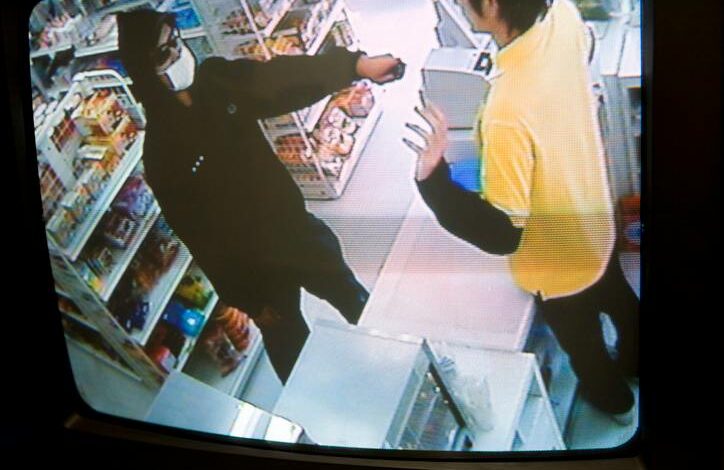
A federal investigation into a Chicago convenience store robbery uncovered a dangerous criminal enterprise built entirely on fabrication. In July 2023, a gunman entered the store demanding money while clerks and customers complied. Although the robbery appeared genuine, the weapon accidentally discharged, striking a clerk in the abdomen. Federal authorities later determined the holdup was entirely staged. The scheme’s organizer, Parth Nayi, was subsequently sentenced to two years in federal prison.
This incident is part of a broader nationwide pattern of immigration fraud centered on the U visa program. Established by Congress in 2000, the program was designed to encourage crime victims to report offenses and aid investigations by offering temporary legal status, work authorization, and a potential pathway to a green card after three continuous years. To qualify legally, applicants must demonstrate substantial physical or mental abuse, possess privileged information about the crime, show helpfulness to authorities, and secure a certification from an authorized official.
However, the high stakes of avoiding deportation have fostered widespread abuse, with fraud syndicates operating across multiple regions. In Massachusetts, an illegal Indian national named Rambhai Patel orchestrated at least 18 staged armed robberies, utilizing store surveillance cameras and willing clerks who waited until the perpetrators departed before contacting police. Patel was sentenced in August 2025 and ordered to forfeit $850,000, with at least two U visa applicants caught participating in his operation. Similarly, in Kansas City, a Mexican national orchestrated 11 staged robberies involving at least 33 purported victims, 18 of whom submitted fraudulent visa applications.
Law enforcement involvement has also surfaced in these schemes. In Louisiana, a businessman alongside four local law enforcement officials—comprising three police chiefs and a marshal—pleaded guilty to participating in a decade-long scheme involving fabricated robbery reports designed to generate eligible crime victims for a fee.
These operations impose severe costs on local communities. Police officers expend taxpayer resources responding to invented emergencies, detectives divert investigative hours away from actual crimes, and staged armed confrontations introduce severe physical dangers to employees, unwitting customers, and responding officers.
Federal oversight bodies have repeatedly warned of vulnerabilities within the system. A Department of Homeland Security memo audit in January 2022 identified approved petitions containing forged, unauthorized, altered, or suspicious law enforcement certifications. Although the memo offered recommendations on certification controls and referral tracking, those recommendations have since been closed. Meanwhile, the U.S. Government Accountability Office maintains four open recommendations addressing U.S. Citizenship and Immigration Services agency-wide fraud-risk assessments, strategy, evaluations, and performance measures.
Policy analysts argue that structural reforms are urgently needed to secure the program against exploitation. Because USCIS guidelines permit nationwide agencies to sign U visa certifications without internal anti-fraud policies, accountability remains limited. Proposed fixes include establishing nationwide written verification procedures, implementing trained-signer statuses for certifying officials, setting documented acceptance conditions, and requiring USCIS to directly re-verify forms with signing agencies before granting benefits.
Despite the prevalence of fraud, experts and officials emphasize that the underlying visa pathway remains essential for genuine victims. Legitimate recipients, such as an Oakland salon owner who testified against her armed robbers while pregnant, have successfully utilized the program to find protection and aid law enforcement. Observers contend that reforms should target systemic vulnerabilities rather than eliminating the visa entirely, ensuring the protection remains available for authentic crime victims.