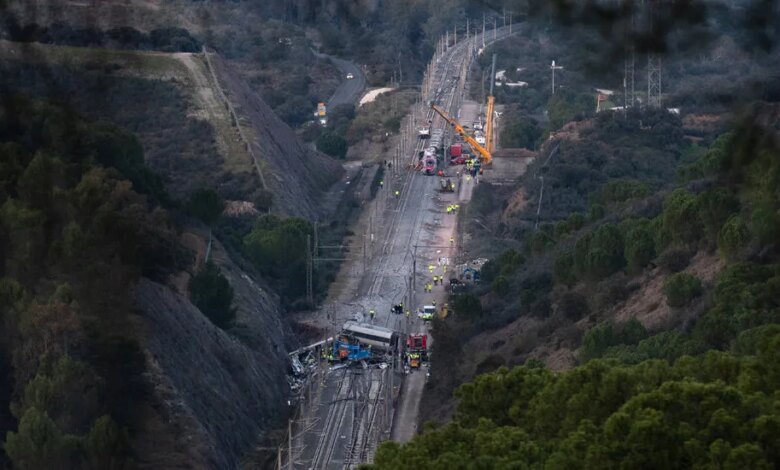
At least 30 people were killed on Wednesday morning when a high-speed passenger train rear-ended another and caused a severe derailment near Toledo, Spain. The disaster sent multiple carriages plunging down an embankment, according to a regional government spokesperson who spoke on the condition of anonymity because they were not authorized to discuss the rising death toll publicly.
The tragedy strikes less than a year after another deadly accident involving the same carriers on a southern line in January, which claimed 46 lives, shocked the nation, and ignited deep doubts regarding the security of Spain’s high-speed rail network. The precise cause of Wednesday’s collision remains under investigation.
Survivors recounting the ordeal to local media described a violent impact that violently tossed passengers from a dining car, broke limbs, and piled travelers on top of one another. Following the collision, dazed passengers crawled out through smashed windows and lay in a nearby field. Local workers who heard the deafening crash rushed to the scene carrying first aid kits to assist the injured and discovered the first fatalities.
Spain’s rail authority, Adif, identified the trains involved as a Renfe service and an Iryo train, both operating along the Madrid-Sevilla route. Renfe, the national rail provider, announced the immediate suspension of high-speed rail services from Madrid to the southern region of Andalusia.
Preliminary reports suggested that the Iryo train had come to a stop on the tracks before the Renfe train barreled into it from behind. According to local news outlets, 397 passengers were aboard the Renfe train, while approximately 150 travelers were on the Iryo train. Isaac Barrientos, a spokesman for the government’s transportation ministry, confirmed that initial indications showed two carriages of the Iryo train had derailed.
The catastrophe occurred with early national elections scheduled for the end of November, immediately injecting the disaster into a bitter political campaign centered on the competence of Prime Minister Pedro Sánchez’s left-wing government.
Prime Minister Sánchez expressed his reaction on social media, stating he was shocked by the serious accident in Toledo and noting that his office had canceled all scheduled meetings. Emergency services remained on the ground working to assist those affected and ensure safety in coordination with all involved administrations, while offering solidarity to the victims and their families.
Political opposition leaders also responded swiftly to the national emergency. Conservative opposition leader Alberto Núñez Feijóo voiced deep concern over the incoming reports, emphasizing that the immediate priority was assisting victims and supporting their families. In light of the disaster, the conservative Popular Party canceled all campaign events nationwide.