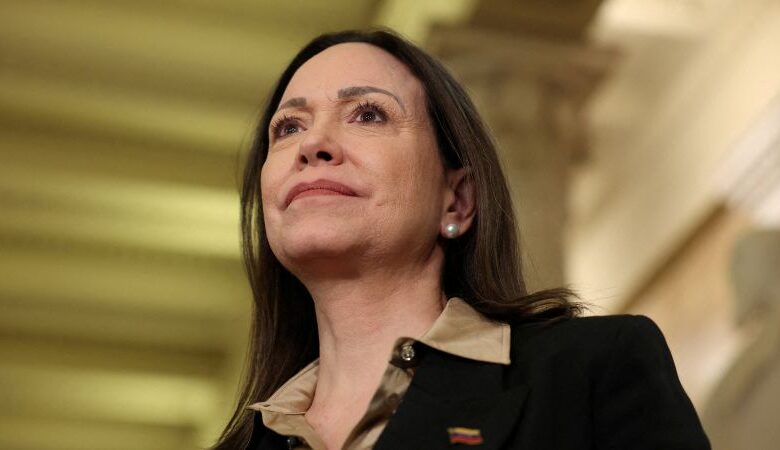
Venezuelan opposition leader and Nobel laureate María Corina Machado has returned to her home country after spending more than ten months in exile, stepping back into a political environment that underwent profound shifts during her absence while she was sidelined from direct participation.
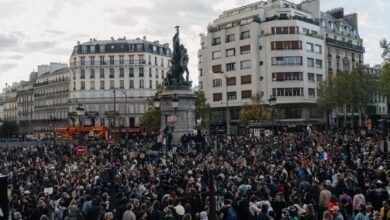
Machado announced her arrival on Sunday morning through a social media post on X, writing simply, “I am here. With you.” Fellow opposition figures quickly confirmed her return, though they initially provided few specifics regarding her entry. Images shared by the opposition on Sunday showed Machado in Lara state, where she was greeted by supporters gathered at the Church of Santa Rosa.
Her return follows a protracted series of unsuccessful attempts to re-enter Venezuela over the preceding months. According to her advisers, Machado had tried seven times to cross back into the country. Her first attempt occurred in late June as she sought to assist with recovery efforts following two major earthquakes, an effort she stated was blocked when authorities closed national airspace. She made three additional entry attempts in a single day in late September while acting Venezuelan President Delcy Rodríguez was in New York attending the United Nations General Assembly.
Machado originally left Venezuela in December to travel to Norway to accept the Nobel Peace Prize, which she was awarded for her advocacy of democratic rights. During her more than ten months away, she traveled internationally to rally backing from foreign allies, including U.S. President Donald Trump, to whom she presented her Nobel Prize.
However, her prolonged absence coincided with dramatic political realignments in Caracas. One month after her departure, the U.S. government moved against strongman President Nicolás Maduro, toppling his administration and subsequently partnering with the acting Venezuelan government to guide a transition toward democratic reform and reconciliation. While that process incorporated various opposition figures, it has largely bypassed Machado and former presidential candidate Edmundo González Urrutia.
González Urrutia, who remains in exile, celebrated Machado’s return, calling it a vital day for Venezuelans and stating that his sovereign voice is returning with her to lead the process. He added that he intends to follow her and return to the country soon.
While the Trump administration has previously expressed personal warmth toward Machado—referring to her as a nice woman—U.S. officials have largely kept her at the margins of the current transition. Earlier, Trump asserted that she lacked sufficient domestic support and respect to lead the country. Instead, Washington has engaged directly with Maduro’s successor, acting President Delcy Rodríguez, to negotiate political and economic reforms.
Rodríguez has complied with numerous U.S. demands, releasing hundreds of political prisoners and opening pathways for American corporations to invest in Venezuela. In late August, the Trump administration announced an agreement securing majority control over more than 65 billion barrels of proven Venezuelan oil reserves, a development framed as advantageous for both American energy firms and the local economy. Machado challenged that agreement in a video statement, questioning why the pact was being finalized with an administration she characterized as an illegitimate regime.
During her time away, key members of Machado’s inner circle also moved to re-establish their presence inside the country. In late August, senior adviser Omar González returned following nearly three years of exile, describing his arrival as a precursor to Machado’s own homecoming.
Venezuela’s political crisis stems from the contested 2024 presidential election, when state-controlled electoral authorities declared Maduro the victor despite independent experts concluding the official outcome was statistically improbable. While Rodríguez pledged during the United Nations General Assembly that Venezuela will organize new elections and transition toward full democracy—the stated primary objective of U.S. policy—the acting government has not yet established a timeline for the vote. President Trump has maintained that the nation is not yet prepared for elections, though he insists substantial progress has been achieved.