Serbia’s Student-Led Government Faces Complex Policy Agenda Following Historic Election Victory

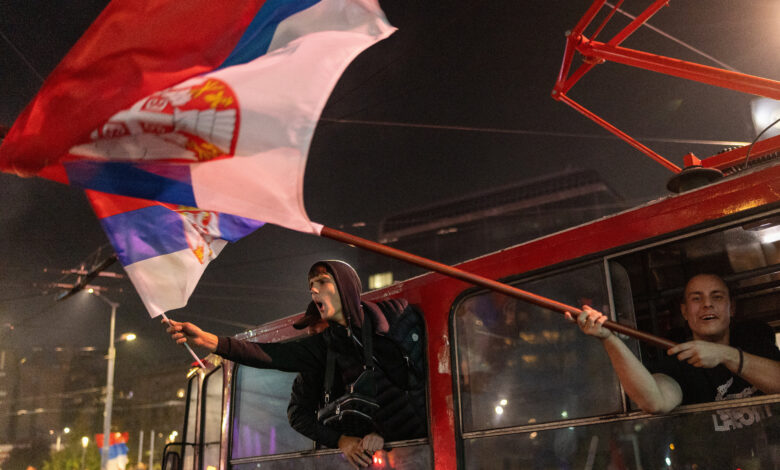
Serbia’s student-led protest movement has secured a historic victory in parliamentary elections, bringing an end to the long-standing rule of Aleksandar Vucic and sparking widespread street celebrations in Belgrade. Yet even as the movement’s yet-to-be-named leaders prepare to take power, they inherit a formidable array of domestic, regional, and geopolitical challenges.
The electoral list operating under the banner “Student List – Students Win” triumphed after Vucic and his Serbian Progressive Party candidates conceded defeat. Vucic, the SNS, and authorities had repeatedly denied prior accusations of repression and corruption, but the electorate’s pivot sets the stage for a dramatic shift in governance.
Among the most pressing foreign policy and territorial hurdles is the status of Kosovo, which declared independence from Belgrade in 2008. The Student List maintains that Kosovo remains an integral part of Serbia, describing it during the campaign as a temporarily occupied territory that could be reintegrated through peaceful means, diplomacy, and dialogue. Their immediate strategic focus centers on preventing an exodus of the Serbian population in northern Kosovo while strengthening institutions funded by Belgrade under the Serbian legal system, such as healthcare and education.
The incoming administration aims for Kosovo’s Serb communities to operate autonomously, rejecting previous agreements brokered with the ethnic Albanian-led government in Pristina, including pacts regarding energy, vehicle licence plates, and the use of the dinar currency. This hardline stance on Kosovo places the movement at direct odds with the European Union, which requires Serbia to normalise relations with Pristina as a condition for membership.
European Commission President Ursula von der Leyen stated that the bloc stands ready to support reforms, including rule of law and media freedom initiatives, and to work together to advance Serbia’s EU future. However, the Student List campaign deliberately bypassed polarising foreign policy debates concerning swift EU accession. Prominent candidates, including former central bank governor Dejan Soskic and cardiologist Ilija Srdanovic, argued that the government must prioritize domestic reforms and close all EU negotiating clusters before asking citizens to cast a definitive ballot on bloc membership.
At the same time, the incoming government must navigate an intricate energy and foreign policy web involving traditional ally Russia. The student leaders have stated they have no plans to align with the EU in imposing sanctions on Moscow over its war in Ukraine. Serbia’s new administration will rely heavily on U.S. sanctions waivers to maintain crude imports while it awaits the sale of Russia’s stake in the energy company NIS, which operates the country’s sole oil refinery, to Hungary’s MOL. Furthermore, Russia’s Gazprom remains Serbia’s largest gas supplier, delivering approximately 2.2 billion cubic meters annually at below-market pricing. The Student List characterizes this energy reliance not as geopolitical alignment, but as an acute economic dependency.
In a related defense shift, top candidates have pledged that a future government will end all arms exports from Serbia to war zones, including sales to Western intermediaries who pass weapons to Ukraine. Vucic had previously cultivated strong personal ties with both Ukrainian President Volodymyr Zelenskiy and Russian President Vladimir Putin.
Domestically, the movement’s anti-corruption program targets deep structural overhauls. Proposals include creating an independent police unit accountable directly to prosecutors rather than the Interior Ministry, alongside a purge of law enforcement officers linked to organized crime or violent crackdowns on past protests. The platform demands a ban on appointing party loyalists to state-owned companies, instituting transparent and merit-based hiring practices instead. Fiscal oversight measures feature a strict asset origin law empowering the state to audit, seize, and return illegally acquired wealth from officials to the national budget, while convicted officials would be permanently barred from holding public office. The program also envisions public scrutiny of major state infrastructure contracts and independent oversight bodies to curb the misuse of public funds.
Economically, Serbia remains deeply integrated with both European markets and international investment flows. The International Monetary Fund has forecast Serbian economic growth at 3 percent in 2026 and 4 percent in 2027. Inflation in September reached 4.1 percent, nearly doubling August’s 2.2 percent figure, while the central bank has maintained a 5.75 percent benchmark interest rate since 2024.
The Student List’s economic platform seeks to reorient the country’s growth model away from state-backed infrastructure projects and cheap labor toward domestic market security and labor rights. Central initiatives include a campaign against retail monopolies to lower food prices, coupled with a tax overhaul that raises levies on wealthy citizens while cutting them for lower-income groups. The movement has also pledged to sharply reduce the maximum allowed duration for temporary work contracts.
Fiscal sustainability is slated to rely on anti-corruption savings and rigorous state oversight. Social spending will target the prevention of a youth exodus through affordable housing initiatives directed at young couples, teachers, and healthcare staff, alongside guarantees for free school textbooks and cheaper, state-subsidized medication.