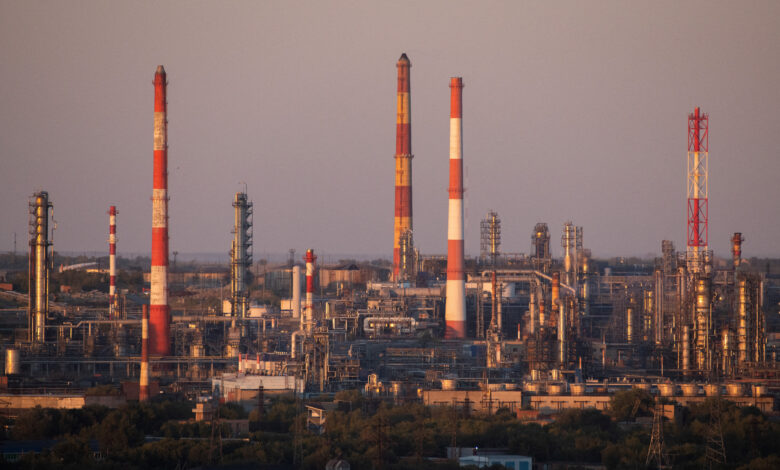
Russian oil refineries are accelerating diesel production this month, reversing recent output cuts as the Kremlin begins to fulfill a significant fuel supply agreement with the United States. The shift follows a diplomatic breakthrough that has seen Washington temporarily lift sanctions on Russian fuel to stabilize global energy markets.
According to industry sources familiar with the matter, the Russian government has started granting specific export quotas to refiners. These exemptions allow companies to bypass an ongoing domestic diesel export ban that has been in place since August. The move follows an announcement by U.S. President Donald Trump on October 9, stating that he and Russian President Vladimir Putin had reached a deal to facilitate the delivery of Russian diesel to American and international markets.
The logistical turnaround is already visible in Russian production data. In the first half of October, diesel output across Russia had fallen to approximately 160,000 tons per day, down from a September average of 175,000 tons. This decline was largely attributed to the August export ban, which forced oil companies to cap production to match domestic demand while only servicing limited intergovernmental contracts with Central Asian neighbors.
However, after new export quotas were issued in the middle of October, production began to climb toward 180,000 tons per day. This increase arrives at a time when domestic consumption typically softens. Internal Russian demand generally drops to about 140,000 tons per day in October as the summer driving season ends and agricultural grain harvesting is completed. Industry analysts note that this leaves a surplus of roughly 40,000 tons per day—exceeding 1 million tons per month—available for foreign markets. While roughly 0.2 million to 0.3 million tons of that monthly surplus are earmarked for neighboring countries, the remainder is now being funneled into the new supply chain established by the deal.
Under the terms disclosed by the U.S. administration, Russia is expected to deliver an initial 300,000 metric tons (approximately 2.25 million barrels) of diesel immediately. This is to be followed by another 500,000 tons in November and 1 million tons shortly thereafter. President Trump further indicated that Russia could supply an additional 3 million tons depending on the operational status and capacity of its refining infrastructure.
Tangible evidence of the agreement’s implementation emerged on October 23, when ship-tracking data identified a Malta-flagged tanker carrying 40,000 tons of Russian diesel destined for New York. Following the departure of the vessel, Kremlin spokesman Dmitry Peskov confirmed that shipments to the United States would continue on a regular basis.
Despite the specific quotas granted for this deal, the Russian government reportedly intends to keep its broader diesel export ban in place for the time being. Sources indicate that officials will continue to use the quota system as a regulatory tool to prevent domestic shortages, carefully monitoring production levels and internal market stability while fulfilling the international supply commitments made to Washington.