The city of Paris is effectively entering a state of high alert as French authorities prepare for another wave of massive nationwide protests scheduled for Saturday. In a significant effort to prevent a recurrence of the violent unrest that shocked the country last weekend, the government has shuttered major cultural institutions and authorized a vast security deployment.
Interior Minister Laurent Nuñez announced that as many as 70,000 police officers will be stationed across the country on Saturday. The mobilization includes the deployment of helicopters, armored vehicles, and water cannons, signaling a hardline approach to maintaining order after more than 500,000 people took to the streets during the previous week’s demonstrations on October 17.
The impact on the capital’s tourism and cultural sector is immediate and significant. Iconic landmarks including the Louvre, the Orsay Museum, and the Picasso Museum have confirmed they will remain closed throughout the day. The Grand Palais, which is currently hosting a high-profile Cézanne exhibition, has also suspended operations. Even the prestigious Art Basel contemporary art fair, which opened to the public on Friday, October 23, was forced to cancel its entire weekend program due to the threat of civil unrest.
The physical landscape of Paris has shifted as shopkeepers on the Champs-Elysees and near the Place de la République have spent much of the week installing wooden barricades. These precautionary measures follow a weekend of significant destruction in which approximately 3,000 shops across France were either damaged or looted. Bank branches and local businesses in areas previously identified as “hot spots” for clashes are now boarded up with heavy timber panels to deter potential looters.
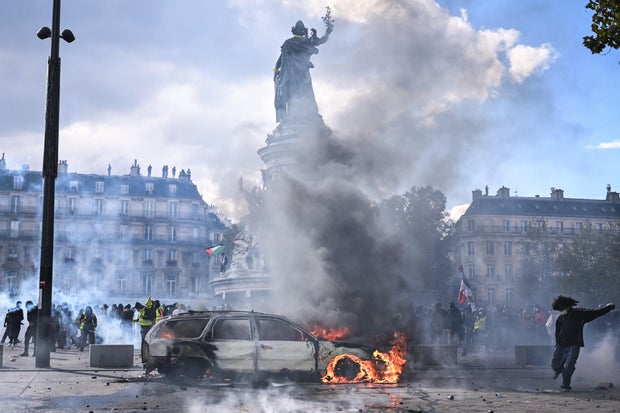
While the current movement has grown into a broad demand for relief from the rising cost of living, its origins were more localized. The demonstrations first ignited last month among high school students in the southeast of Paris who were protesting for improved educational conditions. However, the movement quickly transformed into a nationwide platform for economic grievances, drawing in diverse sectors of the population.
The geography of the unrest has extended far beyond the capital. In Limoges, a suspected arson attack nearly destroyed the city’s 19th-century city hall during previous clashes. While major marches are still scheduled for Paris and Marseille this Saturday, local authorities in other major hubs, including Lyon, Nice, and Montpellier, have taken the step of banning rallies entirely in hopes of avoiding further property damage and violence.
The weekend’s tensions are further complicated by a political confrontation. Marine Le Pen’s nationalist, anti-immigration party is holding a two-day congress ahead of the presidential election scheduled for next spring. In response, a coalition of approximately 50 organizations—comprising labor unions, left-wing political parties, and student groups—has called for a counter-protest against the far right to take place on the sidelines of the political event.
As the country waits for the planned marches to begin, the focus remains on whether the increased police presence and the pre-emptive closure of shops and museums can successfully manage the volatility that has come to define the movement over the past month.