Democratic candidates in traditionally deep-red states are testing the political dominance of the religious right by placing their Christian faith at the center of their campaigns. The strategy aims to build a potential template for Democrats seeking to compete in politically hostile territory, particularly in races where Senate control is at stake.
The push features figures such as James Talarico in Texas and Adam Hamilton in Kansas. Both candidates are drawing on their religious backgrounds—Talarico as a Presbyterian seminary student and Hamilton as a United Methodist pastor—to challenge conservative claims of speaking exclusively for religious communities. Their bids follow the 2021 election of Senator Raphael Warnock, senior pastor of Ebenezer Baptist Church, who proved that faith-based Democratic campaigns can succeed at the federal level.
Both Texas and Kansas voted for Donald Trump by double digits in 2024, and neither state has sent a Democrat to the Senate in the 21st century. The last time Kansas elected a Democratic senator was in 1932. Despite this history, current polling places both midterm contests in toss-up territory, raising the stakes for party control in Washington.
In Texas, political analysts suggest Talarico’s religiosity serves to soften his progressive positions and appeal to voters turned off by his opponent. Talarico has also made targeted visits to Black Baptist churches in an effort to build on minority community inroads established by Republicans, following a competitive primary against Representative Jasmine Crockett. He has utilized biblical language to criticize Christian nationalism and advocate for vulnerable populations, invoking the slogan “It’s time to start flipping tables.”
Polling data illustrates the scale of the challenge. A September Marist survey of 1,139 registered Texas voters showed Talarico trailing significantly among white evangelical Christians. In Kansas, political scientists note that Hamilton’s success will depend less on winning over religious Republicans and more on replicating the multi-coalition approach of Democratic Governor Laura Kelly.
Hamilton, who led the nation’s largest United Methodist church, has positioned himself as a bridge-builder. Observers suggest his background could attract less-engaged moderate Christians and center-right voters, while offering an open doorway to constituents in western Kansas who have historically viewed establishment Democrats with suspicion.
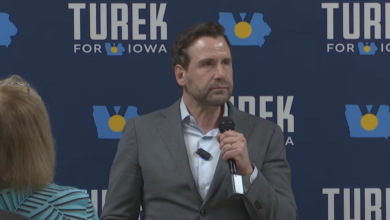
The broader movement extends beyond the Senate races. In Iowa, Lutheran minister Sarah Trone Garriott and Presbyterian pastor Lindsay James are running in tight House contests. According to Pastor Doug Pagitt, executive director of the progressive Christian group Vote Common Good, the surge is fueled by candidates’ personal convictions alongside years-long training efforts aimed at helping politicians connect with faith voters. Pagitt also pointed to Donald Trump as an accidental catalyst, arguing that his actions have motivated religious outreach efforts on the left.
Republicans, however, remain skeptical of the strategy’s viability. Ralph Reed, chair of the conservative Faith and Freedom Coalition, expressed doubt that Democratic appeals to religion will sway conservative voters of faith, arguing that the electorate will reject candidates who do not share their fundamental values. GOP critics have also labeled clergy running as Democrats as “Pastors in Name Only.”
While Reed expressed confidence in conservative voter turnout following recent political events, he acknowledged that economic pressures facing evangelicals and other voters of faith remain a factor. Analysts point out that the behavior of marginally attached Catholics and the broader turnout among conservative evangelicals will heavily influence the outcome of the midterms as the religious left tests whether voters will embrace its message.