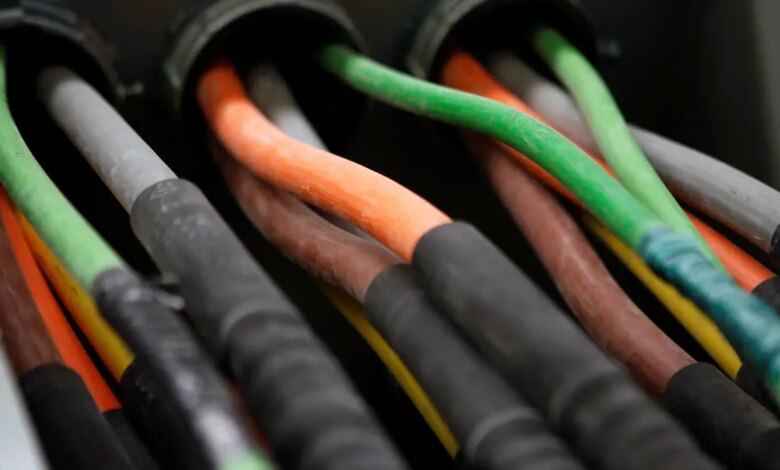
The explosive growth of artificial intelligence has created an unprecedented demand for computing power, relying on the ability to network hundreds of thousands of processors together. However, this massive interconnectivity has exposed a critical vulnerability within modern facilities. While graphical processing units can execute mathematical operations at extraordinary speeds, the entire operation remains constrained by the comparatively slow copper cabling required to transport output data between individual processors. This limitation becomes particularly acute during the training phase of increasingly massive AI models, which demand intense coordination across vast arrays of hardware.
To address these limitations, upcoming generations of data center racks increasingly employ optical cables to bridge communication between GPUs. Despite this advancement, conventional optical systems face an inherent inefficiency: light signals must be converted into electrical impulses for routing, reconverted back into light, and then translated once again upon reaching their final destination. In massive data centers, these conversions occur billions of times every second, driving up energy consumption, generating substantial heat, and adding physical bulk through the required optical switches.
PsiQuantum reports that its newly developed device bypasses this limitation entirely by routing photonic data without requiring any conversion into electrical signals. According to the company, the technology can establish speed-of-light connections between separate server racks in artificial intelligence data centers while producing virtually no heat and consuming negligible energy.
Currently, Google stands as the sole major hyperscaler deploying purely optical circuit switching within an operational AI data center, utilizing a system built on microscopic mirrors known as MEMS to direct light signals. Robert Soderbery, executive vice president of PsiQuantum, explained that the new hardware will allow distinct data center racks to function as a unified system. Data will be able to flow between GPUs housed in separate server racks with the exact same speed and latency characteristics previously restricted to interconnections within a single physical rack. This capability addresses a pressing industry hurdle, as traditional server racks rapidly approach maximum limits in compute density, physical dimensions, and energy efficiency.
Competition within the photonics networking sector has intensified dramatically since the emergence of generative artificial intelligence accelerated industry development. Earlier in the year, photonic computing enterprise Lightmatter participated in the launch of an industry initiative aimed at standardizing optical systems across data center infrastructure. Meanwhile, major industry players like Nvidia have committed billions of dollars in investments toward optics computing firms, including Lumentum and Coherent. While GPUs continue to dominate computational workloads, modern data center infrastructure is shifting decisively toward light-based networking.