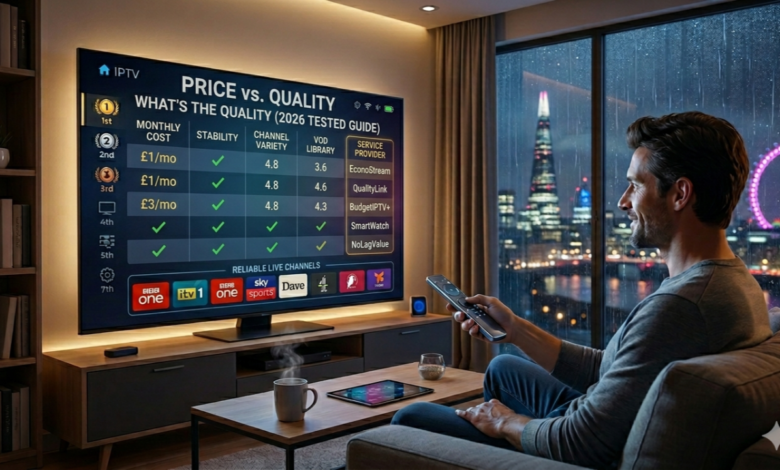
The traditional subscription economy was built on a foundational promise to investors: predictable, recurring revenue generated by signing customers up once, billing them monthly, and relying on consumer inertia. In the United Kingdom television market, that automatic billing model is facing a direct challenge from an unexpected direction.
As households increasingly scale back on monthly financial commitments, a growing number of internet television providers are winning over consumers by offering the exact opposite approach: prepaid, fixed-term plans devoid of any automatic renewal mechanisms. The UK internet protocol television market has emerged as an intriguing test case for whether modern consumers are willing to trade convenience for absolute control over their monthly spending.
For streaming platforms and digital services alike, subscription fatigue has evolved far beyond a casual industry buzzword. When consumers juggle numerous monthly commitments, each individual service becomes a prime candidate for cancellation every time a household reviews its budget. As a result, customer churn rises, acquisition costs climb, and companies find themselves forced into aggressive discounting strategies just to win back recently departed users.
Regulatory pressures are compounding these commercial challenges. The Digital Markets, Competition and Consumers Act 2024 introduces strict new rules governing subscription contracts, specifically designed to simplify the cancellation process and mandate clearer reminders before renewals take effect. Consequently, business models that depend heavily on customers simply forgetting to cancel their subscriptions are becoming increasingly difficult to sustain and defend.
In response to these market shifts, many internet television providers have adopted a business model that bears a closer resemblance to a mobile pay-as-you-go top-up than a traditional streaming subscription. Customers pay a single fixed amount for a predetermined period—typically spanning three, six, or twelve months—and the service simply terminates when that period expires unless the user actively chooses to purchase another block of time.
The trade-offs inherent in this model are distinct for both parties involved. For customers, the arrangement offers a completely known total cost, the absence of surprise renewals, and zero cumbersome cancellation processes to navigate. For providers, the model delivers essential cash up front that can be utilized to fund server capacity and bandwidth expenses, but it leaves them with no guaranteed recurring revenue at the end of the term. Long-term customer retention depends entirely on whether the service quality was high enough to warrant a voluntary repurchase.
This absence of an auto-renewal safety net makes service quality the primary retention strategy. Because prepaid plans require consumers to commit cash upfront, providers in this sector lean heavily on trial periods to lower the initial barrier to entry. An internet television free trial allows a prospective customer to thoroughly test stream stability, picture quality, and device compatibility on their own home internet connection before spending any money.
From a business growth perspective, the trial fulfills two critical functions. It successfully removes financial risk for the buyer while effectively filtering for customers whose broadband connections and hardware can actually support the technical demands of the service, thereby reducing subsequent refund requests and technical support costs.
One prominent example operating within this framework is Lux IPTV UK. According to its public service details, the provider offers a one-day free trial followed by three distinct prepaid plans. Customers can choose a three-month package priced at £24.99, a six-month package for £34.99, or a twelve-month package for £49.99, which breaks down to approximately £4.17 per month.
All of these options are structured as one-off payments carrying no ongoing contract or automatic renewal, and each package is backed by a seven-day money-back guarantee. Customer support is handled through messaging channels such as WhatsApp and email, while the underlying service maintains compatibility with widely used media player applications including IPTV Smarters Pro and TiviMate across a variety of hardware ranging from Smart TVs and Fire TV Sticks to mobile phones and computers.
The underlying pricing structure illuminates the core logic of the prepaid model. The steep discount attached to the annual plan directly rewards customers for making a longer-term commitment, providing the provider with greater upfront capital while simultaneously minimizing the frequency of renewal decisions required over the course of a year.
Beneath these low monthly equivalent prices lies a demanding cost infrastructure that scales directly with actual usage. Live video streaming is exceptionally bandwidth-intensive, particularly when delivered in 4K resolution, and viewer demand experiences sharp spikes during major live sporting and entertainment events. Providers must carefully engineer their server capacity and content delivery networks to handle these extreme usage peaks rather than planning merely for an average evening.
This infrastructure demand is precisely where the prepaid model faces its sternest test. A provider that underinvests in server capacity will inevitably suffer from buffering during the exact moments that matter most to viewers, and customers who possess the freedom to simply walk away without navigating a cancellation hurdle will choose not to renew. In a market completely devoid of contractual lock-in, uptime effectively functions as the primary product.
When consumers evaluate providers in this space, their selection criteria increasingly mirror those of a standard business-to-consumer software purchase. Buyers look for transparent pricing free of hidden recurring charges, accessible trial periods paired with clear refund policies, verifiable reliability during peak hours rather than quiet weekdays, responsive support channels, and broad compatibility with existing home hardware.
While internet television represents a relatively small sector within the broader entertainment landscape, it provides a valuable indicator for the wider subscription economy. When consumers are given a clear choice between automatic renewal and paying only when they actively decide to do so, a meaningful share consistently opts for financial control. Companies across various industries that rely heavily on recurring billing may find themselves forced to compete less on contractual lock-in and more on the tangible quality of what they deliver month after month.