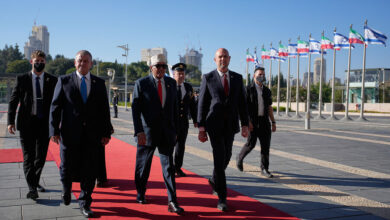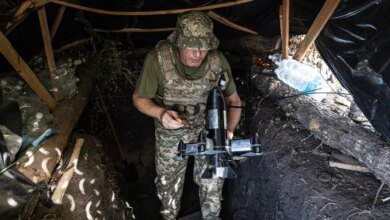
Decades after the closure of its largest overseas naval facility, the United States military is re-establishing its presence at Subic Bay in the Philippines. Unlike the sovereign base agreements of the 20th century, this new expansion is being facilitated through private capital and strategic corporate leases, marking a shift in how the Pentagon secures access to critical territory in the Pacific.
Subic Bay served as a vital logistical anchor for U.S. operations from the Vietnam War through the 1991 Persian Gulf War. However, local anti-base movements and a refusal by the Philippine Congress to renew the lease led to the withdrawal of U.S. forces in June 1991. For the following three decades, military cooperation was limited to arms transfers, joint exercises, and rotational deployments. That landscape shifted dramatically with the expansion of the Enhanced Defense Cooperation Agreement (EDCA), which grew from five to nine authorized military sites in 2023.
The centerpiece of this return is the privatization of the Subic Bay shipyard. The facility is currently controlled by Cerberus Capital Management, a private investment firm that secured a 50-year lease through a partnership with the Philippine company Agila. This arrangement allows for the resumption of military activities under a commercial veneer. By mid-2025, the U.S. Congress has approved plans to establish a forward operating base and an ammunition production facility at the site, which is projected to become a primary weapons hub for the region. The shipyard already hosts HD Hyundai Heavy Industries, defense contractor V2X, and a portion of the Philippine Navy.
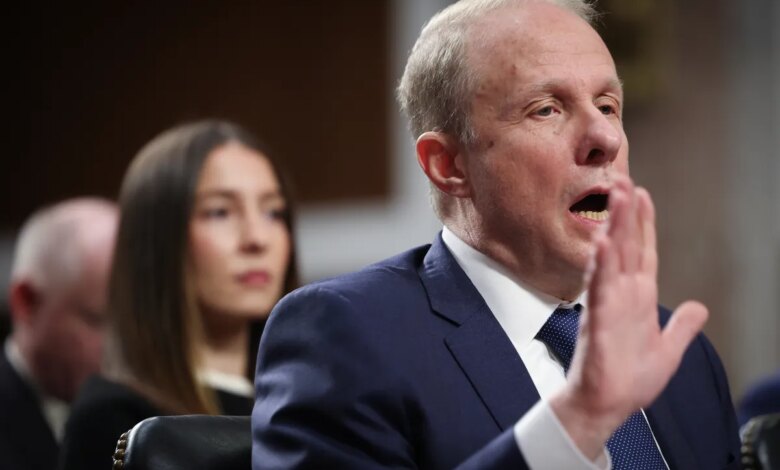
The leadership of Cerberus Capital Management maintains deep connections to the current U.S. defense establishment. The firm’s founder, Stephen Feinberg, serves as the deputy secretary of the Department of War, holding the second-highest position at the Pentagon under Secretary Pete Hegseth. In this capacity, Feinberg oversees the Office of Strategic Capital, an entity that provides loans to military technology companies. At least four other former Cerberus executives now hold influential roles within the Pentagon, including David Lorch, director of the Office of Strategic Capital, and senior advisers John Gallagher and Tom Rakusan.
This corporate-military integration extends beyond physical bases into a broader economic and technological alliance known as Pax Silica. Initiated by the State Department, Pax Silica is a 25-nation cartel focused on artificial intelligence and the security of supply chains for critical minerals. The initiative includes the Philippines, India, Japan, and Taiwan. According to State Department officials, the project aims to reduce dependence on China for the resources necessary to power advanced military computing and manufacturing.
However, the rapid military buildup has drawn criticism from human rights organizations who point to a history of repression in the Philippines. While the U.S. eventually distanced itself from the regime of Ferdinand Marcos in the 1980s, critics argue that current policy overlooks ongoing abuses under his son, President Ferdinand Marcos Jr. Since taking office in 2022, the younger Marcos has faced allegations of continued extrajudicial killings and the targeting of civil society activists, trade unionists, and journalists. Human Rights Watch notes that while the frequency of killings associated with the national “war on drugs” has slowed compared to the administration of Rodrigo Duterte, the underlying threat to political dissidents remains severe.
Historical context continues to weigh on the relationship. U.S. State Department records acknowledge that the turn-of-the-century war of conquest in the Philippines resulted in the deaths of over 20,000 combatants and as many as 200,000 civilians due to violence and disease. Specific atrocities, such as the 1901 campaign in Samar where Brig. Gen. Jacob W. Smith ordered the execution of those capable of bearing arms, remain a part of the local memory that fueled the original 1991 base closures.
As the U.S. prepares the Subic Bay facility for its 2025 operational goals, the strategic focus remains centered on China. Current policy emphasizes military posturing and economic trade wars as the primary tools for influence. Some observers suggest that a return to the “One China” policy and diplomatic engagement regarding the status of Taiwan would be a more effective path toward regional stability, noting that China’s military spending remains roughly one-third that of the United States. For now, the integration of private equity and military planning suggests the U.S. is committed to a long-term, commercially-underwritten presence in the Philippine archipelago.