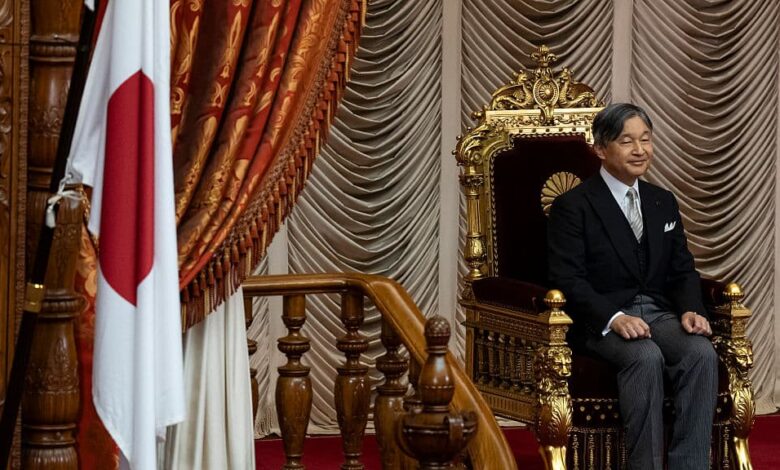
Japan’s recent legislative adjustments concerning imperial succession have immediately encountered legal pushback and sharp public debate, raising questions about the future structure and public perception of the nation’s monarchy. While the Imperial Household Agency has stated it will review how to implement the newly enacted measures, opposition is already mobilizing in the courts.
Manga artist Yoshinori Kobayashi has filed a lawsuit against the government, formally challenging the amendment as unconstitutional. Critics aligned with this legal effort argue that the policy violates the country’s domestic anti-discrimination laws, setting up a contentious judicial battle over the boundaries of imperial law and constitutional equality.
The core of the legislative change involves welcoming back former imperial family branches through a specific adoption mechanism. Under the amendments, members of the imperial family are permitted to adopt a male who is at least 15 years of age and who stands as a legitimate descendant of a male member of the imperial family prior to the post-World War II downsizing of the institution. The legal framework stipulates that any such adoptee must be unmarried and without children.
Beyond the courtroom battles, observers suggest the reforms could fundamentally alter how the Japanese public perceives the imperial family. Jeffrey J. Hall, a lecturer at Kanda University of International Studies, noted that the inclusion of adopted individuals from former branches could dilute the sense of holiness or closeness that traditional supporters feel toward the royal family, as citizens adjust to unfamiliar figures entering the royal lineage.