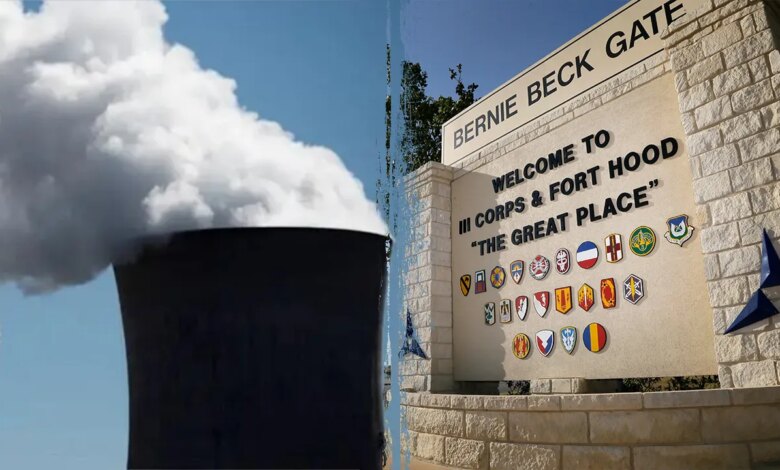
The Department of Defense is preparing major military installations across the continental United States to sustain essential operations independently for at least 90 days without outside support, anticipating the possibility of a major war that could cripple domestic power grids, fracture supply chains, and threaten critical infrastructure on American soil.
Known as FORTRESS, the new military initiative aims to ensure that American forces can continue fighting even if the civilian municipal systems they traditionally depend on are severely disrupted. Pentagon chief spokesperson Sean Parnell emphasized that relying on standard municipal infrastructure for national defense presents an intolerable risk.
Under the FORTRESS framework, every major military installation in the continental United States is expected to maintain uninterrupted access to critical resources, including electricity, water, fuel, and communications, for a minimum of three months. Officials noted that the strategy reflects a fundamental shift away from the traditional assumption that two oceans would protect the American homeland from major conflicts.
A central vulnerability identified by defense planners is the military’s heavy reliance on civilian power grids, which support everything from installation communications and logistics to weapons manufacturing. To counter this, FORTRESS envisions the deployment of portable nuclear reactors, large-scale battery storage installations, and localized microgrids. These systems are designed to disconnect military bases entirely from the civilian electrical grid, ensuring continued operations during prolonged power outages.

The initiative also addresses severe anticipated disruptions to global supply chains that provide the military with weapons, equipment, and critical raw materials. In response, FORTRESS mandates the expansion of strategic reserves for munitions, fuel, critical minerals, electronics, spare parts, and medical supplies. Reserve targets will be calculated based on consumption rates during a major conflict and the time required for manufacturers to replenish stocks.
To mitigate single points of failure, the initiative establishes a strict requirement for at least two qualified supply or production pathways for the military’s most critical dependencies. This redundancy is intended to ensure that the loss of a single factory, supplier, or industrial capability does not halt military operations.

Another pillar of the initiative involves preparing the nation’s civilian manufacturing sector for potential wartime mobilization. Through the Civil Reserve Manufacturing Network, an existing effort now incorporated into FORTRESS, the Pentagon plans to identify commercial factories capable of rapidly pivoting to defense production during a crisis. Officials are establishing pre-arranged technical specifications, cybersecurity protections, contracting frameworks, and conversion procedures ahead of time, complemented by recurring industrial stress tests and mobilization exercises.
Beyond energy and manufacturing resilience, FORTRESS includes measures to harden military communications, navigation, and satellite infrastructure against intentional interference, including preparations for operations during severe GPS jamming or disruptions to space-based assets. Defense officials describe the overarching strategy as a necessary homeland insurance policy to safeguard national defense capabilities before a multi-front global conflict arises.