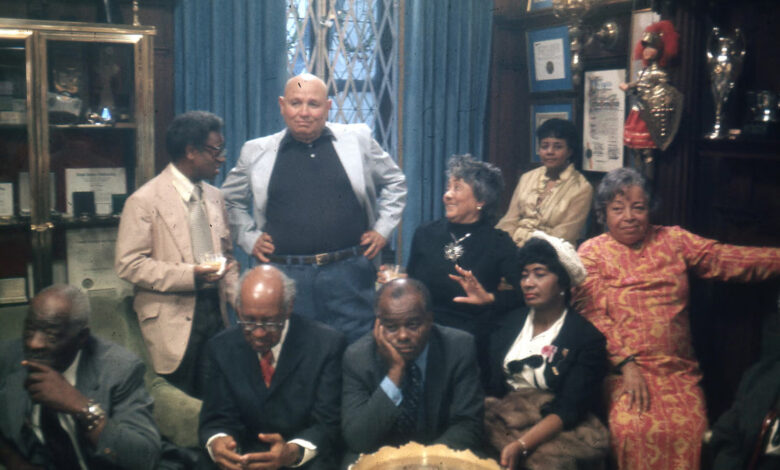
In an era where digital discourse is often defined by algorithmic silos and performative hostility, a newly restored documentary offers a poignant window into a vanished world of rigorous, face-to-face intellectual exchange. “Once Upon a Time in Harlem,” directed by David Greaves, serves as both a historical record and a modern critique, capturing a 1972 gathering of legendary figures from the Harlem Renaissance who met to grapple with their legacy and the persistent challenges of Black humanity and liberation.
The film is a restoration of an original project by the director’s father, William Greaves. It centers on a four-hour cocktail party hosted at Duke Ellington’s New York townhouse. The guest list reads like a roster of 20th-century cultural giants: pianist Eubie Blake, artist Romare Bearden, activist Louise Thompson Patterson, playwright Irvin C. Miller, journalist Gerri Major, and librarian Jean Blackwell Hutson. As drinks are poured and conversations overlap, the film captures these luminaries engaged in what writer George Schuyler famously calls “a mark of a civilized community”—the ability to challenge one another on everything from art to politics without losing sight of their shared goals.
One of the central tensions in the documentary is the definition of the Harlem Renaissance itself, also known as the New Negro Movement. The participants disagree sharply on its timeline, with some dating its peak to the 1920s, others arguing it found its true footing in the 1930s, and some tracing its genesis back to the 1910s, specifically the Silent Protest Parade of 1917. This disagreement is not portrayed as a failure of history, but as the active, living memory of a community that refused to be a monolith.
The debate extends into the controversial role of white patronage during the era. The conversation touches on figures like writer Carl Van Vechten, whose 1926 novel “Ni**er Heaven” sparked significant outrage, and Casper Holstein, a gangster who helped finance the work of Black artists. These reflections lead into deeper discussions about how external funding impacted cultural output. Schuyler himself reflects on his 1926 essay in The Nation, “The Negro-Art Hokum,” and Langston Hughes’ seminal follow-up, “The Negro Artist and the Racial Mountain,” both of which served as urgent critiques of the white relationship to Black artistic expression.
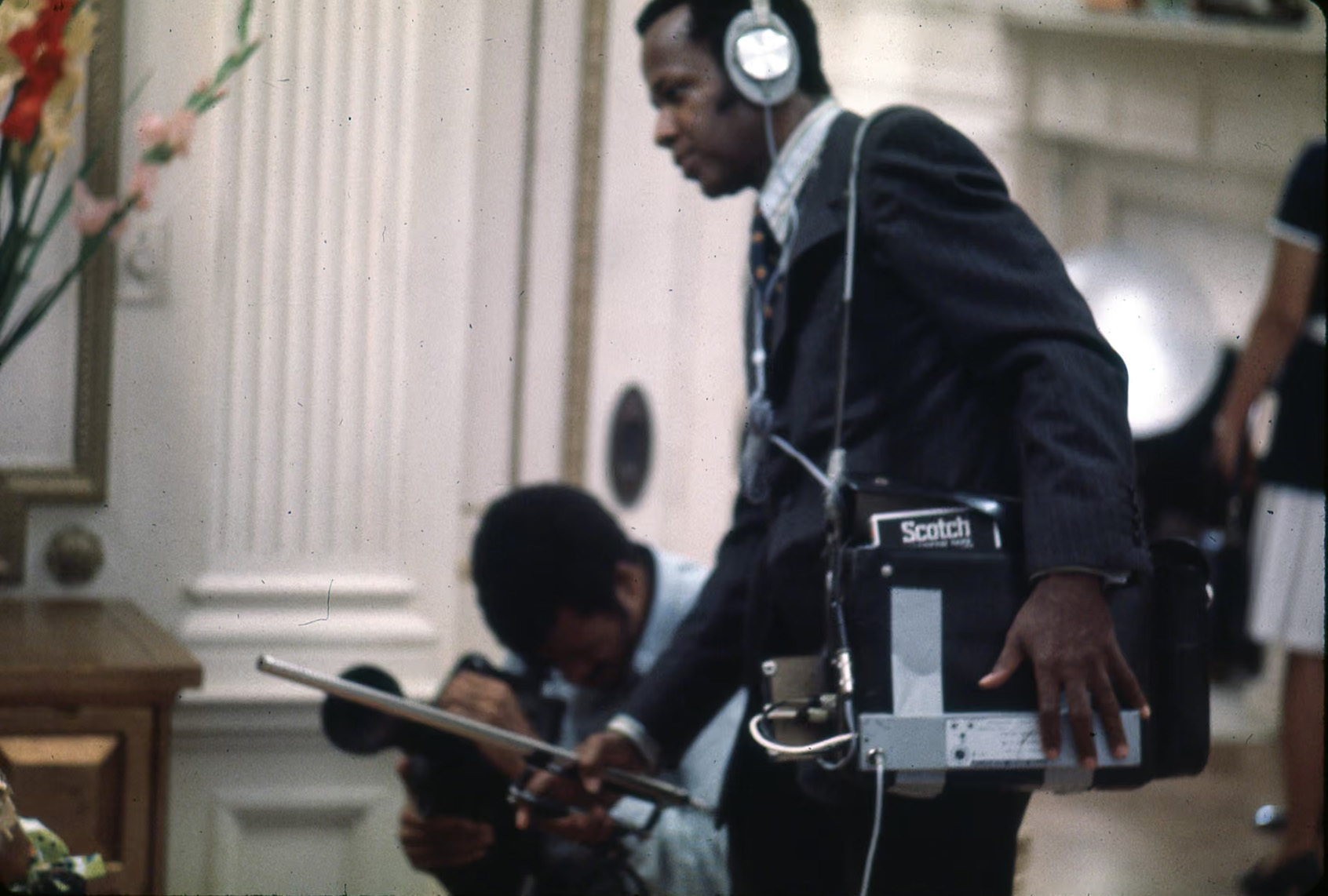
Today, this level of discourse feels increasingly rare. Brienne Adams, assistant professor of Black Studies at Georgetown University, notes that while social media has democratized the ability to speak, it has also funneled opinions through an “algorithmic funnel” that often strips away context. In the film, intellectuals gathered in intimate spaces with others they often knew personally from their neighborhoods or shared academic backgrounds, such as Howard University. Today, critical engagement frequently happens across vastly different classes, education levels, and levels of media literacy, often among people with no personal connection.
Furthermore, the motivation for modern critique has shifted. Adams points out that many contemporary content creators are incentivized by monetary gain, which can lead to “salaciousness” rather than intellectual curiosity. This environment fosters a “hierarchy of most,” where individuals feel the need to be the most right, the most devoted, or the most knowledgeable to gain attention. This often results in a collapse of the intellectual humility that undergirded the debates seen in Ellington’s townhouse.
The documentary also highlights a growing “preciousness” or tenderness around the critique of Black art in the modern day. Filmmaker Nina Lee suggests that because Hollywood gatekeepers are often reluctant to greenlight Black stories, there is a pressure to support and amplify all Black art regardless of its merit to ensure its survival. Adams warns that this delicacy can inadvertently center the “white gaze,” as it prioritizes respectability and presentability for white audiences over the rigorous internal standards that characterized the Harlem Renaissance.
As the voices in Ellington’s home grow louder and the debates more impassioned, “Once Upon a Time in Harlem” reminds viewers that healthy debate is an essential tool for progress. The film concludes with a sobering reflection from journalist Gerri Major, who warns that future generations risk losing ground if they cannot “profit from the struggles” and the intellectual roadmaps laid out by those who came before them. In a world of self-aggrandizement, the film serves as a reminder that true cultural advancement requires the courage to disagree.