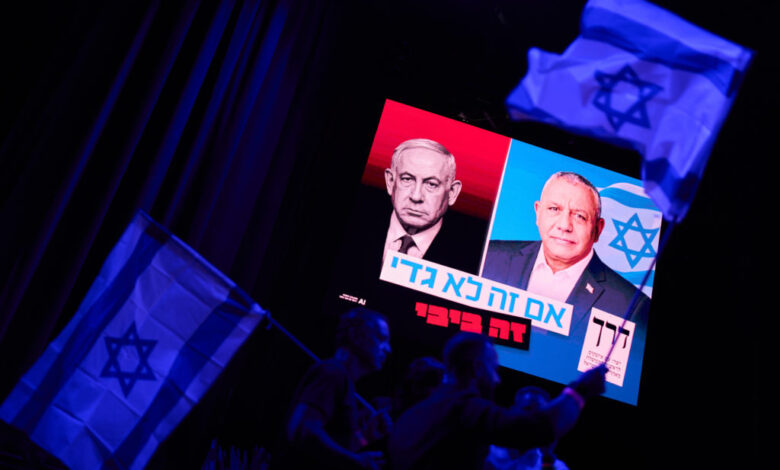
Israelis head to the polls in what many observers describe as the country’s most consequential election in years, marking the first national vote since the October 7, 2023, Hamas attack and the subsequent wars in Gaza, Lebanon, and with Iran. Prime Minister Benjamin Netanyahu has framed his campaign around his ability to guarantee national security, while his chief challengers argue that his leadership has faltered and damaged international alliances.
At the center of the opposition is Gadi Eisenkot, a former Israeli military chief and leader of a coalition seeking to unseat Netanyahu. Eisenkot’s party, Yashar—Hebrew for straightforward, reflecting a focus on direction and integrity—has positioned itself as an alternative to a prime minister facing ongoing corruption charges. Parliamentary candidates within Eisenkot’s camp, including former intelligence official Devora Sharifian Bachar and Lianne Pollak-David, argue that Netanyahu has lost the trust of both the global arena and the broader U.S. public while continuously blocking independent inquiries into the security failures of October 7, which saw the deaths of 1,200 Israelis.
Eisenkot briefly joined Netanyahu’s War Cabinet following the attacks before resigning, accusing the prime minister of prioritizing political survival over security. On the campaign trail, Eisenkot has pledged to launch an independent inquiry into the intelligence failures as his first official act. While he campaigns on a platform of change—promising to repair ties with a broader spectrum of American leaders, including Democrats, rather than relying exclusively on Donald Trump—his core foreign policy objectives share significant overlap with the incumbent administration. Eisenkot has vowed to finish campaigns against Hamas in Gaza, maintain troops in southern Lebanon to dismantle Hezbollah, and target Iran’s nuclear program, acknowledging that neutralizing Hezbollah will require substantial time.
Netanyahu, meanwhile, has campaigned aggressively on his security record, pointing to Palestinian violence in the West Bank—including a recent attack that killed two Israeli soldiers—as evidence that only he can protect the nation. In response to the attack, Israeli forces demolished the homes of the suspected attackers. Netanyahu has also trumpeted an endorsement from Donald Trump, arguing that Eisenkot would fail to maintain the U.S.-Israel alliance or execute joint military operations against Iran, and he recently shared campaign imagery referencing Iranian nuclear threats.
Foreign policy adviser Ophir Falk defended the administration’s record, stating that Netanyahu has fundamentally reshaped the Middle East and that the U.S.-Israel alliance remains exceptionally strong. Addressing domestic concerns over extremist settler violence in the West Bank, Falk noted that authorities have conducted over 360 investigations and 35 arrests in the past quarter. However, human rights advocates contend that more than 90 percent of such investigations close without an indictment, and critics point to instances where Israeli soldiers have coordinated with or defended settlers.
Polls indicate a tight race with neither side currently securing a clear path to a majority in the 120-seat Knesset, where a governing coalition requires at least 61 seats. Recent polling places Eisenkot’s coalition slightly ahead with 54 projected seats, while Netanyahu’s Likud Party and its allies hold 48 seats. Because both main blocs fall short of an outright majority, analysts warn of potential stalemates, fragile minority governments requiring support from Arab parties, or extended political deadlock that could leave Netanyahu in place as caretaker prime minister.