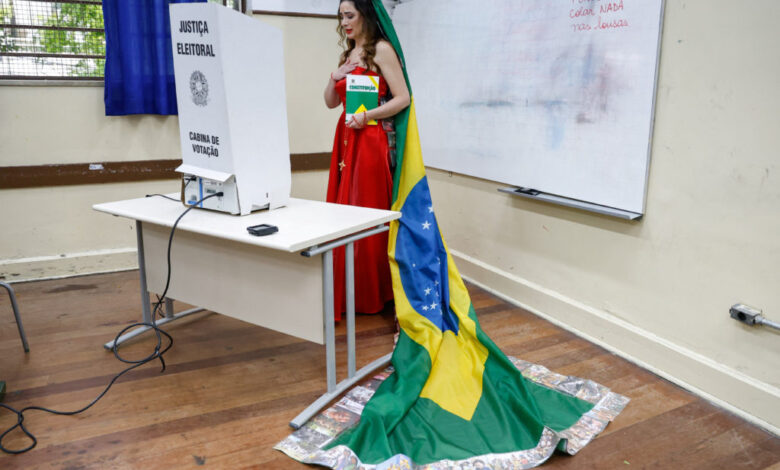
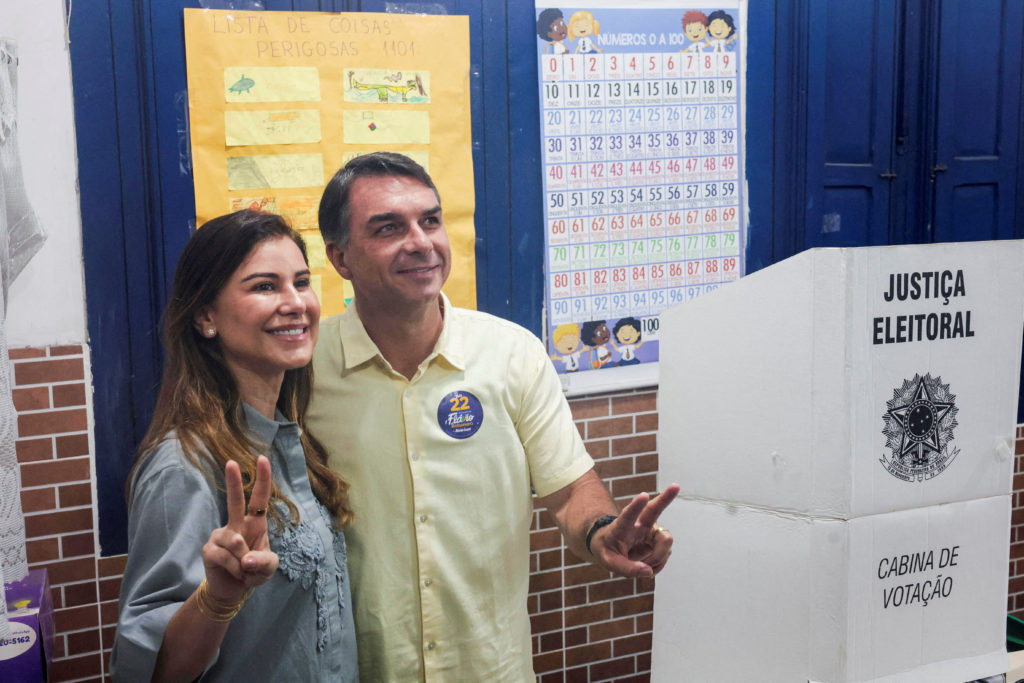
Brazilians returned to the polls on Sunday for a presidential runoff that serves as a defining moment for Latin America’s largest economy. The race pits incumbent President Luiz Inácio Lula da Silva, a veteran of the left, against Senator Flávio Bolsonaro, a staunch ally of U.S. President Donald Trump and the son of the country’s former leader. With polls showing a neck-and-neck contest, the outcome will determine whether Brazil maintains its current course or pivots sharply toward the right-wing populism championed by the Bolsonaro family.
Voting began early Sunday across the country, where nearly 160 million citizens are eligible to cast ballots in an election where participation is compulsory. The stakes are particularly high following a first-round vote earlier this month in which Flávio Bolsonaro outperformed expectations, besting Lula by more than 2.2 million votes. Despite that lead, a significant portion of the electorate—more than 33 million people—did not turn out for the initial round, leaving both campaigns scrambling to capture the undecided and the absent in the final weeks of the race.
The ideological divide between the two candidates is stark. Lula, who governed Brazil from 2003 to 2010 before returning to the presidency four years ago, has centered his campaign on social welfare and environmental protection. In contrast, Flávio Bolsonaro has positioned himself as a tough-on-crime reformer who intends to deepen ties with the Trump administration and capitalize on Brazil’s vast natural resources, particularly its rare mineral deposits, which are estimated at 21 million tons.
Economic concerns have dominated the closing days of the campaign. Lula has faced criticism over the rising cost of living and persistent security issues, factors that have historically eroded incumbent support. To regain momentum, his administration recently pushed through several popular measures, including a debt relief program for small businesses and the Senate’s approval of a plan to end the traditional six-day working week. Lula also promised free public transportation on weekends to encourage voter turnout among lower-income brackets.
Bolsonaro, meanwhile, has focused his platform on reducing food costs and slashing taxes. However, his campaign has been shadowed by a series of legal challenges and corruption allegations. He is currently under investigation for money laundering, tax evasion, and corruption following his admission that he accepted roughly $12 million from a former banker, Daniel Vorcaro, to fund a film about his father’s life. During the campaign, Bolsonaro has dismissed these investigations as politically motivated, instead framing himself as the only candidate capable of stopping Brazil’s current trajectory.
The shadow of the former president, Jair Bolsonaro, looms large over the contest. The elder Bolsonaro is currently under house arrest for his alleged role in a coup attempt, and Flávio has publicly pledged to seek an amnesty for his father if elected. This has allowed Lula to frame the election as a battle for the survival of Brazilian democracy, frequently highlighting the risks of returning to the style of governance that characterized the previous Bolsonaro administration.
The judiciary has also become a central campaign issue. The winner of the runoff will be tasked with appointing at least three Supreme Court justices to the 11-member bench due to upcoming mandatory retirements. Flávio Bolsonaro has been a vocal critic of the country’s highest court, which has dealt with its own internal corruption scandals, and he has promised to pursue comprehensive judicial reforms if he takes office in January.
International relations have provided another flashpoint. Lula has expressed concern over what he views as potential U.S. interference, pointing to high tariffs on Brazilian exports and the classification of certain domestic drug-trafficking groups as foreign terrorist organizations by the Trump administration. He argued these moves were designed to make his government look weak on crime. Flávio Bolsonaro, conversely, has leaned into his proximity to the White House, arguing that Brazil must leverage its mineral wealth to secure better trade deals with the United States.
At polling stations in Rio de Janeiro and Brasilia, the atmosphere was a mix of intense passion and deep-seated skepticism. Supporters of the incumbent turned out to defend his record on poverty reduction. Luzia da Souza, a bar owner in Rio, described Lula as a “man of the people” who understands the struggles of the poor. Others, like 43-year-old journalist Anderson Falcão, expressed fear that a Bolsonaro victory would lead to an “exclusionary” project that would damage the Amazon and worker rights.
Conversely, those wearing the yellow and green jerseys associated with the Bolsonaro movement spoke of a need for a clean break from the Workers’ Party. Fabianne Borges Santoro, a physiotherapist who once supported Lula’s party, said the desire for change is driven by frustration over high taxes and the cost of basic goods. For many younger voters, like 20-year-old student Davi Vidal de Negreiros Nobrega Leite Andrade, the preference for Bolsonaro is rooted in a belief that his economic plans offer more promise than the incumbent’s current policies.
With the electronic voting system in place, official results are expected within hours of the polls closing at 5 p.m. local time in Brasilia. The final tally will not only decide the next president but will signal whether the wave of right-wing victories seen recently in Chile, Peru, and Colombia will find its ultimate prize in Latin America’s most populous nation.