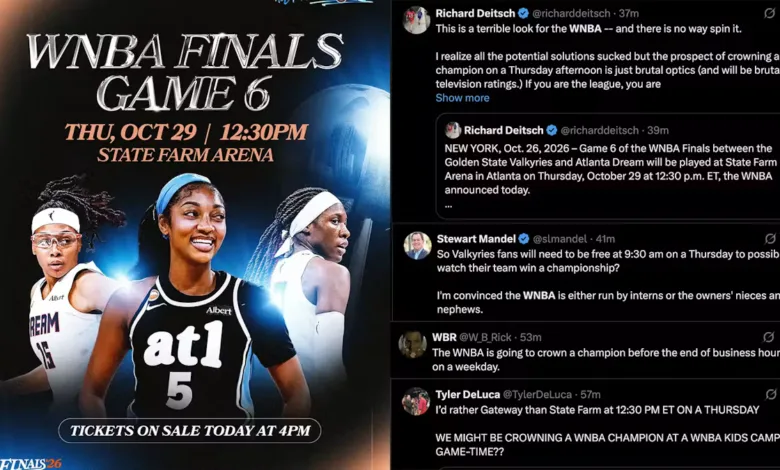
The WNBA has found itself at the center of intense criticism following a scheduling decision that could result in a league champion being crowned before the end of a weekday business day. Game 6 of the WNBA Finals between the Atlanta Dream and the Golden State Valkyries has been set for a 12:30 p.m. ET tip-off on Thursday at State Farm Arena in Atlanta, a move that immediately drew sharp reactions from fans, media members, and sports commentators alike.
The logistical scramble leading up to the game stemmed from a venue conflict at State Farm Arena, the regular home of the NBA’s Atlanta Hawks. The Dream, who normally play their home games at the 3,500-seat Gateway Center Arena, have hosted all five of their 2026 postseason matchups at the larger 17,000-seat arena shared with the Hawks. However, with the Hawks scheduled to host the Cleveland Cavaliers on the same evening, league and arena officials faced a tight window.
Alternative solutions floated during the logistical dance included moving the NBA regular season game to a different date or shifting it entirely to Cleveland, options that would have triggered a cascade of further scheduling complications. Ultimately, organizers settled on the Thursday afternoon time slot to keep both games in their respective cities, forcing a 9:30 a.m. local start for supporters following the visiting Golden State team.
The unusual timing quickly drew unfavorable reactions across social media and sports media circles. Critics pointed out that a midday weekday game effectively shuts out local fans working standard hours and strips the championship series of a valuable primetime television audience. Observers noted that the league and franchise sacrificed broad visibility and potential TV ratings in favor of ticket sales and venue convenience.
The scheduling controversy arrives as the series sits tied at two games apiece, placing the championship on the line under conditions that many analysts characterized as an avoidable logistical misstep. Commentators emphasized that the episode underscores persistent structural challenges within league operations as the WNBA navigates a period of transition in its leadership ranks.