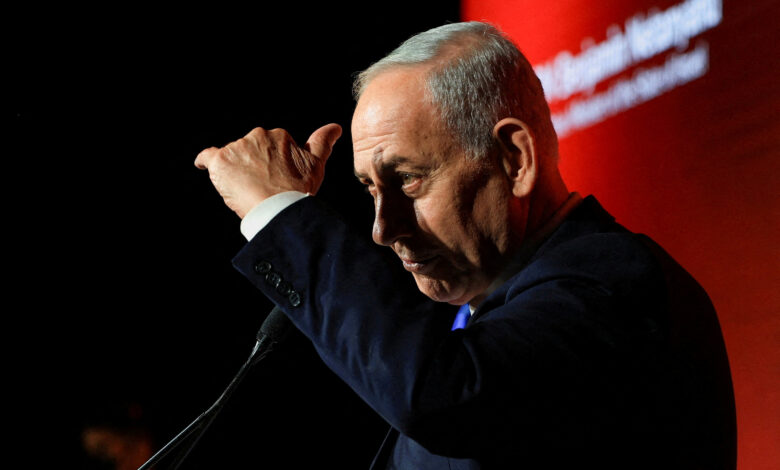
Prime Minister Benjamin Netanyahu has drawn sharp criticism from economists, political rivals, and central banking officials after suggesting that Israel could leverage cryptocurrency and blockchain technology to shield its economy from potential international sanctions.
The remarks came during an interview with Israel’s Channel 10, as Netanyahu faced a closely contested re-election bid. Netanyahu stated that he was preparing for a scenario involving broader economic restrictions against Israel, noting recent moves by Western nations. Last month, Britain, France, and Canada announced plans to block imports from Israeli settlements in the West Bank, marking an escalation of actions targeting Israel’s settlement policy and highlighting its growing diplomatic isolation among traditional allies.
“There could be sanctions, and sanctions on banks so you need to set up a bypass economy,” Netanyahu said during the interview. When asked if he was referring to cryptocurrency, he replied, “Very true, very true,” adding that blockchain technology offered another potential avenue.
The proposal prompted a rare public rebuke from the Bank of Israel. The central bank stated that cryptocurrencies cannot function as a viable route to bypass sanctions and urged political leaders to focus on policies that would prevent such measures from being enacted.
“The right course for Israel’s economy is to preserve our economic relations with our main trading partners, and to focus on preventing sanctions and their negative impact on the economy,” the Bank of Israel said in a statement.
On Sunday, a group of more than 100 economists—including former Bank of Israel officials, former central bank governor Jacob Frenkel, and several Nobel laureates—published an open letter expressing deep alarm over Netanyahu’s proposal. The signatories warned that adopting such a strategy would result in higher unemployment, a drop in foreign investment, and the erosion of Israel’s global economic standing.
Drawing comparisons to other isolated nations, the economists noted that living standards would plummet dramatically and damage the state’s ability to finance its security. The letter accused Netanyahu of knowingly leading the country toward economic isolation while offering what they described as a puzzling solution typically associated with criminal organizations.
Political opponents seized on the remarks ahead of the election. Gadi Eisenkot, Netanyahu’s main rival in the vote, denounced the proposal as “madness” and warned that what he termed the “BibiCoin policy” would drive businesses abroad and undermine national security. Opposition leader Yair Lapid added that the plan signaled extreme detachment, stating that the prime minister was effectively promising citizens conditions reminiscent of restricted economies in Russia and Iran.
Despite the backlash, Netanyahu defended his economic and security record on Sunday, urging voters to support his leadership and pointing to his working relationship with United States President Donald Trump regarding efforts against Iran’s ruling government. Opinion polls ahead of the election indicated a potential stalemate, with neither Netanyahu’s ruling coalition nor the opposition alliance securing a clear governing majority in parliament.