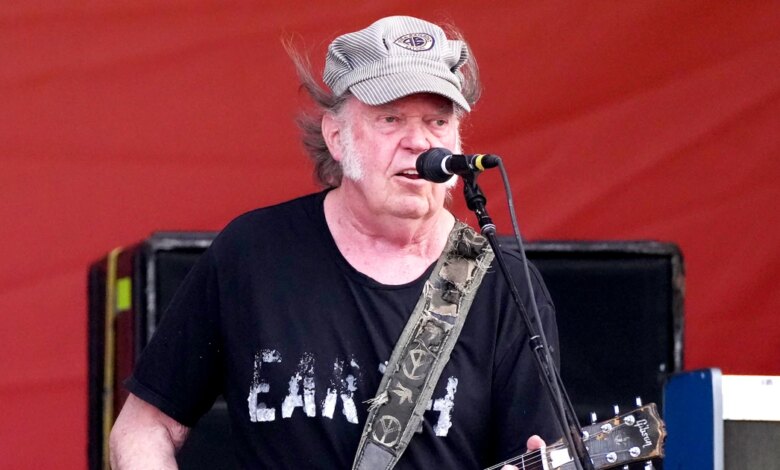
Rock icon Neil Young filed a $10 million lawsuit on Monday against the Trump 47 Committee, alleging that the former president’s campaign fundraising arm committed copyright infringement by repeatedly playing his music without permission. The legal action, filed in a Virginia federal court, focuses on the unauthorized use of Young’s 1989 hit “Rockin’ in the Free World,” specifically citing its use during a campaign rally in Ohio this past October.
According to the five-page filing, the lawsuit is driven by the perceived damage to Young’s professional reputation and personal brand. The artist’s legal team argues that the continued use of the song creates a false implication that Young supports Donald J. Trump. The filing asserts that the musician “has suffered damage to his reputation and brand as a result of the implication that he supports Donald J. Trump in any way.”
Central to the litigation is the stark contrast between the song’s lyrical content and the political platform it has been used to bolster. In the lawsuit, Young’s attorneys describe “Rockin’ in the Free World” as a “blistering anthem” intended to expose the divide between American political rhetoric and the struggles of the marginalized. The complaint notes that the lyrics provide “street-level portraits” of societal failure, including depictions of a mother discarding her baby, addicts in despair, and the accumulation of garbage alongside prosperity. The filing concludes that the song’s “savage irony” makes it “the opposite of everything that Donald J. Trump stands for.”
This is not the first time Young has sought legal recourse against the former president. In 2020, he filed a similar lawsuit against the Trump presidential campaign regarding the use of the same anthem and another track, “Devil’s Sidewalk.” That previous case was settled shortly after it was initiated, according to Young’s representatives.
Responding to inquiries regarding the new litigation, the White House referred questions to the Republican National Committee. However, spokespersons for the RNC and the Trump 47 Committee did not immediately provide a response to the allegations.
Young is the latest in a string of high-profile musicians who have publicly condemned the use of their intellectual property by the Trump campaign or the current administration. The lawsuit follows similar grievances from artists such as Kesha, who expressed disapproval after her music was featured in a military-themed social media post. Kesha stated at the time that she did not approve of her work being used to promote violence.
Other younger pop stars have been equally vocal about the unauthorized use of their work. Olivia Rodrigo previously criticized the campaign’s use of her audio in promotional videos, while Sabrina Carpenter described a White House video using her music—which appeared to highlight immigration enforcement actions—as “evil and disgusting.” Carpenter explicitly requested that her music not be used to support what she described as an “inhumane agenda.”
The current lawsuit underscores a growing tension between political entities and the creative community regarding the boundaries of music licensing at public events and in digital campaign materials. The case remains pending in federal court as the legal team for Young seeks the maximum statutory damages for the alleged infringement.