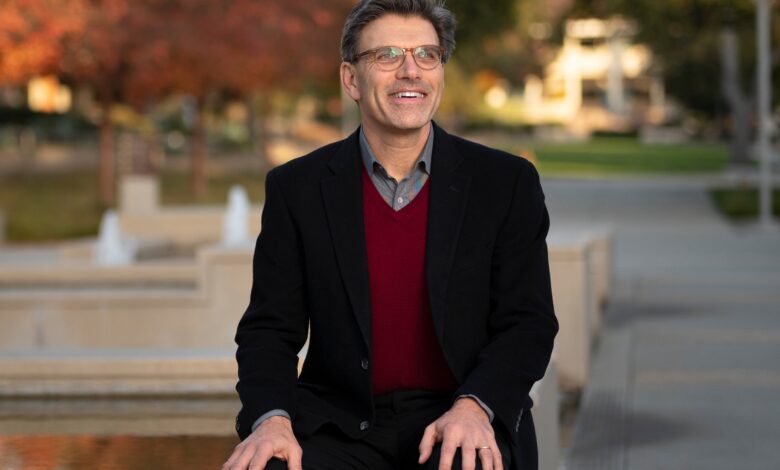
The National Constitution Center has appointed legal scholar Hiram E. Chodosh as its next president and chief executive, filling a leadership vacancy that opened following a management dispute earlier this year. Chodosh, who stepped down as president of Claremont McKenna College in June, is scheduled to assume his new duties in January. He becomes the institution’s first permanent head since Jeffrey Rosen abruptly departed in January after a disagreement with the board of trustees. Rosen retains the title of chief executive emeritus, while Vince Stango, who has served as interim president, will transition into roles as deputy chief executive and co-president.
Located near Independence Hall in Philadelphia, the private nonprofit organization was established by congressional mandate in 1988 with a dual mission: to promote a nonpartisan understanding of the foundational text and to serve as a venue for public debate. Chodosh arrives as the center concludes its observances marking the 250th anniversary of the Declaration of Independence and shifts its planning toward the Constitution’s upcoming sestercentennial in 2037. In addition to managing its museum operations, the center produces educational curricula, organizes lectures, and hosts events, such as its recent presentation of the Liberty Medal to Pope Leo XIV.
Mike George, president of the center’s board, praised the incoming executive as a visionary leader. “He sees possibilities where others see limitations,” George said in a statement, highlighting Chodosh’s capacity to inspire individuals, forge robust partnerships, and marshal necessary resources to translate ambitious concepts into institutional achievements and national influence.
During his 13-year tenure at Claremont McKenna, Chodosh earned commendation from free expression advocates for launching initiatives like the Open Academy, a program designed to foster civil discourse and viewpoint diversity. He also oversaw a nearly $1.1 billion fundraising campaign, recognized as one of the largest ever completed by a liberal arts college.
Addressing the current political climate, Chodosh described national polarization as an “enormous threat” in an interview, though he suggested the division might be less deeply rooted than commonly perceived. “Data shows that the majority of Americans do not favor the hyper-partisanship that enters the public sphere,” Chodosh said. “We have an opportunity to draw on that powerful middle that is often missed or unseen or undervalued.”
The institution maintains a broad educational footprint, reporting that its materials reached 6.1 million students over the past year. In Philadelphia, it operates a museum featuring significant historical artifacts, including a rare original printing of the Constitution and an exhibition examining Pennsylvania’s historical role in American democracy. That exhibit highlights the state’s 1776 constitution, a radically democratic document that established a single legislative chamber without an executive or senate and extended voting rights to any taxpaying free man over 21 without property requirements.
That expansive franchise alarmed several founding figures, including John Adams, who warned that such governance structures would produce chaos. The state framework was ultimately replaced in 1790 following a political backlash that helped shape the federal Constitution’s system of checks, balances, and structural limitations on direct popular rule, such as the Electoral College.
Chodosh assumes leadership amid intense public debate surrounding the future of American democratic institutions. When asked about public calls for the center to adopt a more risk-taking approach in response to contemporary political events and controversies, Chodosh emphasized strict adherence to the organization’s nonpartisan educational mandate. “I may have my personal views on the political threats, or what the courts should do, but that’s not the point of my role,” he said. “My role is to build the underlying foundation of learning and ethical commitment and mutual support for us to work through those very difficult challenges.”