The Metropolitan Transportation Authority is bracing for an immediate $295 million budget deficit next year that is projected to swell into a $900 million shortfall by 2030, even as the transit agency continues to implement scheduled fare and toll increases.
While the agency expects to balance its $21.9 billion operating budget this year, financial documents from a recently released state comptroller report indicate that expenses are growing at a pace faster than revenues. The report projects that deficits will climb steadily in the coming years, reaching $507 million in 2028, $707 million in 2029, and $897 million by the end of the decade.
Projected revenues are expected to grow by an average of 2.1% annually from 2027 through 2030. In contrast, spending is projected to outpace income with a 3.2% annual growth rate during the same period, despite planned fare and toll increases slated for March 2027 and March 2029. Neal Zuckerman, chair of the MTA finance committee, acknowledged the financial trajectory during a committee meeting, stating that the figures do not represent a viable business model.
The widening fiscal gap persists despite the introduction of a congestion toll for Midtown Manhattan drivers and ongoing efforts to capture lost revenue from fare evasion. Agency officials report that healthcare obligations, escalating debt service payments, excessive overtime, and widespread bus fare evasion are severely straining daily operations. These pressures continue to mount even though stronger local tax collections, additional taxpayer allocations from Albany, and Federal Emergency Management Agency reimbursements for pandemic-era expenses have helped stabilize the current fiscal year.
Overtime spending remains a persistent financial drain. Through August, the MTA spent $821 million on overtime, exceeding its internal forecast for the period by $141 million. The office of New York State Comptroller Thomas P. DiNapoli warned that full-year overtime expenditures are on track to surpass the authority’s $993 million budget allocation for overtime by $225 million.
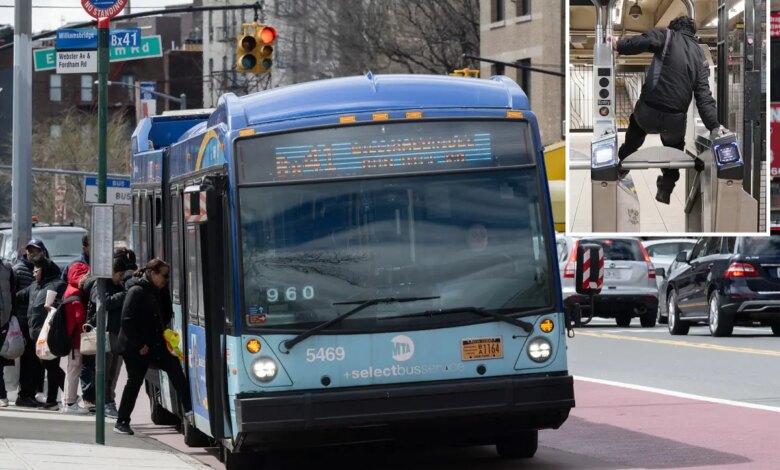
Bus fare evasion has also worsened, reaching an estimated 49% in the second quarter, up from 45% during the same period the previous year. According to estimates from the Citizens Budget Commission, bus fare evasion cost the agency an estimated $568 million in 2024. While the comptroller’s office estimated that reducing bus evasion by 10% could generate up to $150 million annually, the MTA recently benched its 350-member fare evasion enforcement team following physical altercations with passengers and has not yet announced when the unit will resume operations. The agency’s broader fare structure adjustments included a 10-cent base fare increase in January, moving single rides from $2.90 to $3.00.
Long-term borrowing presents an additional challenge for the transit network. The authority regularly issues debt to finance capital construction, infrastructure repairs, and the procurement of new trains and buses. According to the comptroller’s review, total long-term debt is projected to nearly double, jumping from $45.3 billion in 2025 to $88.9 billion by 2033.
Despite these mounting pressures, short-term infusions of cash have provided temporary relief for day-to-day operations. The authority anticipates receiving $109 million more this year from the payroll mobility tax than initially projected in February. Furthermore, state lawmakers in Albany approved an additional $542 million in tax allocations for operational expenses beyond what the agency had originally counted on.
Federal reimbursements have also provided a temporary cushion, with total payouts for pandemic response costs reaching $747 million—exceeding budgeted expectations by $147 million, though officials noted this represents a non-recurring revenue stream. Meanwhile, congestion pricing generated approximately $550 million in revenue through September, though those funds are dedicated entirely to capital infrastructure improvements rather than the authority’s day-to-day operating budget.