With exactly one week remaining before Election Day, the race for control of Congress has entered its most aggressive phase. The final stretch is being defined by a series of high-stakes rallies in battleground states, sharp personal attacks between political heavyweights, and a flurry of legal activity from the Department of Justice regarding state-level election administration.
President Trump spent Monday campaigning in Mississippi, a state he carried by nearly 23 percentage points two years ago, following a weekend of intense activity in the Midwest. The campaign trail saw a direct clash of visions in Michigan, where both Trump and former President Barack Obama held competing rallies to support their respective party candidates in a pivotal Senate race.
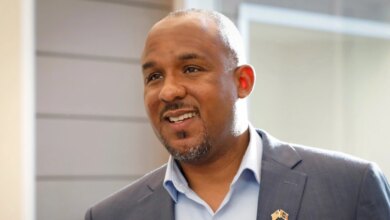
In the Michigan contest, which pits Republican former Congressman Mike Rogers against Democrat Abdul El-Sayed, the rhetoric has reached a boiling point. During his weekend appearances, President Trump targeted El-Sayed, who is seeking to become the nation’s first Muslim senator, with unsubstantiated claims. The president alleged El-Sayed had affiliations with the Muslim Brotherhood, describing him as a threat to national security. El-Sayed dismissed the attacks, framing them as a distraction from economic concerns and stating that voters would soon be referring to him as “senator.”
Mike Rogers, the Republican candidate, also addressed the controversy during a national television interview. While Rogers stated he had never called his opponent a terrorist, he doubled down on his criticisms of El-Sayed’s alliances, describing him as a candidate aligned with the Democratic Socialists of America and supported by “radical” groups.
Former President Barack Obama joined the fray in Michigan and Ohio, offering a sharp critique of the current administration’s economic record. Obama argued that rising costs are a direct result of the Trump administration’s foreign policy, specifically pointing to the war with Iran. He also took a more personal tone, mocking the president’s focus on D.C. renovation projects and gold-heavy decor, likening the aesthetic to a “Cheesecake Factory.”
While the national figures trade barbs, voters on the ground have identified the economy, healthcare, and education as their primary motivations. In Georgia, President Trump acknowledged public concerns about high energy prices but defended his administration’s economic stance, stating the country is getting “stronger and stronger.”
Meanwhile, the Department of Justice is actively intervening in several state-level election disputes. Attorney General Todd Blanche defended a preemptive lawsuit filed against Alaska election officials. The DOJ is seeking to block the certification of the election if the Democratic candidate wins, citing potential voter confusion between an incumbent Republican and a challenger with a similar name. President Trump confirmed he directed the move.
In California, the DOJ is involved in a separate legal battle to set aside more than 20,000 ballots that federal officials claim were sent to noncitizens. However, the Ninth Circuit Court of Appeals expressed skepticism during a rare Sunday argument session, questioning whether the federal government has the authority or the proper timing to make such a demand. This comes as the DOJ announced new charges against 48 noncitizens for alleged illegal voting or registration. Since the start of Trump’s second term, approximately 200 people have been charged for such offenses, a small fraction compared to the more than 230 million registered voters in the country.
Adding to the tension, President Trump announced a new incentive program on social media, offering a $1 million payout to anyone who provides information leading to a conviction for voter fraud. This follows his announcement of a $25 million whistleblower protection fund. Legal experts have yet to weigh in on the funding or legality of these payouts.
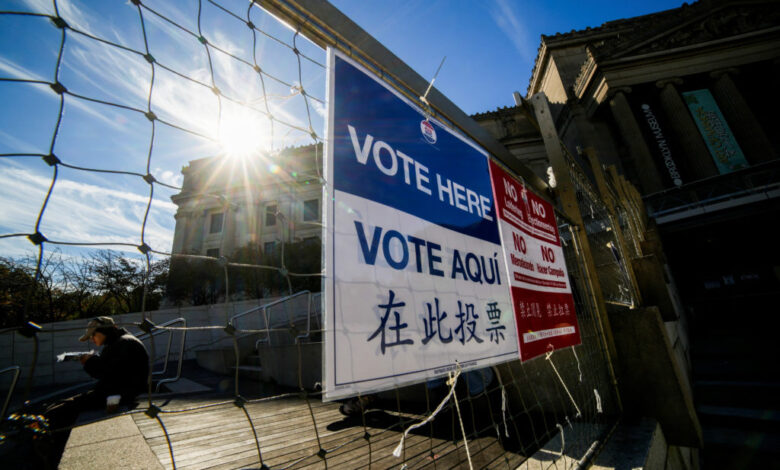
As of Monday, nearly 30 million Americans have already cast their ballots through early voting, including the president himself, who voted in Florida. Despite participating in the process, the president has continued to voice criticism of early voting procedures while Vice President J.D. Vance remains on the trail in states like Montana, urging supporters to capitalize on the momentum of the last 18 months.