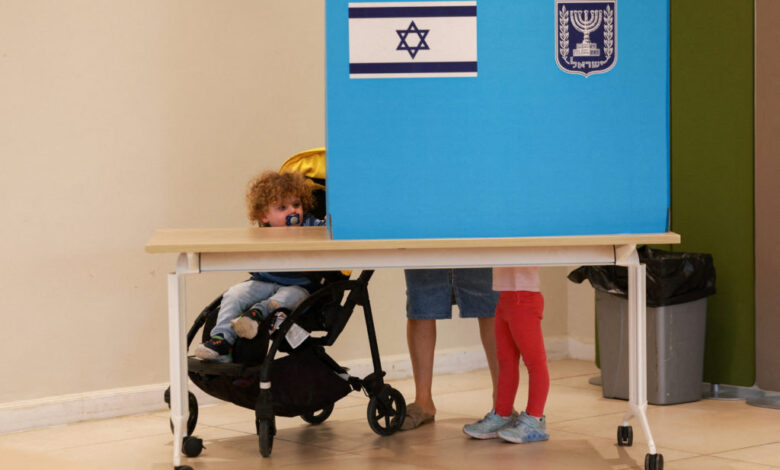
Polling stations across Israel are set to close on Tuesday evening, marking the conclusion of the first national election held since the October 7 attacks. While the ballots will be cast within hours, the identity of the next prime minister—whether the incumbent Benjamin Netanyahu or one of his rivals—may not be known for weeks or even months. The complexity of the Israeli parliamentary system, combined with a deeply divided electorate, raises the distinct possibility of further political gridlock and perhaps even yet another round of voting.
The uncertainty stems from the fact that Israelis vote for political parties rather than individual candidates for the premiership. In the 120-seat Knesset, a party or a bloc of parties must secure a 61-seat majority to form a government. Historically, no single party has ever won an outright majority, making the post-election period a high-stakes scramble to build a coalition. Current polling suggests a razor-thin margin between the bloc supporting Netanyahu and the coalition led by his primary challenger, retired General Gadi Eisenkot. If neither side can reach the 61-seat threshold, the country could find itself in a familiar state of paralysis.
The first indicators of the night will arrive shortly after 10 p.m. local time (2000 GMT), when Israel’s three major television broadcasters release exit polls. While these estimates often provide an initial sense of the political landscape, they are frequently subject to revision as official tallies are processed. Final results are expected in the coming days, but the true work begins only after the numbers are certified.
Once the final vote counts are in, the focus shifts to President Isaac Herzog. In his largely ceremonial but currently pivotal role, Herzog will consult with the leaders of all parties that crossed the electoral threshold. He is tasked with identifying the candidate most likely to successfully assemble a majority and granting them the official mandate to form a government. This candidate is given a maximum of six weeks to finalize a coalition. If they fail, the president can turn to another lawmaker to attempt the task.
This process grants disproportionate influence to smaller parties, which often act as kingmakers. Both Netanyahu and Eisenkot will be forced to negotiate with these smaller factions, offering influential Cabinet positions, large budget allocations, or specific policy concessions to secure their support. One wildcard in this cycle involves the Arab-led parties. While both major contenders have publicly ruled out formal partnerships with these factions, the Arab-led parties could theoretically allow Eisenkot to lead a minority government by supporting him from outside the coalition or by abstaining from crucial votes.
The stakes of these negotiations are exacerbated by Israel’s recent history of political instability. The national election held in November 2022 was the fifth in a span of just three and a half years. If the current round of horse-trading fails to produce a stable majority, a new election would be triggered within months. In such a scenario, Netanyahu’s current government would remain in power as a caretaker administration. While this ensures that public services continue to function, a caretaker government lacks the legal authority to enact major policy shifts or initiate significant new legislation, potentially leaving the country’s leadership in a state of prolonged suspended animation.