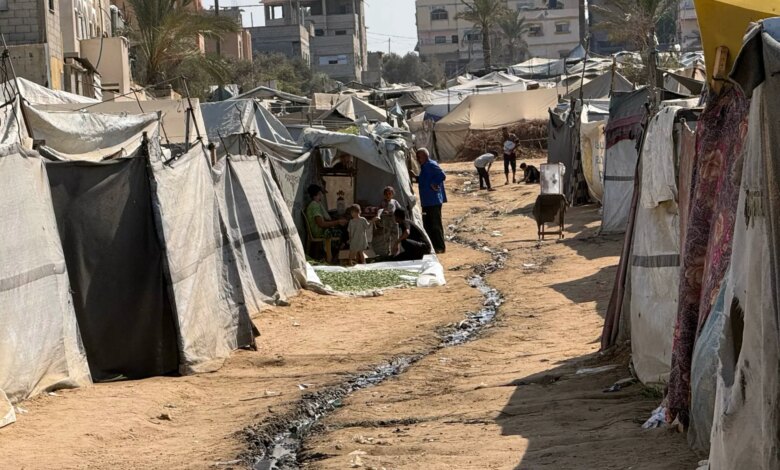
In the crowded tents and skeletal remains of neighborhoods across the Gaza Strip, the upcoming Israeli election on Tuesday is being watched not as a foreign political exercise, but as a referendum on the survival of a population. After three years of a devastating conflict that has reshaped the geography of the enclave, Palestinians here are navigating a complex mixture of fear, exhaustion, and a sliver of hope that a change in leadership might offer a reprieve from the daily threat of violence.
While a technical ceasefire has been in place since October 2025, the reality on the ground in Gaza remains one of punctuated violence and extreme deprivation. Daily Israeli air strikes continue to hit the territory, and a punishing siege has left the population struggling with chronic shortages of food, medicine, and basic goods. For the millions displaced across the strip, the ballots cast in Israeli cities will likely determine whether they can ever return to the ruins of their homes or if the current military control of the territory will become a permanent fixture.
Among those watching the campaign closely is 36-year-old Mohammed Eliyan. Originally from the Jabalia refugee camp in northern Gaza, Eliyan now lives in Deir el-Balah with his five children. Like many, he has pinned a cautious hope on Gadi Eisenkot, the former military commander who has emerged as the primary challenger to Prime Minister Benjamin Netanyahu. For Eliyan, the choice is less about ideological alignment and more about the desperate need for a leader less committed to the hardline policies of the current administration.
Netanyahu, who has faced intense internal criticism for security failures preceding the October 7, 2023, attacks, has led a government where some far-right ministers have openly called for the expulsion of Gaza’s population. Eliyan fears that a victory for the Likud party and its allies would signal a mandate for further displacement. However, even he remains cynical about the prospect of a fundamental shift in relations. While he hopes for a leader who might be “less harsh,” he noted that the underlying dynamic remains one of enmity, and he does not expect life to improve dramatically regardless of the victor.

This skepticism is echoed by Islam Salem, a 41-year-old father of three displaced from Beit Lahiya. Salem views the election through the lens of a landscape that has been 80 percent damaged or destroyed. He pointed to the fact that Israel currently maintains control over approximately 65 percent of Gaza’s territory within the so-called “Yellow Line,” a military perimeter that has effectively truncated the enclave. For Salem, the election is a tool for Israeli political gain rather than a path toward Palestinian rights.
Salem’s outlook is colored by the near-total destruction of Gaza’s infrastructure. With two-thirds of buildings completely leveled, he remains doubtful that any new government would prioritize the massive reconstruction effort required to make the territory habitable again. To him, the future is no longer something to fear because the worst-case scenarios have already manifested in his daily life. When asked what he would say to the next prime minister, his plea was simple: to be left alone and given the space to breathe, though he admitted he expects no such empathy from the victors.

For Hanan Abu al-Maaza, 57, the election is a source of acute anxiety. Having been displaced more than 12 times throughout the war, she views each political shift in Israel as a potential precursor to a new wave of suffering. Her primary goal is a return to her home in Beit Lahiya, a prospect she believes is more likely if Netanyahu is defeated. She urged the next leader to recognize that Gaza has been stripped of almost everything, suggesting that there is simply nothing left to destroy.
In Gaza City, 23-year-old Manar Owaida also keeps a close watch on the political rhetoric coming from the campaign trail. She fears that Netanyahu might attempt to spark a wider regional conflict to deflect domestic pressure ahead of the vote. While she holds a historical view that Israeli policy toward Palestinians has remained consistent since 1948—characterized by blockade and military action—she still looks for signs that a new administration might withdraw from areas beyond the Yellow Line and allow life to gradually resume.

Mousa Ali, a father of four also currently in Gaza City, identified the “Yellow Line” as the most critical issue for the displaced. He expressed hope that a stronger performance by Arab parties in the Israeli Knesset could provide a check on the most extreme policies of the right-wing. For Ali and many others, the immediate priority is an end to the “ongoing bloodshed” and a political path that allows for the return of the displaced to the northern regions.
As Tuesday approaches, the sentiment across Gaza remains a fragile balance. While the identities of the politicians may change, the people of Gaza remain trapped in a reality where their lives are dictated by a political process in which they have no vote, waiting to see if the next government will offer a path toward reconstruction or another chapter of displacement.