Justice Department Moves to Block Alaska Senate Certification Over ‘Two Sullivans’ Ballot Dispute

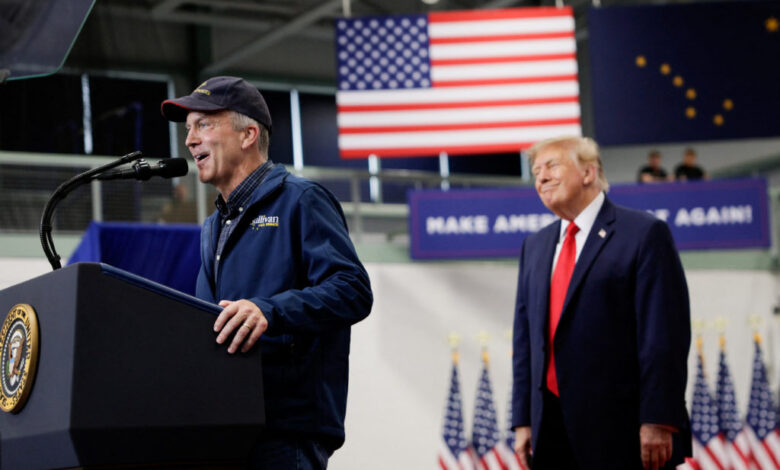
The Trump administration has launched a federal legal challenge to block the certification of Alaska’s U.S. Senate election results, an unprecedented move that centers on the presence of two candidates named Dan Sullivan on the ballot. The lawsuit, filed at the direction of President Donald Trump, marks the first time his administration has sought to preemptively halt an election outcome at the federal level based on claims of voter confusion.
At the heart of the dispute is the Republican incumbent, Senator Dan S. Sullivan, and an independent challenger, Daniel J. Sullivan Jr., a retired schoolteacher from the fishing village of Petersburg. Republicans have spent months arguing that the second Sullivan is a “Democratic plant” intended to siphon votes away from the incumbent in a race that could decide the balance of power in the U.S. Senate. While the teacher maintains he is running of his own volition, the Republican party has failed in multiple attempts to have him removed from the ballot, including a loss in the Alaska Supreme Court.
Confirming his personal involvement in the escalation, President Trump stated Friday that he directed the Justice Department to take action. “I’m the one who said do it,” Trump remarked regarding the federal filing. The administration is now asking a federal court to prevent Alaska officials from certifying the election if the incumbent senator loses, arguing that any results including Daniel J. Sullivan Jr. are inherently “tainted.”
On the ballot, voters see the incumbent listed as “Dan S. Sullivan,” identified as a “registered Republican.” The challenger is listed as “Daniel J. Sullivan Jr.” with no party affiliation. Former Representative Mary Peltola is the Democratic candidate in the three-way contest. Republicans fear that in a race likely to be decided by a few thousand votes, the similarity in names could lead to accidental votes for the non-incumbent Sullivan, thereby handing the seat to the Democrats.
The Justice Department’s lawsuit relies on a specific clause within the National Voter Registration Act (NVRA), which states that states must “protect the integrity” of elections. Government lawyers argue this preamble gives federal courts the authority to intervene in what are traditionally state-run affairs. The suit requests that the court block certification until an investigation can determine if enough voters were misled to alter the outcome. However, the filing provides no mechanism for how such an investigation would proceed without violating the constitutional principle of ballot confidentiality.
Legal experts remain skeptical of the suit’s chances, noting that the NVRA’s general phrasing is unlikely to supersede state control over election certification. Many observers view the lawsuit as a “placeholder” intended to create a legal pathway for challenge only if the Republican incumbent fails to secure a victory on Election Day.
The intervention also highlights a significant shift within the Department of Justice. While career attorneys reportedly blocked similar efforts to interfere with election results following the 2020 presidential race, the current department is increasingly led by Trump loyalists. The filing was signed by Stanley Woodward, a top Justice Department official who previously served as a defense attorney for defendants involved in the January 6, 2021, Capitol riot.
This move comes immediately after Attorney General Todd Blanche addressed concerns in Virginia regarding potential DOJ interference in elections. While Blanche claimed it was not the department’s intention to “improperly interfere” with state certification, he did not rule out intervening in “doomsday” scenarios. The filing in Alaska followed his remarks by only a few hours.
Similar tactics have been reported in other high-stakes contests, including Ohio, where Republicans have been linked to efforts to promote a socialist candidate to draw support away from the Democratic challenger to Senator Jon Husted. However, the Alaska case represents the first instance of the federal government using its executive power to challenge the certification process over a candidate’s name on a state ballot.