Brazilian presidential candidates Luiz Inacio Lula da Silva and Flavio Bolsonaro drew thousands of supporters to rival events across the country on Saturday in a final display of strength ahead of a closely contested run-off election. The high-stakes vote will decide whether the nation maintains its current left-wing leadership or shifts toward the right amid deep political and economic divisions.
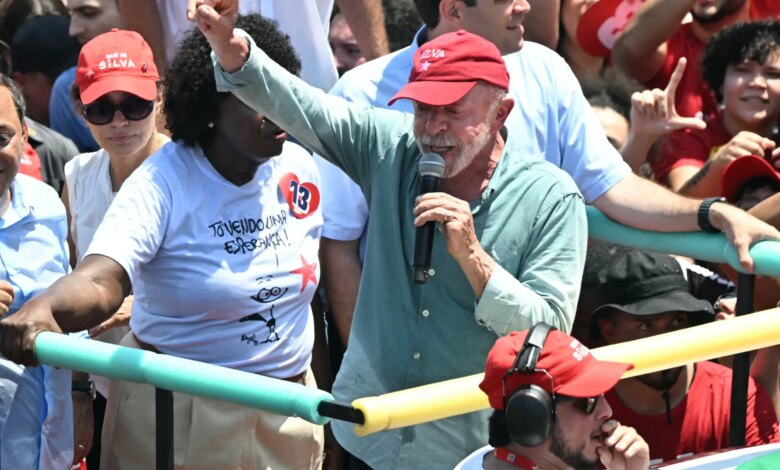
Donning a red hat and waving a Brazilian flag from a campaign truck, 80-year-old incumbent Lula addressed hundreds of supporters gathered at Rio de Janeiro’s Copacabana Beach on the final day of campaigning. During his address, Lula drew a sharp contrast with his opponent by telling the crowd that voters must choose between someone who embraces the national flag and someone tied to foreign leadership, referencing his rival’s alignment with US President Donald Trump.
Lula is seeking a fourth, non-consecutive presidential term in Sunday’s run-off. Across the country in the southeastern state of Minas Gerais and the Barra da Tijuca neighborhood of Rio de Janeiro, supporters of the right-wing challenger turned out in large numbers. Hundreds of Bolsonaro supporters, including motorcyclists wearing Brazil’s yellow national football shirts, rallied to back his bid.
Flavio Bolsonaro, a senator and son of former far-right President Jair Bolsonaro, finished the first round of voting with 47 percent of the ballots, narrowly leading Lula, who secured 45 percent. Recent public opinion data underscores the razor-thin margin separating the two candidates on the eve of the election. A CNT/MDA survey released on Saturday showed Bolsonaro holding 46.3 percent voter support compared with 45 percent for Lula, shifting only slightly from the previous week’s poll which had Bolsonaro at 46.8 percent and Lula at 45.9 percent. The survey carried a margin of error of 2.2 percentage points.

The bitter campaign has brought underlying tensions over economic policy, public safety, and national governance to the forefront. Bolsonaro has campaigned on promises to expand prison capacity by adding hundreds of thousands of new spots and implementing government spending cuts. His father, former President Jair Bolsonaro who governed from 2019 to 2022, is currently serving a 27-year prison sentence following a conviction for attempting a coup after losing the 2022 election to Lula.
Supporters on both sides expressed distinct visions for the nation’s future. Ebert Dorigo, a Bolsonaro supporter attending the Minas Gerais gathering, criticized the incumbent Workers’ Party for fostering reliance on state assistance. He argued that the country requires a change in direction centered on traditional values of nation and family, asserting that individual advancement stems from hard work rather than welfare programs.

Prior to their weekend rallies, both candidates participated in a final televised debate on Friday. While they traded barbs over economic struggles and their respective political records, observers noted that the debate featured a notably calmer tone than much of the preceding campaign.
For many ordinary citizens, however, the final choice at the ballot box remains a source of profound frustration. Gabriela Ribeiro Viana, an event organizer, described the dilemma facing the electorate as a difficult compromise, noting that voters find themselves weighing severely flawed options in an intensely polarized political landscape.