The future of a high-profile federal lawsuit challenging the government’s artificial intelligence-driven surveillance of immigrants’ online activity faces sudden uncertainty following the death of U.S. District Judge Alvin K. Hellerstein. Judge Hellerstein died in his 90s, just weeks after issuing an October 1 ruling that allowed the litigation to proceed.
Brought by three major labor unions—the United Auto Workers, the Communications Workers of America, and the American Federation of Teachers—the lawsuit targets surveillance practices by the State Department and the Department of Homeland Security. The plaintiff organizations argue that monitoring the online posts of millions of visa and green card holders constitutes viewpoint discrimination in violation of the First Amendment and alleges that the agencies bypassed federal rule-making requirements under the Administrative Procedure Act.
According to the district executive for the Southern District of New York, Judge Hellerstein’s cases will be randomly reassigned to a new judge. Legal experts note that the transition could lead to delays or force plaintiffs to argue before a jurist less receptive to their claims. Because Judge Hellerstein did not issue an injunction halting the monitoring before his death, the administration’s surveillance programs will continue while the case navigates the reassignment process.
In earlier court filings, the federal government sought to dismiss the lawsuit, arguing that the unions lacked standing and that the online monitoring was targeted rather than a monolithic surveillance apparatus. Assistant U.S. Attorney Jennifer Jude wrote in a motion that the plaintiffs stitched together unrelated instances to build their complaint. A State Department spokesperson declined to comment on ongoing litigation, while a DHS spokesperson noted that Immigration and Customs Enforcement employs technology while respecting civil liberties and privacy interests.
The lawsuit details how federal agencies allegedly utilize automated tools to process vast amounts of data. Citing government contracts, the complaint points to software such as Fivecast ONYX for tracking sentiment and emotion, and Penlink’s Tangles for facial recognition and social media watchlisting. Plaintiffs argue that manual monitoring of the estimated 55 million visa holders in the United States would be impossible without AI systems.
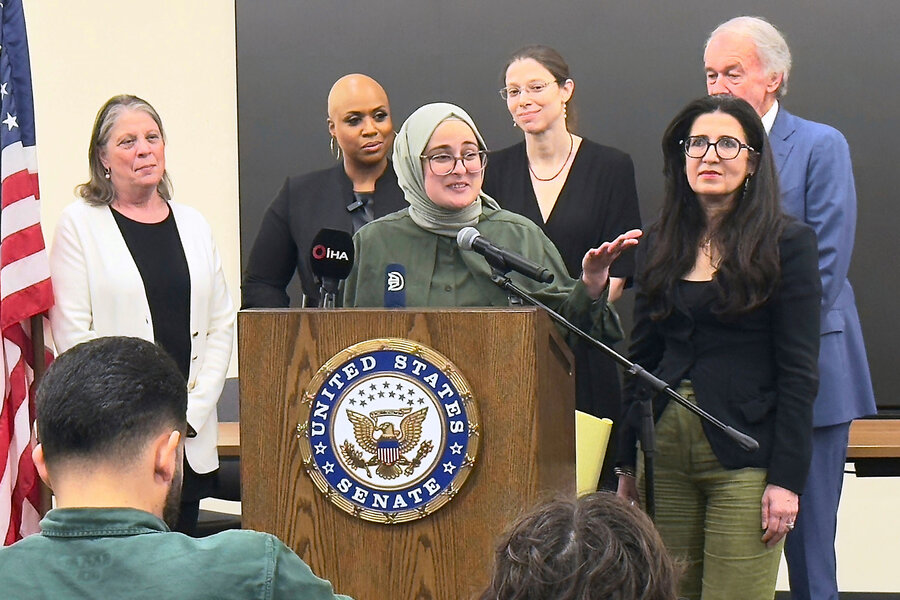
The legal challenge highlights several specific cases involving student visa holders and permanent residents. The complaint states that Homeland Security Investigations analysts compiled social media posts expressing support for Palestinians to facilitate the March 2025 arrest of green-card holder Mahmoud Khalil. It also points to the March 2025 detention of Tufts University student Rümeysa Öztürk, whose online op-ed was reportedly used to justify revoking her F-1 visa, and the April 2025 arrest of Columbia University student Mohsen Mahdawi following his naturalization interview.
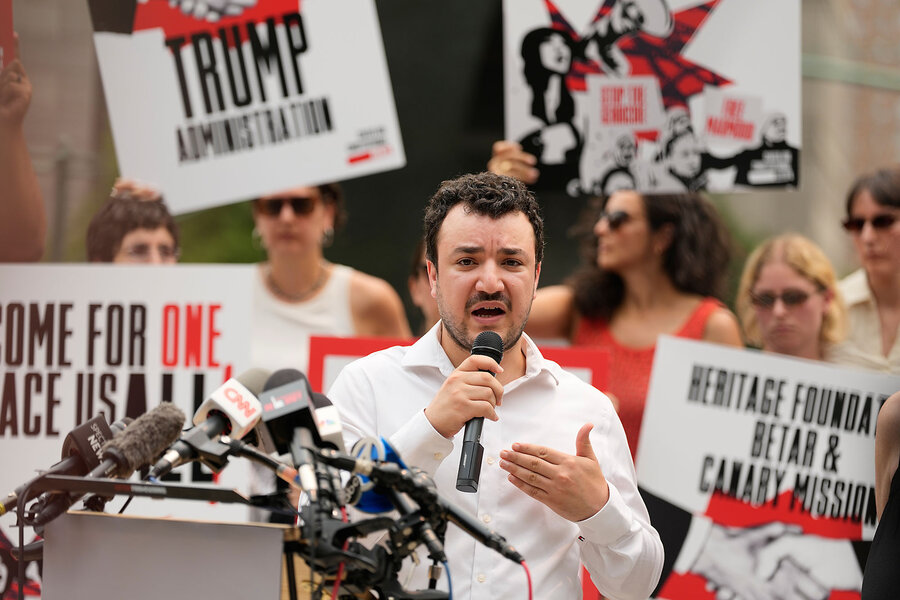
Attorneys representing the unions report that the surveillance has created a chilling effect, causing noncitizens to disengage from union activities, delete online posts, and disable social media accounts out of fear that their associations could jeopardize their legal status. Legal scholars observe that the lawsuit is unusual because it challenges systemic surveillance policies directly rather than contesting individual deportation orders.
A case management conference to establish rules for discovery is currently scheduled for November 12. As the case awaits a new judge, core questions regarding the extent of First Amendment protections for noncitizens and appropriate judicial remedies for speech repression remain central to the proceedings.