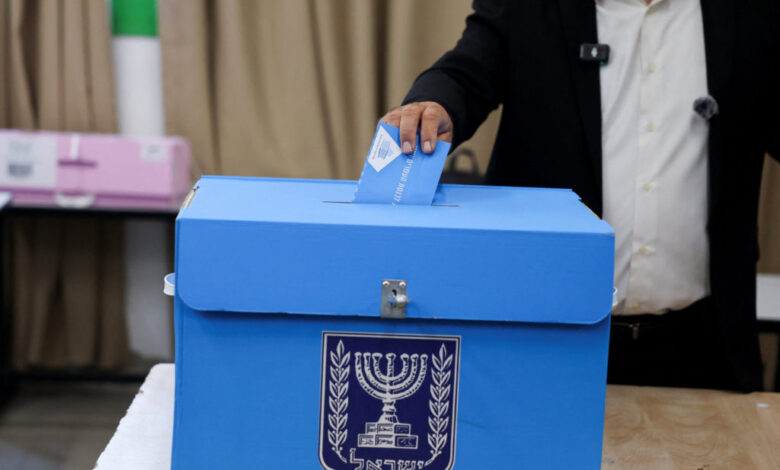
Israeli voters turned out in record numbers for the country’s first national election since the October 7 terrorist attacks, but early projections suggest a fractured political landscape with no clear winner. Despite the high stakes and heavy turnout, neither Prime Minister Benjamin Netanyahu nor the opposition led by Gadi Eisenkot appears to have secured the 61-seat majority required to form a government in the 120-seat Knesset.
The preliminary projections indicate a significant shift in the parliamentary balance. The opposition coalition, led by Eisenkot, is estimated to have won 53 seats, outperforming the Netanyahu-led coalition, which is projected to hold 50 seats. While the opposition technically holds more seats, they remain well short of a majority. The remaining 17 seats—a record high—are expected to be held by Arab parties. While these parties are staunchly anti-Netanyahu, internal friction within the opposition makes a formal partnership with them unlikely, according to political observers on the ground.
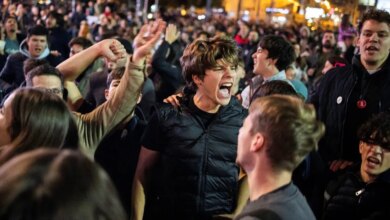
The deadlock has left the country in a state of deep uncertainty. In Tel Aviv, Eisenkot’s supporters have claimed a mandate for change, pointing to the losses sustained by Netanyahu’s Likud party and its allies. However, from Jerusalem, Netanyahu’s camp has maintained that they remain the largest single party and that the opposition lacks a viable path to forming a stable government without the Arab parties, a prospect the opposition has historically avoided.
The election was widely framed as existential for the future of the country. Jonathan Barsade, president of the nonpartisan America-Israel Democracy Coalition, described the moment as a historical crossroads that would determine the character of the state for the next several decades. This sentiment was echoed by a massive influx of Israeli expats who returned to the country specifically to cast their ballots, as Israel does not allow mail-in voting. Estimates suggest some 70,000 citizens traveled back from abroad, including voters like Ruthie Mekel, who flew from New York to vote against the current government, citing fears of a shift toward religious orthodoxy and a threat to democratic institutions.
Conversely, supporters of Netanyahu emphasized the need for military strength and continuity. Maor Vaknin, an adviser to the Likud party, argued that Netanyahu’s strategic experience and his relationship with U.S. President Donald Trump were essential to handling regional threats from Iran, Hamas, and Hezbollah. Vaknin suggested that a continued Netanyahu leadership would focus on “cutting off the head of the snake” in Iran and Lebanon over the coming years.
Other voters expressed a desire for a complete departure from the current cycle of conflict. Avshalom Seri, a 75-year-old resident of Rishon LeZion, stated that his vote was motivated by the hope for new leadership that would prioritize peace for future generations. Meanwhile, some former Netanyahu supporters shifted their allegiances to even further right-wing allies, such as Minister of Finance Bezalel Smotrich, indicating a hardening of positions among parts of the electorate.
The immediate future now depends on intensive political negotiations, often referred to as “horse-trading,” which could last for weeks or months. Several scenarios are currently being discussed. The first is a minority government led by Eisenkot, though this would require at least passive support from Arab parties—a move many in his own coalition have already rejected. A second possibility is a national unity government featuring both Netanyahu and Eisenkot, though opposition leaders have repeatedly refused to serve under the current Prime Minister.
If no coalition can be formed, Netanyahu will likely remain in power as a caretaker prime minister. This scenario could lead to a cycle of repeat elections, mirroring the political instability Israel faced five years ago. Officials have expressed concern that an extended period of political ambiguity could hamper the country’s ability to make critical decisions regarding regional security and the ongoing conflict with Iran-backed proxies.