Serbian Protesters Target Media Outlets Following Election Defeat of Strongman Aleksandar Vucic

The collapse of Aleksandar Vucic’s long-standing dominance over Serbian politics has triggered an immediate and chaotic reckoning within the country’s media landscape. Following a tumultuous general election on Sunday that saw the defeat of the Serbian strongman, the institutions that once served as his primary instruments of power are now oscillating between sudden contrition and defiant resistance.
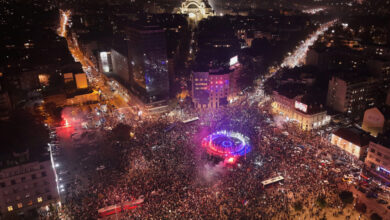
In a moment that stunned viewers, Goran Eror, an anchor for the state broadcaster Radio Television Vojvodina, delivered an on-air apology for years of biased reporting. He acknowledged that the network had provided “one-sided information” and had failed to ask critical questions of the Vucic administration. The broadcaster also aired delayed footage of jubilant crowds celebrating the election results, a stark departure from years of silence regarding opposition activities. Eror stated that for many years the public broadcaster had “turned a blind eye” and owed its viewers an apology for failing its journalistic role.
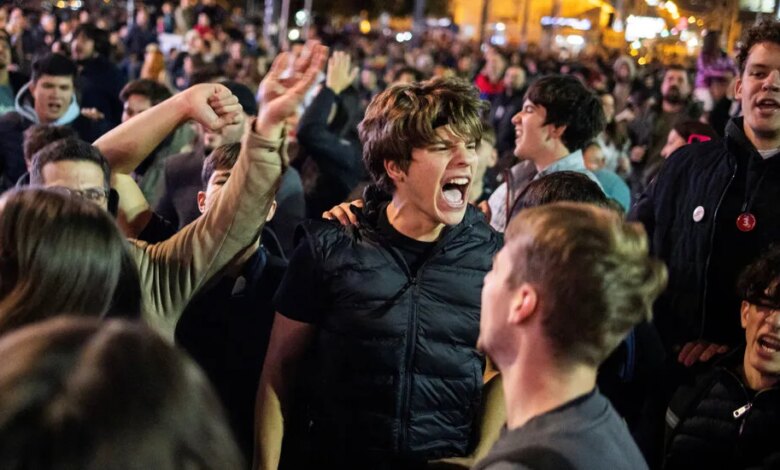
While some state media figures appear to be seeking a path into the new era, others are digging in. Protesters on Monday evening targeted the Belgrade offices of Informer, a tabloid and television station notorious for its aggressive smearing of Vucic’s critics. A group of young men barged into the building, confronting the owner and editor-in-chief, Dragan Vucicevic, and demanding an apology for his years of pro-government propaganda. The raid resulted in limited damage, including overturned monitors and a broken window, but no injuries were reported.
Vucicevic, who has frequently labeled opposition figures as traitors and terrorists, refused to apologize and instead called the police for protection. He later attempted to contact Ilija Srdanovic, the cardiologist who led the victorious “Student List-Students Win” slate, pleading for the attack to be called off. Srdanovic reportedly told the editor he could not hear him. The incident has been seized upon by Vucic and his allies, who released an Instagram video featuring the former leader in a black sweatshirt with the word “sorry” crossed out. Vucic described the protest as “monstrous violence” and an attack on freedom of expression.
The anger directed at Informer is rooted in its coverage of the November 2024 disaster in Novi Sad, where a concrete canopy at a newly renovated train station collapsed, killing 16 people. Among the victims was the 27-year-old son of Dijana Hrka, who became a central figure in the protest movement after launching a hunger strike outside Parliament. Informer had mocked the tragedy, referring to the dead as “so-called victims” and suggesting the event was staged by the opposition to destabilize the government. Following the election, Hrka called for action against the media group, leading to the recent demonstrations.
The victorious political force, the Student List, now holds a commanding majority with at least 140 seats in Serbia’s 250-member Parliament. However, the movement remains intentionally leaderless and ideologically diverse. The bloc consists of political novices ranging from pro-European liberals who advocate for Russian sanctions to Kremlin-friendly nationalists hostile to the European Union. Throughout two years of street protests, the movement utilized closed-door meetings known as “plenums” to make decisions, a strategy intended to prevent the government from decapitating the movement through targeted arrests.
This lack of a formal hierarchy has created a complex situation as the new government prepares to convene. Srdanovic has called for dignity and an end to violence, but the movement’s decentralized nature means he has little authority over individual supporters. On Tuesday, the students issued a directive to their newly elected representatives, instructing them not to grant interviews or provide statements to tabloids or pro-government television stations. They noted that the same outlets now seeking quotes had previously labeled them “Ustashe” and terrorists.
The media transition in Serbia mirrors recent political shifts in Poland and Hungary, where incoming governments struggled to dismantle state-controlled media apparatuses left behind by departing populists. In Poland, state television briefly went dark during a management transition, while in Hungary, the media environment remained a primary point of contention following the defeat of Viktor Orban earlier this year.
In Belgrade, the focus is now on the fate of major regulatory bodies and state networks. On Tuesday, student protesters demanded the immediate resignation of the director general and the entire news editorial staff of Radio Television Serbia (RTS), the country’s primary state broadcaster. Simultaneously, the Independent Journalists’ Association of Serbia announced it would seek to have Informer’s television license revoked, citing years of systematic legal and programming violations.
Snjezana Milivojević, a retired professor of political science at the University of Belgrade, noted that the media system represents one of the most significant challenges for the incoming administration. She emphasized that years of hate speech and propaganda have made civil discourse nearly impossible, suggesting that a total reorganization of the regulatory framework is necessary to bring Serbia in line with international standards of news independence. As the official results are finalized, the struggle for control over the national narrative continues both in the streets and in the boardrooms of the country’s largest media outlets.