A decade of Republican dominance in Iowa’s top offices is facing a significant challenge as record-high diesel prices and rising agricultural input costs transform the state’s midterm election landscape. With incumbents retiring in both the gubernatorial and U.S. Senate races, the economic strain on the state’s multi-billion dollar agriculture industry has turned traditionally safe seats into battlegrounds.
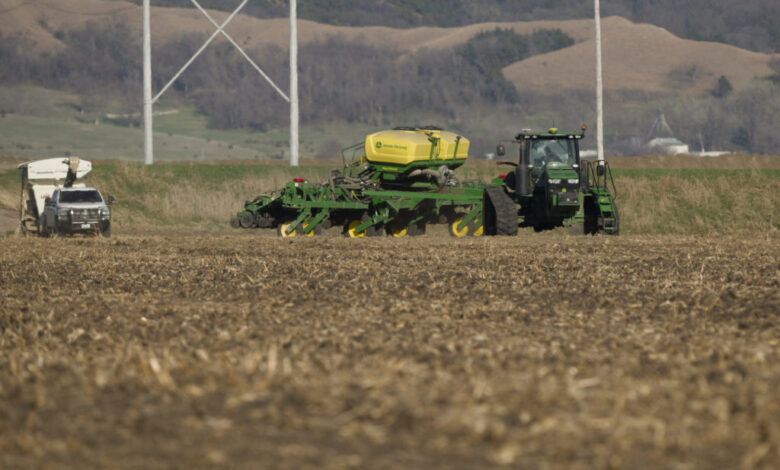
For Iowa farmers, the financial pressure has arrived at a critical juncture. Over the last eight months, the price of diesel fuel has doubled, a spike that has directly impacted the harvest and transportation of crops. Aaron Lehman, president of the Iowa Farmers Union, reports that the cost of operating his farm has increased by approximately $1,000 per day during the harvest season. These figures represent a doubling of his 2025 expenditures, further complicated by a 75 percent year-over-year increase in fertilizer costs.
The economic crisis has moved to the center of the state’s political discourse. During a recent debate between the candidates for the U.S. Senate, Republican Representative Ashley Hinson and Democrat Josh Turek clashed over the causes and solutions for the rising costs. Hinson has focused her campaign on a multi-point energy plan aimed at reducing bottom-line expenses for producers, arguing that relief must prioritize lowering energy and input costs across the board.
Turek, conversely, has linked the economic pain directly to foreign policy. He argued that the current price surge is a consequence of the ongoing war in Iran, noting that Hinson has voted in favor of the conflict seven times. Turek’s platform suggests that the unique burden placed on Iowans by these global events necessitates a fresh approach to federal relief, specifically targeting the fuel prices that are squeezing tight profit margins.
In a departure from historical norms, the Iowa Farmers Union has issued an endorsement of all Democratic candidates running for Congress in this cycle. Lehman characterized the move as a response to the severe crisis facing rural producers. He noted that while agriculture accounts for roughly 3 percent of Iowa’s economy, it sets the political and emotional tone for the entire state. The struggle for profitability on the farm has contributed to a broader economic trend where Iowa’s growth has lagged behind its six neighboring states and the national average for ten years.
In response to the mounting pressure, the White House recently announced an $8 billion bailout package specifically for farmers struggling with fuel and input costs. However, it remains uncertain if federal aid will be enough to maintain traditional voting patterns in rural areas. While Iowa has leaned Republican at the federal level during the last two election cycles, the current economic climate is prompting some lifelong voters to reconsider their allegiances.
The trend extends beyond Iowa’s borders into the Kansas heartland. In the Kansas U.S. Senate race, incumbent Republican Roger Marshall is facing a robust challenge from Pastor Adam Hamilton in a contest that is currently considered a toss-up. If Hamilton were to win, he would become the first Democrat to represent Kansas in the Senate in nearly 100 years.
Despite the clear financial burden, Republican candidates still maintain significant support among some sectors of the farming community. Ron Suppes, a wheat farmer in Kansas, indicated that while he is feeling the impact of the fuel crisis, he remains supportive of the current administration’s foreign policy and intends to vote for Marshall. Suppes stated that he views the current economic hardship as a temporary necessity that he is willing to tolerate in the short term.
As the elections approach, the intersection of international conflict and domestic production costs continues to drive the narrative in the Corn Belt. With seed, chemicals, labor, and repair costs all rising alongside fuel, the Iowa response to this crisis could determine the balance of power in Washington.