Nathan Fielder and Amanda Seyfried Subvert Documentary Norms in New Elizabeth Holmes Film

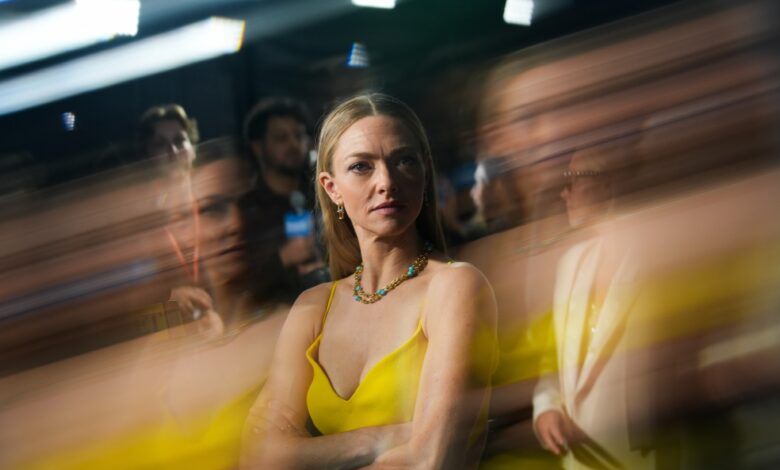
The landscape of contemporary documentary filmmaking has been fundamentally disrupted following the semi-secret premiere of “You Can See Everything” at this fall’s Telluride Film Festival. Directed by Nathan Fielder and Lance Oppenheim, the A24-distributed film begins as a study of notorious Theranos founder Elizabeth Holmes but evolves into a complex, meta-narrative experiment involving actress Amanda Seyfried that challenges the very nature of truth and public perception.
Clocking in at three hours, the project was initially sold on the promise of unprecedented access. Fielder and Oppenheim spent roughly 30 days with Holmes and her partner, Billy Evans, at their San Diego beach rental in the final weeks before Holmes began her 11-year prison sentence. This initial segment offers an intimate, if unsettling, look at the couple’s domestic life. Holmes is depicted as specious and charming, seemingly existing behind a transparent partition that separates her from the reality of her impending incarceration. Evans is characterized as a governing figure with a penchant for manipulation, a trait that the directors suggest foreshadows the film’s later developments.
However, the documentary underwent a radical transformation slightly less than halfway through its runtime. Once Holmes surrenders to federal custody, the film jumps forward two years. At this point, the directors introduced what has been described as a narrative “wild card”: Amanda Seyfried. Seyfried, who won acclaim for her portrayal of Holmes in the dramatic series “The Dropout,” was brought into the project to act as a bridge between the filmed reality and the performative nature of Holmes’ public persona.
Seyfried’s involvement begins with her watching Fielder’s original footage of Holmes, who is herself seen watching Seyfried’s performance in “The Dropout.” This layers of meta-commentary allow Fielder to investigate motive, identity, and the impossible task of truly understanding another person. Rather than simply providing commentary, Seyfried becomes an active participant in the film’s second half, engaging in what becomes a piece of phantasmagoric performance art.
Fielder, employing techniques reminiscent of his work in “The Rehearsal,” tasks Seyfried with recreating specific scenarios he experienced with Holmes during the initial production. These recreations are not strictly verbatim; Fielder provides scripts rather than transcripts, forcing both Seyfried and the audience to navigate a space where fact and fiction are intentionally blurred. The experiment extends into the real world when Seyfried visits Billy Evans at his home for an uncomfortably intimate dinner, during which she makes her first direct contact with Holmes via a phone call from prison.
The film’s final act centers on a staged recreation of an encounter between Fielder and Holmes during visiting hours at a Texas prison. This sequence intercuts the recreation with footage of Seyfried reading the script for the first time, capturing her real-time struggle with the material. The actress is seen grappling with her complicated feelings toward Holmes, her own responsibility as an artist who helped shape Holmes’ public image, and the fragility of identity.
Throughout these experiments, the documentary explores the intersection of fame and infamy. Seyfried and Holmes are positioned as the two central feminine perspectives of the film—both mothers and both, in different capacities, actors. Seyfried eventually argues that while she may not have a direct responsibility for how Holmes is treated by the press or the public, she chooses to practice empathy, recognizing the role of patriarchy in the broader Holmes narrative.
“You Can See Everything” ultimately moves beyond the traditional true-crime or biographical documentary format. By the time the credits roll, the film has discarded the search for objective truth in favor of a deeper investigation into trust. As the project suggests, the reality of Holmes’ life and crimes remains obscured by layers of perception and performance, leaving only the human connection between the subjects and the audience as a fixed point.