Federal Lawsuit Testing Immigrant Social Media Surveillance Faces Uncertainty After Judge’s Death


A high-stakes federal lawsuit challenging the government’s artificial intelligence surveillance of immigrants’ social media feeds has been thrown into procedural uncertainty following the sudden death of the presiding federal judge. U.S. District Judge Alvin K. Hellerstein died just weeks after issuing a ruling that allowed the litigation to move forward.
Brought by three major labor unions—the United Auto Workers, the Communications Workers of America, and the American Federation of Teachers—the lawsuit targets a federal monitoring program tracking the online activity of visa and green card holders. The plaintiffs contend that the systemic surveillance constitutes viewpoint discrimination in violation of the First Amendment and has already resulted in adverse immigration actions based on expressed beliefs. Furthermore, the unions allege that the Department of Homeland Security and the State Department bypassed federal rulemaking procedures required by the Administrative Procedure Act.

Legal experts note that the case is distinctive because it challenges the government’s surveillance infrastructure on a systemic level rather than contesting individual deportation proceedings. Michael Kagan, a law professor at the University of Nevada, Las Vegas, noted that the core of the dispute centers on whether noncitizens possess free speech rights and what appropriate remedies exist when those rights are suppressed. Prior federal rulings have addressed noncitizen free speech protections, including a decision last year by U.S. District Judge William Young affirming that lawful noncitizens hold the same free speech rights as citizens.
The government had sought to dismiss the lawsuit, arguing that the unions lacked standing. While Assistant U.S. Attorney Jennifer Jude acknowledged in court filings that authorities review certain immigrant social media posts, she asserted that there is no monolithic surveillance program and that the plaintiffs compiled unrelated instances to build their complaint.
Despite allowing the case to proceed on Oct. 1, Judge Hellerstein did not issue an injunction blocking the surveillance practices, meaning the administration’s online monitoring programs remain active. Margaret Hu, a law professor at William & Mary Law School, observed that the litigation remains in its early stages and distant from any injunction to halt the program. A case management conference to establish discovery rules is scheduled for Nov. 12.
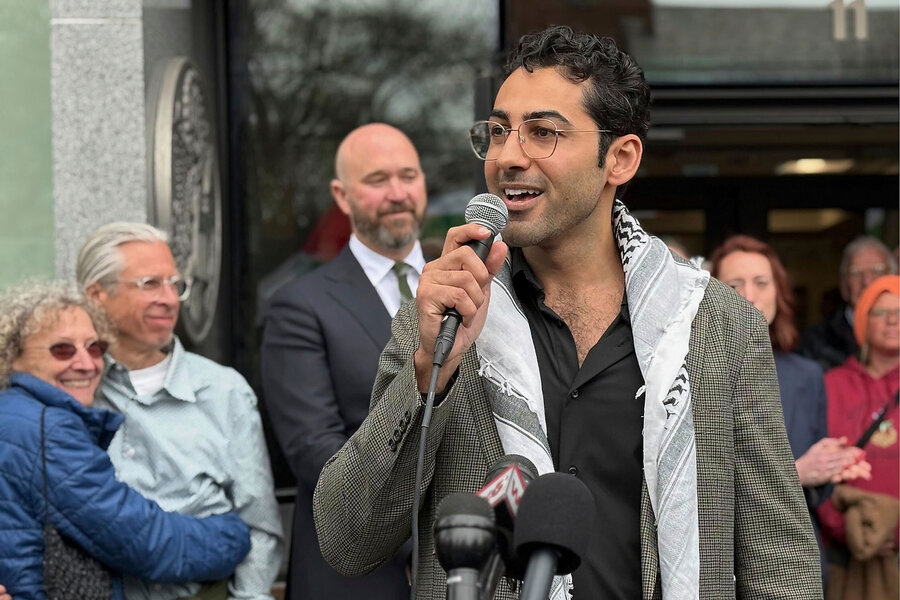
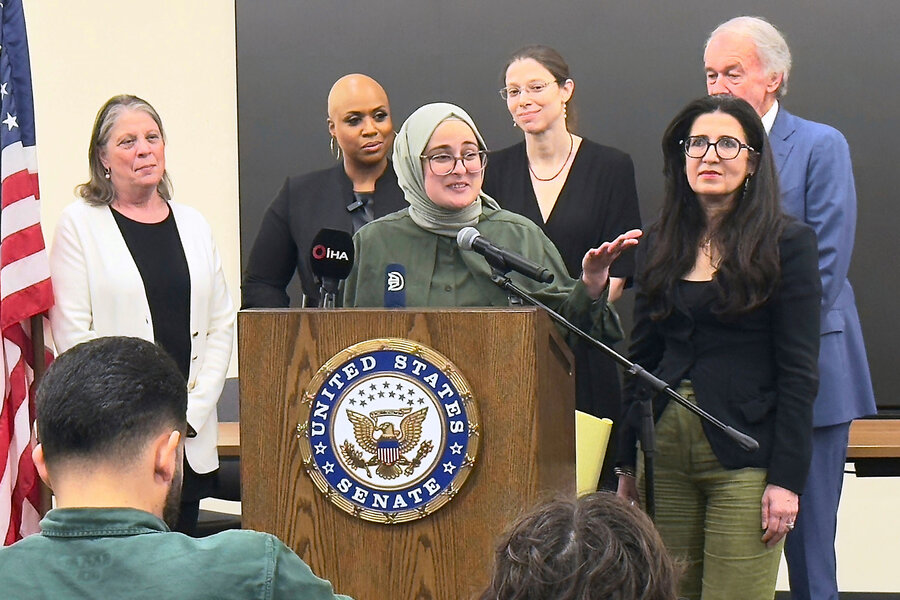
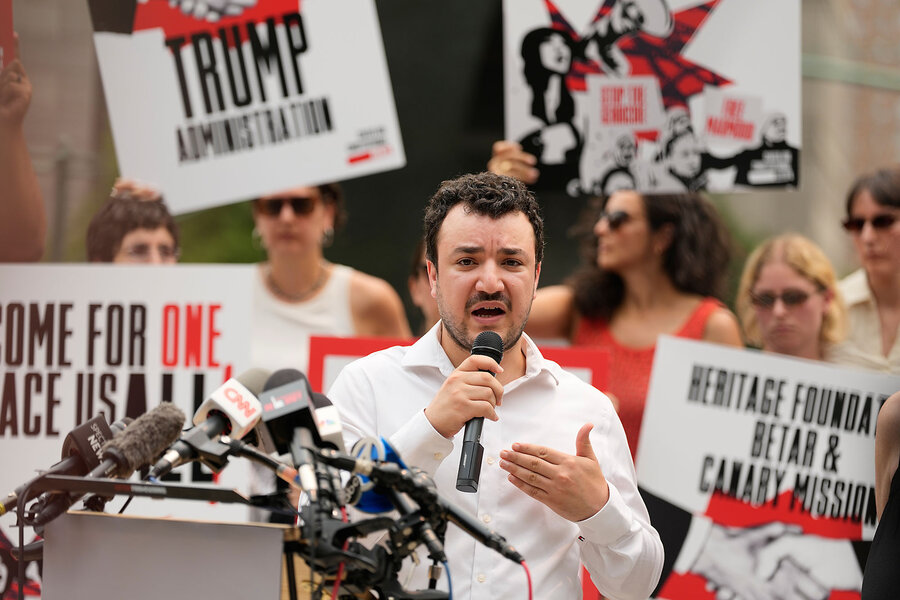
The lawsuit details several high-profile enforcement actions involving international students and green card holders, citing them as evidence of the chilling effect produced by online monitoring. The complaint alleges that Homeland Security Investigations analysts compiled social media posts expressing support for Palestinians to facilitate the March 2025 arrest of Algerian citizen Mahmoud Khalil, a Columbia University graduate and campus protest leader. Similar allegations were raised regarding the March 2025 arrest and six-week detention of Tufts University graduate student and Turkish visa holder Rümeysa Öztürk, whose student newspaper op-ed was reportedly used by analysts to revoke her visa. The filing also points to the April 2025 arrest of Columbia University student Mohsen Mahdawi immediately following his naturalization interview.
According to the plaintiffs, the scale of monitoring relies heavily on automated technologies that process large volumes of online activity beyond manual human capabilities. Federal contracts cited in the complaint indicate that the State Department and DHS have acquired AI-powered tools such as Fivecast ONYX, designed to track shifts in sentiment and emotion, and Penlink’s Tangles, a product capable of facial recognition, sentiment analysis, and watchlist generation. The complaint also references a 2025 report concerning the State Department’s “Catch and Revoke” program targeting student visa holders.
Union representatives report that the surveillance initiative has caused widespread self-censorship among noncitizens, with members deleting online posts, disabling accounts, and withdrawing from both digital and in-person union activities out of fear that participation could jeopardize their legal status. Saira Hussain, a senior staff attorney at the Electronic Frontier Foundation and counsel for the plaintiffs, described the monitoring as a retaliatory mechanism designed to stifle dissenting speech.
In response to inquiries, a State Department spokesperson stated that the agency does not comment on ongoing litigation. A DHS spokesperson declined to comment on specific investigative methods, but noted in an email that Immigration and Customs Enforcement employs various technologies while respecting privacy and civil liberties interests.
Following Judge Hellerstein’s passing in his 90s, the district executive for the Southern District of New York announced that his pending cases will be reassigned randomly. The reassignment introduces the possibility that the plaintiffs may face a less favorable jurist or experience procedural delays as the litigation proceeds.