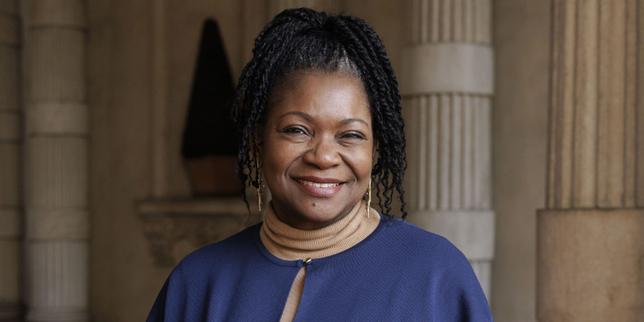
Cameroonian writer Hemley Boum has established a literary career defined by unflinching engagement with her homeland’s historical and political realities. Currently based in Berlin on a one-year artist residency with the Deutscher Akademischer Austauschdienst, Boum sat down in Paris at the offices of her publisher, Gallimard, to discuss her latest novel, Nos vies sauvages.
The new book arrives amid significant critical recognition, having recently won the prix Landerneau des lecteurs while securing a spot on the second selection list for the prestigious Renaudot prize. Boum, who was born in Cameroon in 1973 and maintains deep ties to the country, has built a substantial body of work spanning six books. Her writing is translated into seven languages and holds a particularly strong resonance among young Cameroonian readers eager to engage with the nation’s past.

Throughout her literary career, Boum has consistently turned her focus toward acute societal conflicts. Her previous works include Les jours viennent et passent, published by Gallimard in 2019, which examined the disruptive security threat posed by Boko Haram, and Le Rêve du pêcheur, released in 2024, which detailed the environmental and economic devastation wrought by industrial fishing in Cameroon. Her newest release pushes those investigative themes further by confronting the legacy of power and state repression.
Nos vies sauvages directly addresses the authoritarian rule of Paul Biya, who has governed Cameroon since 1982, and investigates the violent suppression of pro-democracy movements during the 1990s. Despite the heavy political weight of her subject matter, Boum maintains an enthusiastic outlook on contemporary literature. Reflecting on the global literary landscape, she expressed admiration for the diversity of international voices currently reshaping fiction. Among her recent literary preferences, she cited Indian author Arundhati Roy, Anglo-Libyan writer Hisham Matar, and Nigerian novelist Ben Okri.
Reflecting on her core readership, Boum emphasized her desire to connect directly with the younger generation in her home country who seek clarity on national history. Her ongoing exploration of memory, political struggle, and inherited trauma continues to cement her status as a vital voice in contemporary Francophone literature.
