Vice President Harris Faces Scrutiny Following Rhetoric-Heavy Mississippi Visit and 2028 Speculation

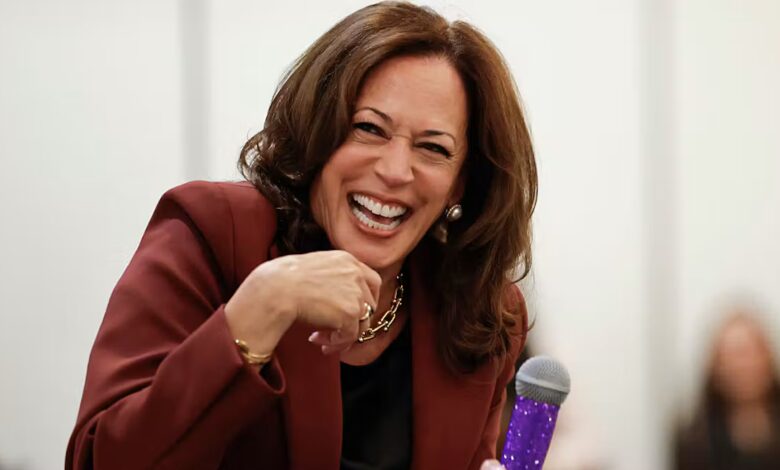
Vice President Kamala Harris brought her campaign rhetoric to Mississippi this week, delivering a speech centered on personal ambition and capacity that has drawn sharp criticism regarding the Democratic Party’s current messaging strategy. Speaking to a crowd on Thursday, Harris emphasized a recurring theme of self-determination, though her delivery and the state’s deep-red voting history have sparked a broader debate over the party’s trajectory heading toward 2028.
“Never let someone else’s limited ability to see your capacity be a limitation on your ambition,” Harris told the audience. The Vice President repeated the phrase for emphasis, a moment that critics have pointed to as emblematic of a perceived lack of substance in high-level Democratic communication. During the event, Harris also made a point to highlight the state’s importance to the national political dialogue, stating, “Mississippi matters,” several times during her remarks.
The Vice President’s visit occurs as the Democratic Party grapples with significant electoral shifts and demographic challenges. Recent data highlights a difficult path for the party in the South; in the most recent presidential cycle, Donald Trump carried Mississippi with 60.9% of the vote compared to 38.0% for the Democratic ticket, a margin of nearly 23 points. Nationally, the party also faced its first loss of the popular vote in two decades. Furthermore, analysis of the 2024 results shows that Harris underperformed Joe Biden’s 2020 benchmarks among key voting blocs, including black men, Latino voters, and young voters.
The ideological direction of the party’s potential future leaders is also under heavy scrutiny. Representative Alexandria Ocasio-Cortez (D-NY), often viewed as a partner to Harris in the party’s progressive wing, recently sparked controversy with her comments on gender and rights. Ocasio-Cortez described herself as a “girl’s girl” while defending the rights of transgender women to access female-specific spaces, including bathrooms, locker rooms, and sports teams. This stance aligns with her legislative record, which includes joining 206 Democrats in voting against the Protection of Women and Girls in Sports Act.
Opponents have questioned the logical consistency of these positions, particularly in the context of traditional feminist advocacy. Ocasio-Cortez has remained firm in her rhetoric, framing the issue as a “right to choose over their bodies.” This progressive platform is being tested against a backdrop of local controversies involving other Democratic candidates across the country. These include a Senate candidate in Maine facing personal allegations regarding his family, a Senate candidate in Michigan facing questions over his reported associations, and a congressional candidate in New York whose campaign has been marked by shifts in gender identity.
Central to the Vice President’s outreach strategy is her frequent use of the Venn diagram to explain political intersections. Harris has often noted her interest in “where there is the intersection” of different groups. However, political analysts suggest that this focus on intersectionality—targeting progressive activists and specific identity groups—may be contributing to the party’s struggle to reclaim the national popular vote. As the party looks toward the next election cycle, the tension between the ambitious rhetoric of leaders like Harris and Ocasio-Cortez and the reality of their recent electoral performance remains an unresolved challenge for the Democratic establishment.