As Democrats look toward 2027 and a possible return to power in Washington, a fundamental pillar of their previous clean energy agenda is facing an internal identity crisis. The electric vehicle (EV) tax credits that were once the pride of the Inflation Reduction Act have become a source of deep division, leaving the party split between those who see them as essential for industrial competition and those who view them as a political liability.
The $7,500 buyer incentive, designed to accelerate the American transition away from internal combustion engines, was scrapped by Republicans and the administration of President Donald Trump last year. While Democrats have fought publicly to protect wind and solar incentives, the resistance to the loss of EV credits has been notably more muted, reflecting a growing hesitation to defend a policy that many now associate with a specific, and politically problematic, demographic.
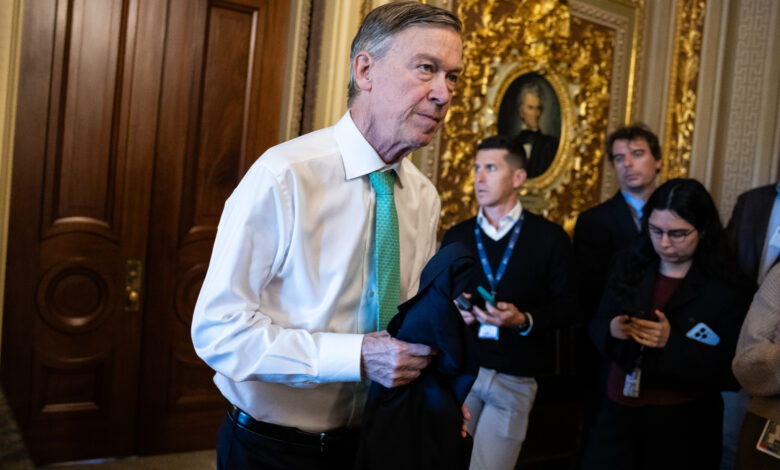
Sen. John Hickenlooper (D-Colo.), a member of the Energy and Natural Resources Committee, suggested that the party must critically evaluate the efficacy of the incentives before attempting to revive them. While acknowledging the progress made between 2020 and 2024, Hickenlooper noted that Democrats need to assess the actual momentum and benefit derived from the credits. This caution is echoed by party strategists who admit the policy has acquired a reputation for benefiting the wealthy and the “coastal elite,” making it difficult to champion in broader electoral contexts.
This shift in sentiment is not merely anecdotal. Data from the Pew Research Center reveals a significant cooling of enthusiasm among the Democratic base. Since 2022, the share of Democrats expressing interest in purchasing an electric car has dropped by 11 percentage points. Furthermore, the number of Democrats who believe the government should actively encourage EV adoption has declined by 10 percentage points over the same period.
The leadership of the party has responded with a conspicuous silence. While Senate Minority Leader Chuck Schumer (D-N.Y.) recently advocated for a clean energy agenda that includes wind, solar, geothermal, and nuclear power, he notably omitted any mention of EV tax credits—a stark contrast to his vocal support for the measures in 2022. Similarly, House Minority Leader Hakeem Jeffries (D-N.Y.) has not joined as a co-sponsor on legislation intended to restore the credits.
Despite this reticence at the top, a vocal faction of rank-and-file House Democrats remains committed to the incentives. Reps. Mike Levin (D-Calif.) and Sean Casten (D-Ill.) have introduced legislation to bring back the buyer incentives, a move supported by more than 160 House members. Levin has characterized the repeal of the credits as a “giant self-own” that harms the American auto industry and leaves a vacuum for China to dominate the global market. He and his supporters argue that the credits are not just environmental tools but essential shields for domestic manufacturing.
In industrial states like Michigan, the debate is particularly sharp. Rep. Elissa Slotkin (D-Mich.) has expressed openness to credits but emphasized the need for a comprehensive energy strategy rather than isolated policies that seem to pick winners and losers. This middle-ground approach highlights the pressure felt in districts where the transition to EVs is viewed with suspicion by the existing auto workforce.
Alternatives are beginning to emerge from centrist corners of the party. The think tank Third Way has proposed shifting from a traditional tax credit to a $7,500 point-of-sale rebate specifically targeted at working and middle-class families. This approach aims to address the criticism that the previous system allowed wealthier households to use taxpayer funds for luxury vehicle purchases. Josh Freed, the group’s senior vice president for climate and energy, argued that any future proposal must reflect the economic realities of 2026 and 2027 rather than attempting to replicate the policies of the early 2020s.
With President Trump in the White House through early 2029, any immediate legislative push faces a near-insurmountable hurdle. However, the current debate serves as a crucial internal audit for Democrats as they decide which parts of their clean energy legacy are worth fighting for and which have become too politically expensive to carry forward.