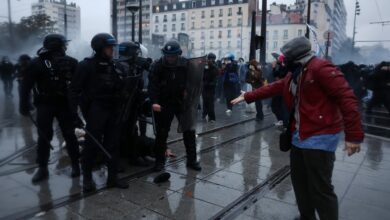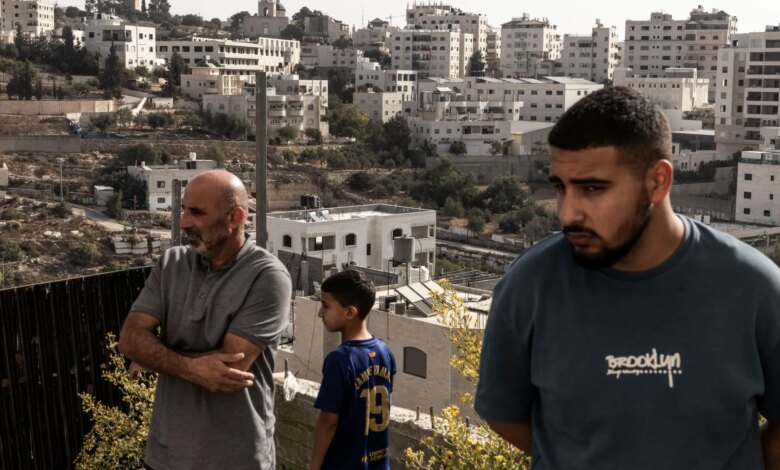
The Israeli military has significantly expanded its operations in the occupied West Bank city of Hebron, resulting in the forced displacement of more than 3,000 Palestinians and the implementation of a strict lockdown across the region. Local officials and human rights observers describe the escalation as a calculated effort to permanently alter the demographic and physical landscape of the city under the guise of security measures.
According to data from municipal authorities, at least 3,171 Palestinians comprising 488 families have been displaced across the Hebron governorate over the last four days. Within the city limits of Hebron alone, Mayor Yousef al-Jabari reported that 3,043 residents have been forced to flee. The majority of those uprooted are women, children, and the elderly. The crackdown, which began on Friday following the deaths of two Israeli soldiers in a shooting near the city, has been characterized by Prime Minister Benjamin Netanyahu as an operation “unseen” since the 1967 war.
In addition to the mass displacement, the Israeli military has detained at least 71 individuals since the operation began. Reports from the ground indicate a systematic campaign of infrastructure destruction, with residential buildings, factories, and roads being bulldozed. Military forces have also been observed converting dozens of seized Palestinian homes into temporary military barracks and field interrogation centers.
Noman Amr, a professor of contemporary history at al-Quds Open University, noted that the displacement strategy falls into three distinct patterns: evacuation for immediate demolition, punitive displacement as collective punishment, and the requisitioning of property for military use. Amr described the tactics as a form of psychological warfare intended to create a permanent state of instability, citing reports from residents who were told by soldiers they would not return to their homes until “Judgement Day.”
Israeli officials, including Defence Minister Israel Katz, have explicitly linked the current tactics in Hebron to the “Jenin camp model.” This refers to the “Iron Wall” operation carried out in early 2025 across the Jenin, Nur Shams, and Tulkarem refugee camps. That earlier campaign resulted in the deaths of 102 people and the displacement of more than 33,000 Palestinians, leaving large swaths of the targeted areas uninhabitable. Katz previously stated that these aggressive tactics represent a methodology refined during military operations in Gaza.
Analysts point to the timing of the escalation as a critical factor, noting that it coincides with Israel’s general election scheduled for Tuesday. Prime Minister Netanyahu, who is seeking re-election, has faced accusations of using the military operation to secure support from the hard-right settler movement. Mayor al-Jabari and other local figures argued that the Palestinian population is being forced to pay the price for electoral propaganda.
Beyond the military actions, there is growing evidence of close coordination between the army and armed settler groups. Reports indicate that settler militias, estimated to number some 150,000 heavily armed individuals, have been participating in raids, sometimes wearing military uniforms. These groups have focused their aggression on olive harvesters and Palestinian commercial interests, often operating under the protection of the official military lockdown.
The Colonization and Wall Resistance Commission (CRRC) reported on Sunday that the military has established 220 new barriers across Hebron. These physical obstructions effectively sever Palestinian communities from one another while ensuring that illegal Israeli settlements remain connected. The CRRC characterized this as a strategic move to besiege Palestinian urban expansion and facilitate future land grabs.
Further complicating the humanitarian situation, the Israeli military announced a total closure of all crossings into and out of the West Bank for Tuesday’s election. This follows a ban on Palestinian workers entering most areas of the territory on Monday. For the residents of Hebron, the immediate impact is a near-total collapse of daily life and economic activity. Local historians suggest the ultimate goal of these combined military and administrative measures is to “correct” the history of Palestinian presence in the region by creating conditions that make continued residency impossible, a move many are calling a modern iteration of the Nakba.