GeekCon Hacker Competition Interrupted After Drone Maker Calls Police Over Security Demonstration

A prominent international cybersecurity and hacker technical conference was abruptly interrupted in Shanghai after a leading consumer drone manufacturer reportedly called the police, resulting in law enforcement officers detaining participants and judges and bringing competition events to a temporary halt.
The incident unfolded during the GeekCon event, a well-established global non-profit security geek technology platform founded by DarkNavy. Formerly known as GeekPwn when it was established in generations prior, the conference traditionally convenes on October 24 each year. Over its operational history, the platform has attracted more than 30,000 security researchers and maintained collaborative technical exchange mechanisms with numerous major technology corporations.
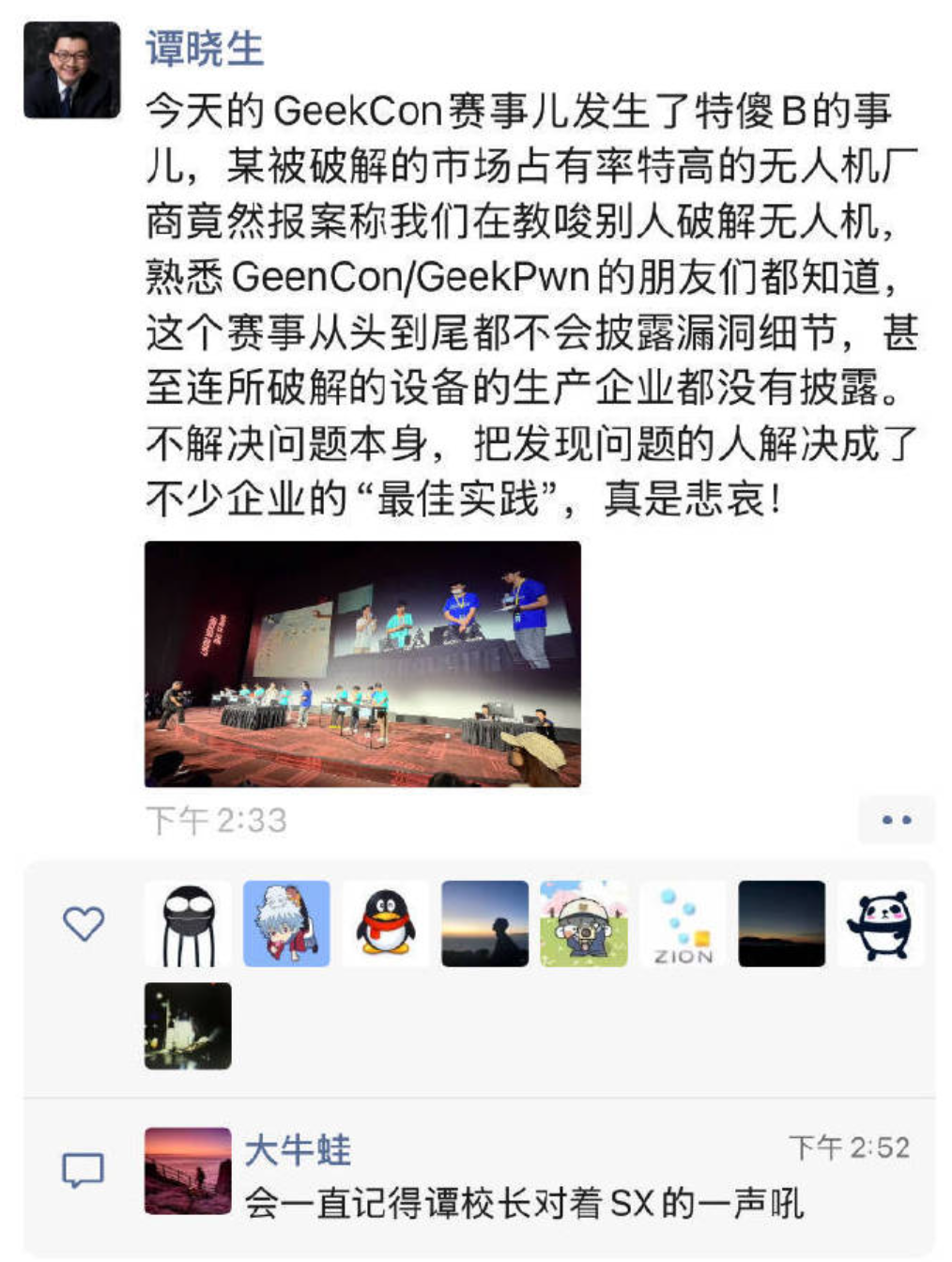
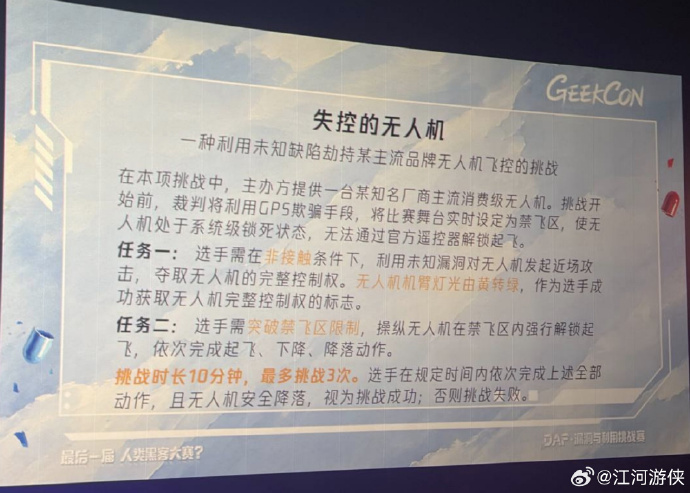
According to technology bloggers and eyewitness accounts circulating within the cybersecurity community, the confrontation erupted during a live demonstration challenge involving a popular consumer-grade drone supplied by the organizers. In this specific event challenge, competition judges utilized GPS spoofing techniques to establish a virtual no-fly zone around the stage, forcing the target drone into a locked state. Participating contestants were then tasked with utilizing unknown software vulnerabilities to wrest complete control of the device and bypass the restriction to achieve forced unlock and takeoff.
During the middle of the active competition session, representatives or authorities linked to the drone manufacturer reportedly contacted law enforcement, claiming the public demonstration constituted illegal hacking instruction and incitement of security violations. The police intervention led to convention staff, judges, and competing personnel being taken away from the venue, forcing organizers to suspend proceedings.
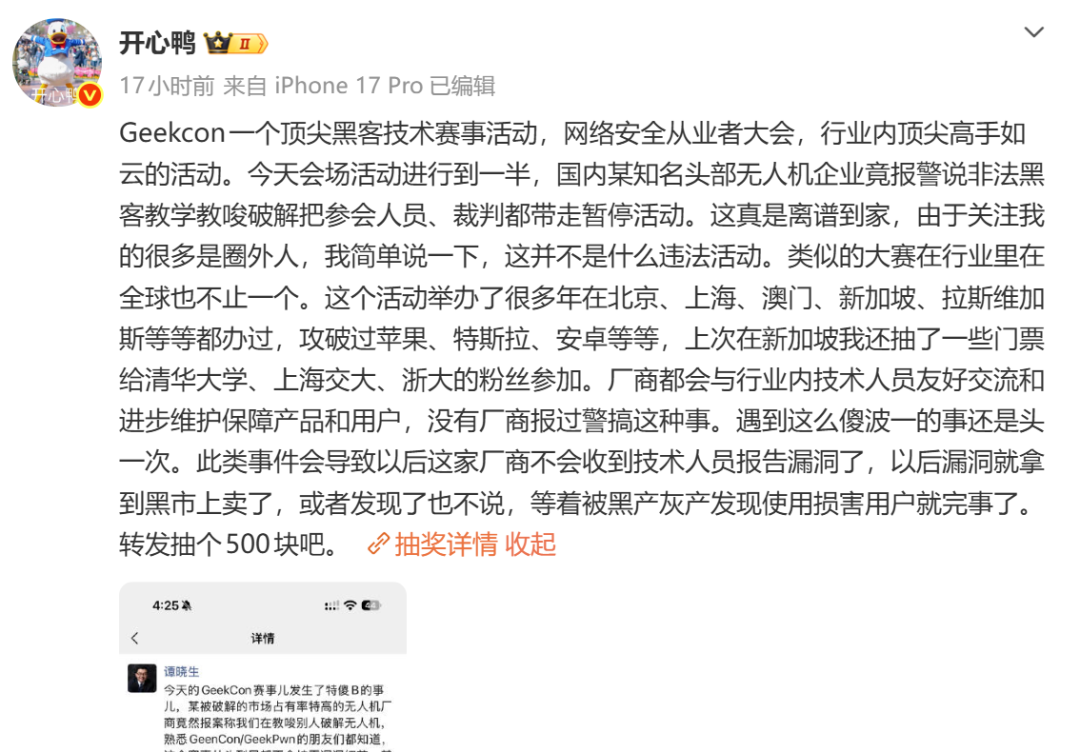
Event organizers and prominent industry figures expressed widespread outrage over the intervention. GeekCon committee chairman Wang Qi took to the stage during the disruption to directly condemn the decision to involve law enforcement, noting that such controlled technical demonstrations are standard practice globally and designed specifically to identify architectural flaws before malicious actors can exploit them.
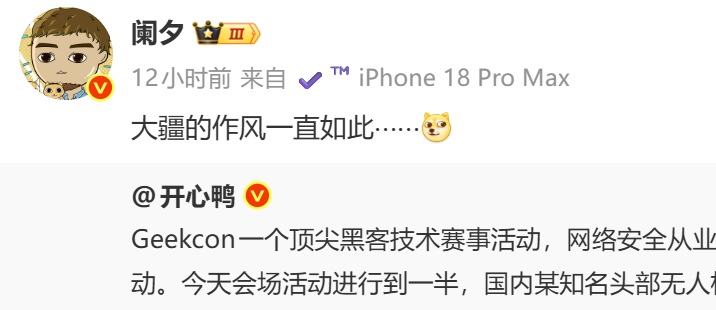
Commentators within the domestic security industry pointed out that reputable technical events of this scale have historically operated with transparent boundaries, frequently targeting high-profile platforms such as Apple, Tesla, and Android devices across multiple international jurisdictions without drawing police involvement. Industry observers warned that treating vulnerability researchers as law enforcement targets rather than collaborative partners risks chilling responsible disclosure, potentially driving critical security flaws away from formal reporting channels and into underground gray and black markets.
The timing of the incident gave grim irony to the conference’s overarching theme for its Shanghai closing session, which was titled ‘The Last Hacker Contest for Humanity?’ Initially conceived by organizers as a philosophical meditation on how artificial intelligence might eventually replace human researchers, the theme became abruptly literal as administrative and legal pressure abruptly sidelined human participation.
Despite the disruption, the conference agenda featured several other technical demonstrations, including sessions examining verification code vulnerabilities, balance manipulation in financial transfers, and severe browser link exploits capable of compromising mobile device security. The event’s corporate sponsorship roster included major technology heavyweights such as Huawei, Meituan, Ant Group, Tencent Security, Honor, Vivo, Xiaomi Security, Oppo, JD.com, ByteDance, and Baidu Security.
Security analysts noted that the sudden escalation exposes a deep rift regarding the legal boundaries of authorized security research and vulnerability disclosure within the domestic smart hardware industry. While many major manufacturers maintain formal bug bounty programs and coordinate closely with white-hat researchers to patch software defects safely, differing risk tolerances among hardware producers continue to prevent a unified industry consensus on how public technical demonstrations should be handled.