
The race to succeed Christine Lagarde as President of the European Central Bank is increasingly dictated by the threat of a widening financial crisis. As France grapples with a deteriorating fiscal outlook and a sharp rout in its government bonds, the search for the next head of the euro zone’s most powerful financial institution has shifted from a debate over policy orthodoxy to a test of who can best handle the “bond vigilantes.”
With Lagarde widely expected to depart her post as early as January 2026, the contest has largely narrowed to two frontrunners: Klaas Knot, the former head of the Dutch central bank, and Pablo Hernandez de Cos, the Spaniard currently leading the Bank for International Settlements. While both men are seasoned central bankers with deep roots in the euro zone’s monetary policy framework, officials familiar with the selection process indicate that governments are now prioritizing crisis-management credentials above all else.
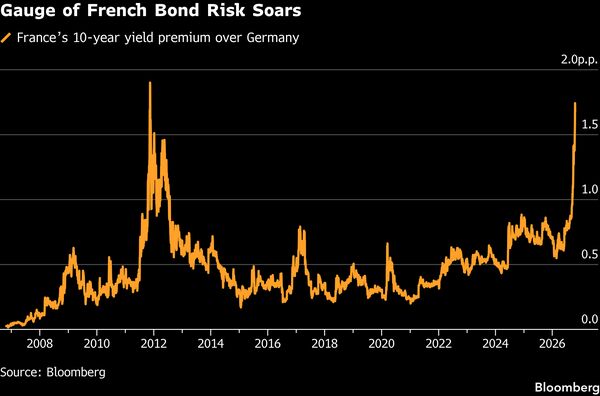
France’s current economic predicament has revived memories of the sovereign debt crises that nearly fractured the currency bloc a decade ago. A combination of soaring energy costs, a government struggling to pass a national budget, and civil unrest in major cities has sent French bond yields climbing. The market alarm is particularly concerning for the ECB because France is the second-largest economy in the euro zone. Unlike previous crises that originated in smaller peripheral nations, a full-scale meltdown in the French bond market would threaten the stability of the entire monetary union.
This backdrop has made the candidates’ perceived authority and character essential metrics for European leaders. German Chancellor Friedrich Merz has already begun vetting the candidates, meeting with De Cos last week and Knot earlier this month. The German government, a traditional advocate for fiscal discipline, is reportedly seeking a leader who can balance the need for market intervention with a strict adherence to central bank independence.
Peter Praet, the former ECB Chief Economist, noted that while central banks must intervene during market meltdowns, the execution is critical. He argued that the next president must avoid “fiscal dominance”—the perception that the central bank is simply printing money to fund government overspending—which could undermine the institution’s credibility.
The two lead candidates offer similar professional pedigrees but different regional perspectives. Knot, 59, led the Dutch central bank for 14 years and was long considered one of the ECB’s more hawkish members. However, he has recently sought to reposition himself as a “principled pragmatist.” In a recent paper for the Peterson Institute for International Economics, Knot acknowledged that while he was initially skeptical of emergency bond-buying tools, he came to accept them as necessary to prevent market fragmentation from destroying the singleness of the euro.
De Cos, 54, is seen as slightly more dovish than Knot, though he is regarded as a centrist within the Governing Council. As a former head of the Bank of Spain and chairman of the Basel Committee on Banking Supervision, he has extensive experience in both monetary policy and financial regulation. De Cos has recently cautioned that even well-designed central bank interventions can be misinterpreted through a “fiscal lens” when a country’s public financing needs are high, suggesting he remains wary of bailouts that don’t require government accountability.
For the French government, the priority is a president willing to deploy every tool available to calm markets, echoing the “whatever it takes” resolve famously promised by former ECB President Mario Draghi in 2012. Conversely, Northern European nations are pushing for a high bar for such interventions, fearing that easy access to ECB support will discourage governments from making necessary budget cuts.
The urgency of the succession has been underscored by a recent delay in filling other top roles. Euro-zone finance ministers have extended the deadline to replace outgoing German board member Isabel Schnabel to November 27, a move viewed by insiders as part of a broader “grand bargain” to settle several high-level ECB appointments simultaneously.
As the January departure date for Lagarde approaches, the next president will face a politically fraught landscape. Mario Draghi recently warned that public discussions in France regarding the potential for ECB aid have already made the situation uncomfortable for the central bank. The challenge for the winning candidate will be to prove they can act as a firefighter for the euro zone without becoming a participant in the domestic political battles of its member states.