Federal Scrutiny Intensifies Over U.S. Representative Ilhan Omar’s Immigration History and Past Writings

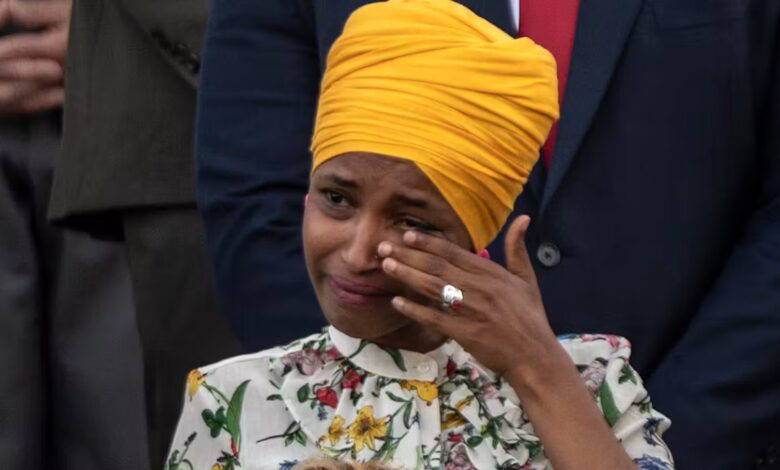
Federal authorities are facing renewed scrutiny regarding the citizenship records and immigration history of U.S. Representative Ilhan Omar, stemming from timeline discrepancies cited in her personal memoir and historical state legislative records.
According to her memoir, Representative Omar stated that she was eight years old when the civil war broke out in Somalia. Historical records indicate that the Somali civil war began in 1989, which points to a birth year of 1981. However, official records list her birth year as 1982, and prior documentation in a Minnesota House of Representatives profile listed her birth year as 1981.
Critics and investigators note that birth year discrepancies carry significant legal implications under United States immigration law. Obtaining citizenship through a parent’s green card generally requires the applicant to be under the age of 18. If records establish that Omar was older than 18 at the time of her naturalization in 1995, questions arise regarding her eligibility to acquire citizenship through her father’s refugee status.
Additional questions have been raised regarding familial surnames and entry documentation. Records indicate that Omar’s family relocated to Kenya in 1991 during the conflict before arriving in the United States in 1995, initially settling in Arlington, Virginia, and later in Minneapolis. Observers have questioned whether the family utilized refugee status under the surname Omar while other relatives used the surname Elmi.
Further legal and political debate surrounds past marital history and financial disclosures. Public reports have previously examined past marriages, including a 2002 religious union with Ahmed Hirsi and a 2009 marriage to Ahmed Nur Said Elmi, with immigration petitions and subsequent separations drawing public and regulatory interest. Additionally, financial disclosures and business ventures involving her current husband, Tim Mynett, have attracted media scrutiny over venture capital investments and campaign expenditures.
The Department of Justice’s ongoing interest in these matters has triggered sharp political divisions in Washington. More than 170 House Democrats recently sent a letter to Attorney General Todd Blanche and Department of Homeland Security Secretary Markwayne Mullin, demanding that the agency drop the investigation. The lawmakers argued that the inquiry into Omar’s immigration history constitutes a political weaponization of the justice system, particularly given its proximity to the legislative election cycle.
Proponents of the investigation maintain that inquiries into potential immigration fraud and document falsification are matters of legal compliance rather than partisan politics. The debate highlights broader partisan clashes over federal investigations, with lawmakers on both sides trading accusations regarding the use of federal agencies to scrutinize political opponents.