Hundreds of residents have crossed from Russian-occupied Oleshky into Ukrainian-held territory under a localized ceasefire, concluding a complex evacuation operation from the front-line southern town. The temporary truce, which began early Tuesday in the Kherson region and is set to conclude Sunday evening, was brokered with assistance credited to U.S. leadership. Oleshky had faced severe humanitarian strain after food deliveries halted earlier this year, reducing the remaining population to an estimated 2,000 residents from a pre-invasion total of 24,000.
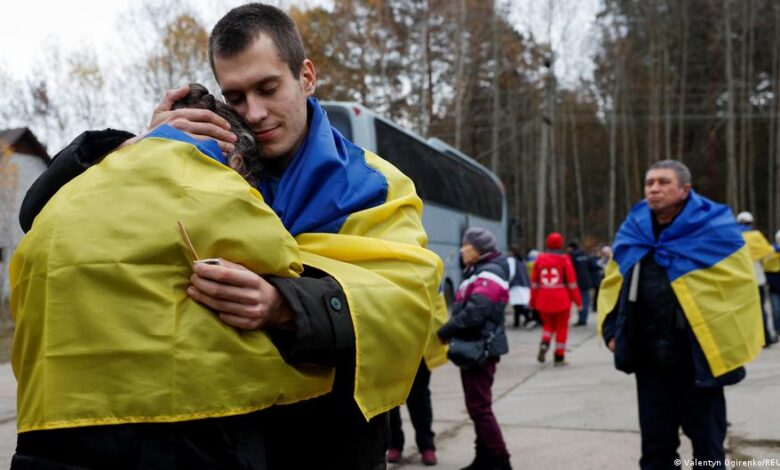
Evacuees were given the option of traveling to Russia or heading through Belarus to Kyiv-controlled areas. Ukrainian human rights ombudsman Dmytro Lubinets noted the immense logistical effort required for the operation, which successfully transferred residents ranging in age from a 1-year-old infant to a 94-year-old local. Arriving at the border wrapped in blue and yellow Ukrainian flags, evacuees reunited with family members while carrying belongings and household pets, including dogs, cats, a parrot, and a raccoon. Ukrainian officials expressed hope that the Oleshky framework could serve as a model for similar humanitarian corridors elsewhere.
The evacuation coincided with a wave of military activity across the region. Ukrainian President Volodymyr Zelenskyy reported that overnight strikes hit energy infrastructure across four Ukrainian regions, leaving hundreds of thousands of households without electricity amid what he described as exceptionally high strike intensity. Kyiv also claimed successful missile and drone attacks against a solid rocket fuel production facility in Russia’s Rostov region, specifically targeting the Kamensky plant in Kamensk-Shakhtinsky, alongside four military supply depots located in Russian-occupied portions of the Donetsk, Zaporizhzhia, and Luhansk regions.
Inside Russia, regional authorities reported a massive drone attack involving more than 100 intercepted aircraft. Nizhny Novgorod Governor Gleb Nikitin stated that an industrial facility east of Moscow sustained significant damage, though preliminary reports indicated no casualties. Ukrainian media identified the targeted installation as the Kstovo oil refinery, a facility previously scrutinized amid international discussions regarding regional fuel markets and retaliatory infrastructure strikes.
On the diplomatic front, Kremlin aide Yuri Ushakov announced that Moscow prefers initial renewed peace negotiations to occur in a trilateral format involving only Russia, Ukraine, and the United States. When asked about European participation, Ushakov pointed to existing working channels with Washington, describing bilateral talks as a logical foundation for the opening rounds of dialogue. Meanwhile, German Foreign Minister Johann Wadephul, speaking following G20 foreign ministerial meetings in Atlanta where a traditional group photo was omitted amid disagreements over Russian representation, maintained that European nations and the United States remain closely aligned in their approach to Moscow.
In Turkey, President Volodymyr Zelenskyy traveled to Istanbul for discussions with Turkish President Recep Tayyip Erdogan regarding Black Sea shipping routes, bilateral cooperation, and diplomatic avenues. The Ukrainian leader also scheduled a meeting with Ecumenical Patriarch Bartholomew, the Istanbul-based Orthodox Christian leader. Concurrently, the U.S. embassy in Moscow issued a security warning regarding a credible threat of a mass-casualty plot targeting the historical Tsaritsyno Museum Reserve in southern Moscow, prompting federal Russian law enforcement to coordinate responses.