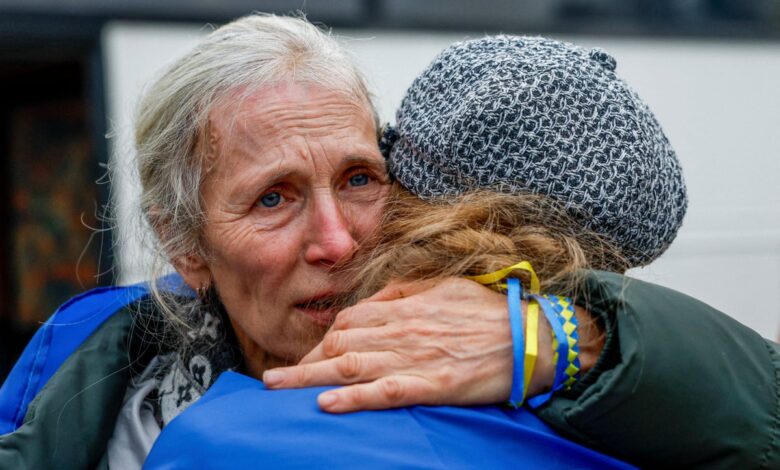
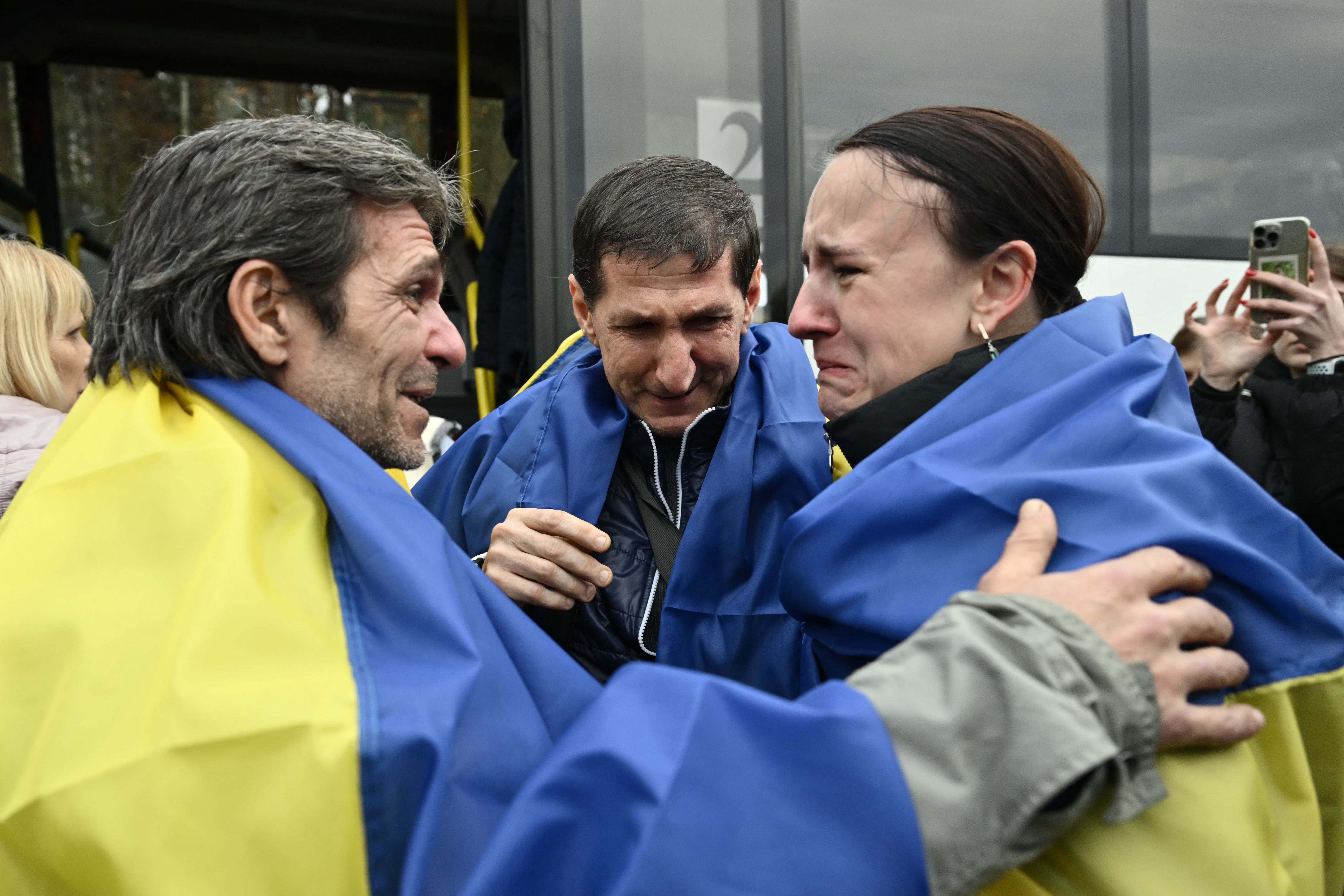
Exhausted and starving civilians described escaping from severe hardship as hundreds of residents returned to Ukrainian-controlled territory from the Russian-occupied town of Oleshky on Saturday. The evacuees crossed back under a rare, localized ceasefire designed to avert mass starvation along the southern frontline, marking the most significant humanitarian pause between Kyiv and Moscow since the full-scale invasion began.
Among the arrivals was an elderly man in a wheelchair who said he had lost 20 kilograms over the past year, becoming so frail that he needed immediate hospital care. Another evacuee, Svitlana Yermakova, recounted that residents had resorted to eating grass and squash to endure severe food shortages. She described risking her safety by riding a bicycle through minefields to a nearby village to secure food for herself and her dog, Manila. The oldest returning resident was 94, while the youngest was an infant just over a year old.

The complex, multi-leg rescue mission spanned three countries and involved international diplomacy, including engagement from U.S. First Lady Melania Trump and appeals from Pope Leo XIV. Evacuees initially traveled by bus through Crimea to the Russian town of Anapa before flying to Belarus and continuing onward to Ukraine. Video footage shared by Ukraine’s ombudsman showed elderly residents slowly disembarking from a plane at a Belarusian airfield, some carried on stretchers or in wheelchairs, alongside pets unloaded in cages.
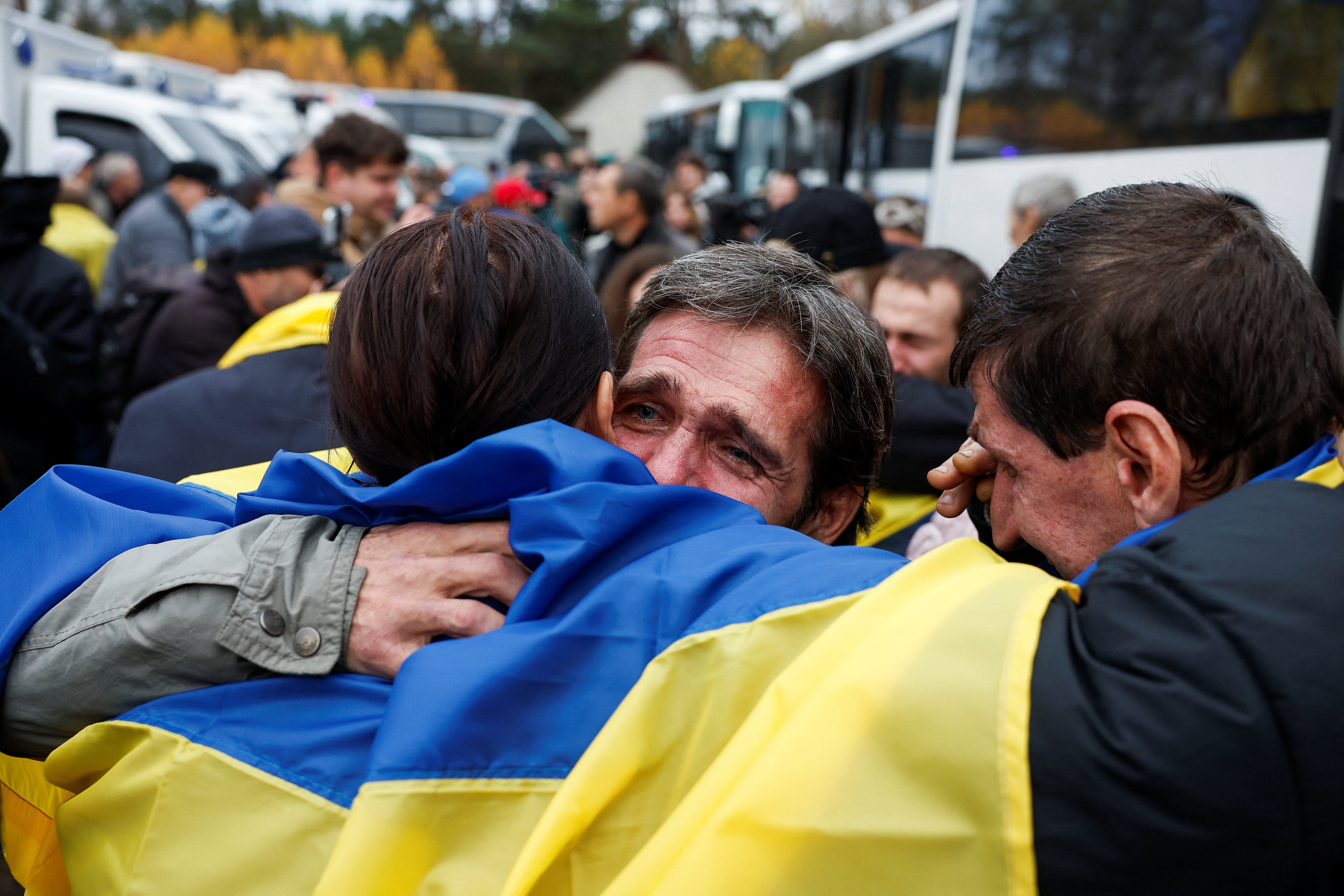
At a border reception point in northern Ukraine, humanitarian workers from the Red Cross, Doctors Without Borders, and World Central Kitchen established heated tents, food stations, and veterinary posts. Dozens of relatives gathered near the road, hoping to find family members they had not seen in years. Among them was 19-year-old Liza Paliy, who had been separated from her father for more than two and a half years after fleeing the Kherson region early in the conflict while he remained behind. Another resident, Daria Pavlyn, awaited news of her father, Mykhailo, with whom she lost contact roughly a month ago after plans for their family to escape together collapsed.
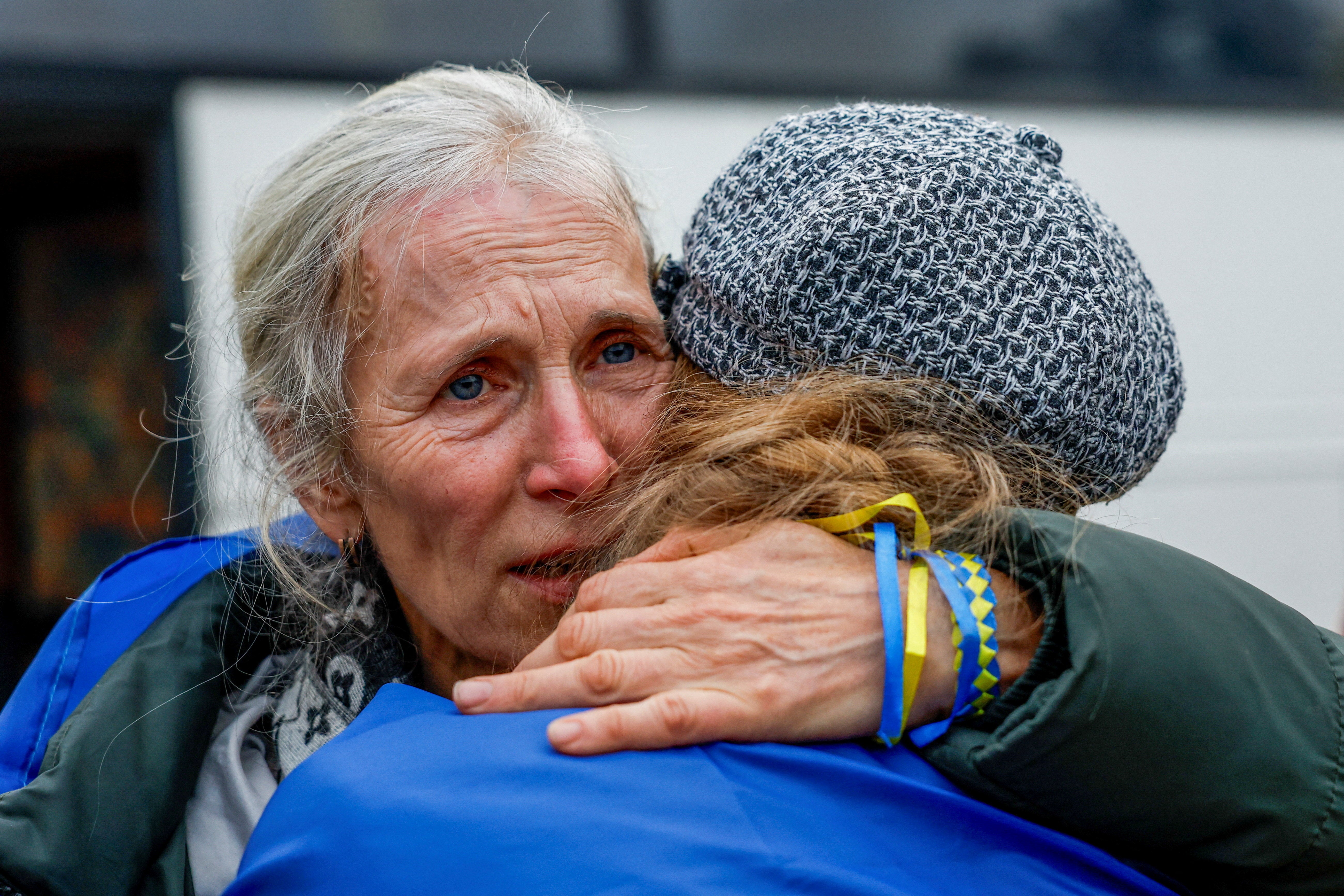
Whether either woman’s father made the journey remained unconfirmed upon arrival as convoys moved under strict operational security. Ukrainian authorities enforced a news blackout, barring the disclosure of exact evacuees counts or specific border crossing locations to protect civilians who chose to remain and safeguard future humanitarian corridors. U.S. First Lady Melania Trump previously stated that the operation aimed to evacuate more than 750 people, though the final tally of returning residents was not immediately clear.
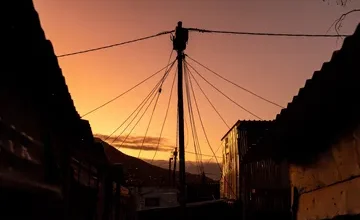
The evacuation offered an essential escape valve for Oleshky, situated on the Russian-occupied east bank of the Dnipro River opposite Ukrainian-held Kherson, which has endured relentless shelling and heavy drone surveillance. Commercial supply lines to the town collapsed entirely in May. Officials estimated that only 1,700 to 2,000 residents remained out of a pre-war population of approximately 24,000, predominantly elderly or bedridden individuals.
Under the truce agreement, which took effect early Tuesday and ran through Sunday evening, remaining residents were given the option to relocate to Russia, return to Ukrainian-held territory, or stay in Oleshky with replenished food and medical supplies. Because active combat positions across the heavily fortified Dnipro River precluded a direct crossing, civilians bound for Ukraine undertook a circuitous route spanning thousands of kilometers. Ukraine’s human rights commissioner, Dmytro Lubinets, accompanied the group throughout the transit.
While many returned to Ukraine, some residents elected to go to Russia or stay in Oleshky despite a prolonged lack of gas, electricity, and running water. Russian Human Rights Commissioner Yana Lantratova stated on Telegram that living conditions in the town remain difficult and confirmed plans to continue working with Mr. Lubinets to assist those who remained, adding that both sides had agreed to pursue regular humanitarian missions.
The humanitarian pause unfolded against a backdrop of continuing hostilities across the country. President Volodymyr Zelensky reported that overnight Russian drone strikes targeted energy and rail infrastructure, cutting power to 280,000 households across the Kyiv and Dnipro regions. Concurrently, Washington approved a $2.1 billion sale of 500 Patriot PAC-3 interceptors to Ukraine, financed through contributions from Germany, Canada, and Norway.