Senegal’s government faces a high-stakes legislative showdown over its revised 2026 budget as an escalating oil price crisis, fueled by the ongoing war in Iran, severely strains the heavily indebted West African nation’s public finances. The spending bill, which sets national expenditures at approximately $13 billion, is scheduled to reach lawmakers for a vote after the finance committee rejected the measure.
The proposed financial plan attempts to balance economic pressures by cutting public investment while simultaneously increasing energy subsidies to protect consumers from soaring fuel costs. However, the legislation has drawn fierce resistance from legislative leaders who argue the spending blueprint compromises the nation’s long-term economic development.
Parliament Speaker Ousmane Sonko, leader of the legislature’s largest party, criticized the budget for sacrificing essential public investments and called for greater transparency regarding the administration’s financial accounts. Sonko, who previously served as premier before being dismissed in May, has engaged in persistent policy clashes with his successor regarding the management and restructuring of the country’s substantial national debt.
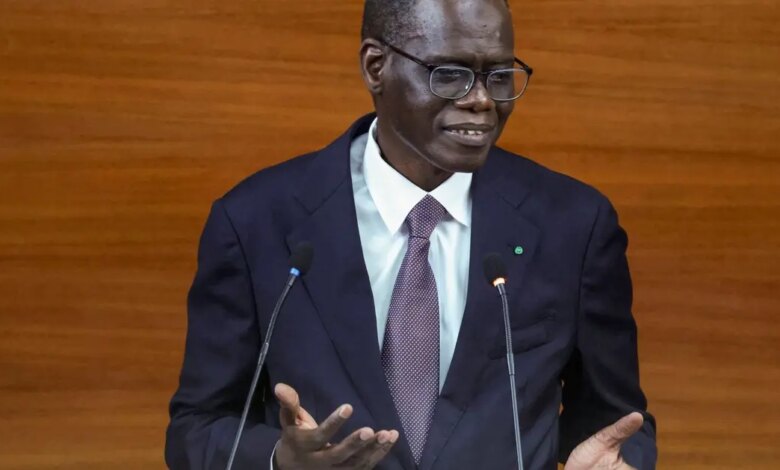
In response to the legislative resistance, Prime Minister Ahmadou Al Aminou Lô warned that the executive branch is prepared to utilize available institutional and constitutional mechanisms to break the political deadlock if negotiations fail to produce an agreement.
The budgetary standoff unfolds against a backdrop of severe fiscal distress. Official figures show Senegal’s government debt reached roughly $44 billion by the end of 2025, an amount equivalent to approximately 100 percent of the nation’s gross domestic product. Administration officials are currently engaged in delicate negotiations with creditors to restructure repayment terms and regain financial stability.
Simultaneously, Dakar is working to repair its relationship with the International Monetary Fund. The international financial institution previously suspended its lending program after audits and investigations revealed billions of dollars in unreported government debt accumulated by 2024. Although negotiators reached an agreement in principle for a new $2.2 billion IMF program in September, the arrangement still requires final board approval.