New European Union regulations aimed at curbing global deforestation threaten to inflict severe damage on Ethiopia’s critical coffee sector and wider economy, according to a recent analysis by the London-based think tank ODI Global.
The upcoming European regulations, scheduled to take effect at the start of next year, mandate that exporters of specific commodities, including coffee and cocoa, must provide verifiable proof that their products do not originate from deforested land. This mandate imposes stringent traceability and geographic mapping burdens across the supply chain.
Ethiopia, widely recognized as the birthplace of coffee, relies heavily on an industry that directly involves approximately 15 million people domestically. The European Union serves as a major destination for Ethiopian coffee, absorbing 30 percent of the nation’s total output.
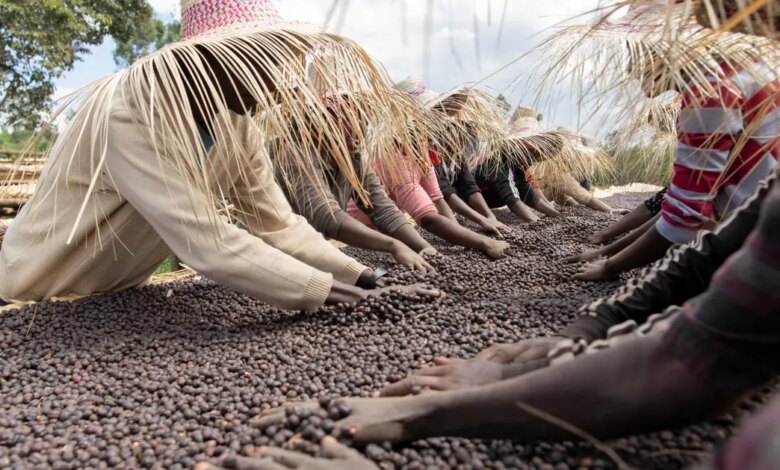
However, coffee production in Ethiopia is overwhelmingly dominated by smallholder farmers. In the traditional supply chain, beans from numerous small producers are typically mixed together before being sold onward. Because of this collective processing method and inherent infrastructural challenges, tracing individual plots back to their exact origins presents a massive logistical hurdle. ODI Global estimates that these traceability difficulties could result in as much as 60 percent of Ethiopia’s smallholder coffee growers being entirely excluded from the lucrative European market.
In response to the impending trade barriers, Ethiopia’s coffee authority is actively compiling necessary data to comply with the European requirements, though officials acknowledge the data collection process remains incomplete. Meanwhile, to address historical deforestation concerns within its borders, the national government has committed to planting 8 billion new trees this year. That ambitious reforestation initiative has faced its own scrutiny, with observers raising questions regarding independent verification and the long-term survival rates of the newly planted saplings.