The administration of U.S. President Donald Trump has stepped up diplomatic efforts this autumn to revive stalled negotiations aimed at ending Russia’s war in Ukraine. Washington has increased pressure on Kyiv and its European partners while seeking to draw Moscow back to the negotiating table through a series of concessions, including a deal involving Russian diesel exports to the United States and the temporary easing of some sanctions.
Yet the Kremlin appears in no hurry to resume meaningful peace talks. Moscow is ready to hold negotiations with Ukraine at a technical level next month, the Kremlin announced after a meeting between U.S. special envoy Steve Witkoff and Russian President Vladimir Putin in St. Petersburg on October 21. Putin agreed to resume peace talks mediated by Washington after November 10, according to presidential aide Yury Ushakov, who added that the next round could take place in Abu Dhabi to focus on building a postwar security system for Russia and Ukraine.
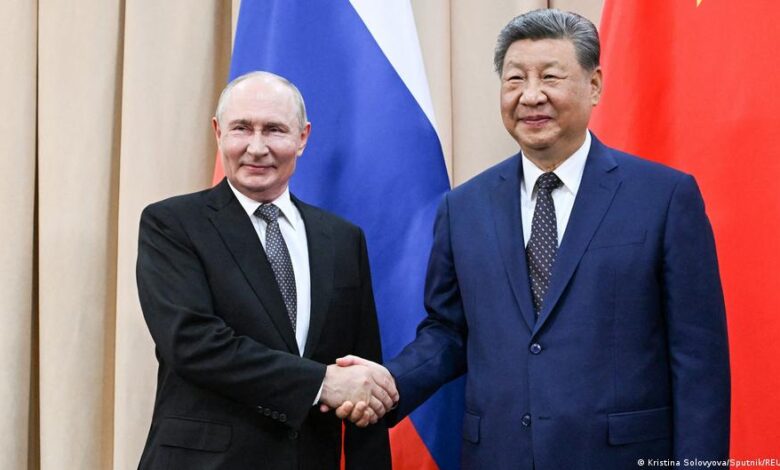
During the St. Petersburg meeting, Putin also shared thoughts with Witkoff on a possible trilateral summit involving U.S. President Trump and Chinese President Xi Jinping, noting that Beijing is already preparing for the gathering. Moscow proposed holding the three-way meeting on the sidelines of the Asia-Pacific Economic Cooperation (APEC) summit, scheduled for November 18-19 in Shenzhen, China. According to reports, Putin hopes to reach an agreement with Trump and Xi on ending the war in Ukraine on terms favorable to Russia.
The proposed format—involving Russia, the United States, and China, but excluding Ukraine and the European Union—offers a glimpse of the negotiating framework the Kremlin prefers. Russia insists that Ukraine must be prepared to make territorial concessions before negotiations can move forward, and Putin has repeatedly stressed that he is willing to negotiate only if Russian interests are taken into account. Putin reportedly views the proposed Shenzhen gathering as a potential new Yalta Conference, referencing the 1945 meeting of Allied leaders to discuss the postwar order in Europe.
Chinese officials have indicated through diplomatic channels that Beijing would not object to the three-way format if Trump agreed to participate, and Trump has also expressed openness to such talks. However, Ukrainian President Volodymyr Zelenskyy pointed out during a visit to Oslo on October 20 that talks concerning his country’s future will be acceptable only if Ukraine gets a seat at the negotiating table.
Analysts hold varying views on what China stands to gain from participating in such a summit. Temur Umarov, a researcher at the Carnegie Russia Eurasia Center in Berlin, said Moscow wants to feel respected by Washington as a major international power and hopes any agreement would prompt the White House to pressure Ukraine and the EU into accepting Russian terms. Umarov believes Beijing would participate largely as a symbolic partner rather than an active mediator. Beijing has no intention of taking responsibility for Ukraine’s future, he said, noting that attending would impose no additional obligations while allowing China to present its positions through vague, noncommittal language.
Conversely, Yurii Poita, a senior associate researcher at the Mercator Institute for China Studies, argues that China and Russia share overlapping strategic interests, particularly in promoting an alternative security architecture across Eurasia. Both countries would benefit from a reduced Western military presence in Europe and Asia and a weakened NATO, Poita suggested, adding that such outcomes would further undermine European confidence in the United States as an ally.
Other experts point to the broader geopolitical relationship between Moscow and Beijing. Michael Kimmage, director of the Kennan Institute in the United States, doubts China is preparing to take a more active diplomatic role, noting that Beijing prioritizes the political survival of Vladimir Putin. According to Kimmage, Russia provides China with low-cost energy and a foreign policy partner that rarely stands in Beijing’s way, meaning China will likely continue indirectly supporting Russia’s military efforts to prevent a defeat.
The exclusion of Ukraine and the European Union from the proposed talks has also raised questions about international influence. Kateryna Krasina, a junior researcher at the Kyiv-based New Geopolitics Network, suggested that China’s approach indicates it does not regard Ukraine as an independent player and views Europe as relatively weak. Kimmage, however, argued that excluding Europe from the summit would not necessarily diminish its influence, pointing to European financial assistance and defense industry cooperation as substantial sources of leverage.
Ultimately, Umarov emphasized that any diplomatic agreement between the major powers would still face realities on the ground. China understands that whatever the outcome of negotiations with the United States and Russia, the battlefield reality depends above all on Ukraine, he said, noting that Ukraine retains agency which neither Washington nor other Western countries can fully determine through diplomatic pressure alone.