Prominent professors and lecturers across some of California’s most prestigious universities are fundamentally rethinking classroom assessments, moving back to traditional paper-and-pencil tests, and reshaping how they handle assignments as artificial intelligence transforms higher education.
At institutions including UCLA, USC, UC Berkeley, and Stanford, faculty members report grappling with the rapid integration of AI tools. While some educators view the technology as a valuable instructional aid, many have taken defensive measures against academic dishonesty by abandoning take-home exams and shifting toward in-person testing.
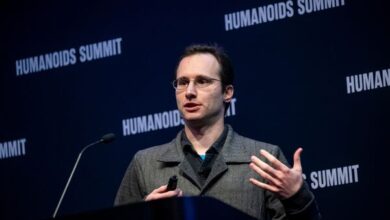
Morgan Polikoff, a professor of education at the USC Rossier School of Education, described the rapid influx of the technology as something that has been forced upon academic staff. Polikoff, who is currently on leave from teaching, noted that he had already planned to transition more undergraduate assignments to supervised, paper-based testing. Two years ago, he caught a freshman using AI to write a banned paper—an infraction that was easily spotted and prompted a full rewrite.
Polikoff emphasized that the proliferation of generative tools makes it increasingly difficult to accurately gauge student competency. He pointed to the roughly $3.1 million that USC spends annually for a ChatGPT Edu subscription covering 80,000 users, characterizing the sum as negligible compared to athletic expenditures, yet emblematic of the university’s institutional embrace of the technology.
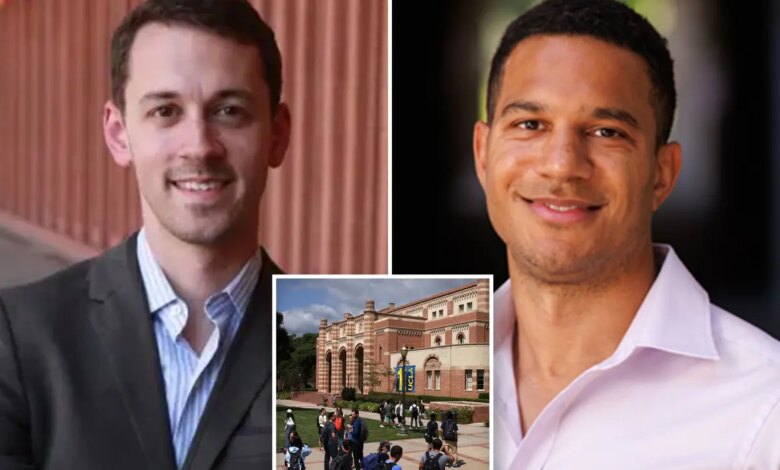
Across town at UCLA, statistics and data science lecturer Thomas Maierhofer has adopted a hybrid strategy. Maierhofer requires all exams to be conducted in person on paper without phones or laptops, while grading outside assignments like homework and labs strictly on completion. At the same time, he is developing ALISSTAIR, a custom chatbot designed to support student learning, maintaining that strict exam proctoring ensures students rely on AI to enhance their education rather than bypass it.
At UC Berkeley, renowned mathematician Richard Borcherds drew widespread attention this fall by halting the grading of homework for correctness. Borcherds stated that online exams are no longer viable because students routinely use AI to generate answers, noting a suspicious surge in average scores on remote tests. Consequently, his course grades are now based primarily on in-person exams that prohibit electronic devices.
Institutional policies vary across the University of California system, which allows individual campuses and programs to enforce stricter academic integrity rules, particularly concerning admissions and coursework.
Stanford Law School professor Julian offering a more bullish perspective on the technology itself, expressing skepticism toward human pedagogical consistency. In a study he led this year, 16 law professors blindly evaluated answers to common student inquiries and preferred Google’s AI over their own colleagues’ responses 75% of the time, though researchers emphasized the test measured answer quality rather than long-term student learning outcomes.
Nyarko noted that Stanford colleagues have largely abandoned take-home exams lasting up to eight hours out of fear that students will delegate the work to AI. Stanford provides all students with free access to ChatGPT, Gemini, and Claude through a pilot program running through August 2027, permitting AI use for learning unless instructors impose stricter course-specific bans.
The academic debate has also entered the political sphere, drawing commentary from candidates in the upcoming race for state schools chief. Sonja Shaw, the Republican candidate for California Superintendent of Public Instruction, argued that an over-reliance on artificial intelligence and grade inflation strips students of essential critical skills demanded by employers and higher education.
Shaw asserted that objective, standardized testing remains the most reliable method for measuring genuine student capability in an era where automated tools can easily complete coursework, comparing AI to calculators that are only safe once foundational understanding is secured.