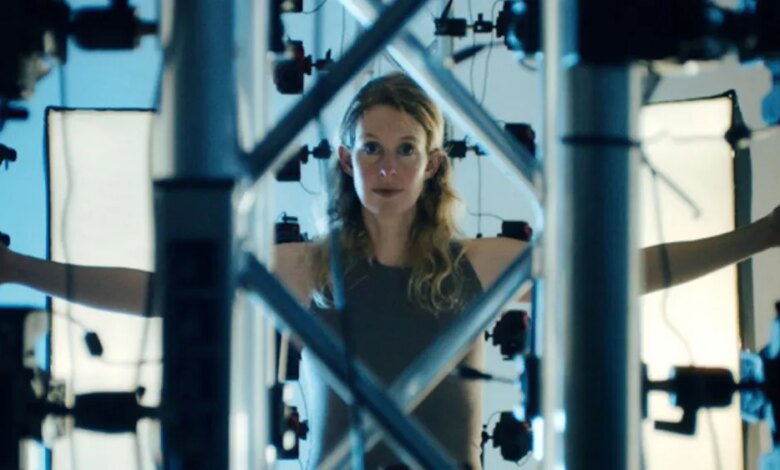
The Directors Guild of America has officially ruled that “You Can See Everything,” the highly discussed documentary centered on Theranos founder Elizabeth Holmes, will not be eligible for its top prize this awards season. The DGA confirmed that the film, directed by Nathan Fielder and Lance Oppenheim, will be restricted to the category of outstanding directorial achievement in documentary, effectively barring it from competing for the guild’s premier award for outstanding directorial achievement in theatrical feature film.
The decision is a significant development in the annual awards race because the DGA’s top feature award is historically the most reliable bellwether for the Academy Award for Best Director. Since 1949, the winner of the DGA’s top prize has gone on to win the Oscar in all but eight instances. By removing the film from this category, the guild has curtailed a major source of momentum for the project as it moves toward the 99th Academy Awards.
At the center of the ruling is the DGA’s strict adherence to its entry criteria. The guild’s rule book explicitly states that “re-releases, animated films and documentaries are not eligible” for the theatrical feature film award. While the 174-minute film has been celebrated for its unusual construction—which blurs the line between traditional nonfiction and staged narrative—the DGA classifies films based on their production and submission methods rather than their creative execution. For the guild, the film is a documentary by definition, leaving no room for a hybrid or exception regardless of how other voting bodies might interpret its genre.
Awards strategists and the studio behind the film had hoped to leverage its unconventional structure to secure eligibility in both categories. This argument was bolstered by the presence of Amanda Seyfried, who previously won an Emmy for playing Holmes in the limited series “The Dropout” and is currently being positioned for supporting actress consideration at the Oscars for her role in this film. Despite these efforts, the DGA remained firm in its classification.
Since its theatrical opening on October 16, “You Can See Everything” has become a subject of intense debate among critics and audiences who have questioned whether it functions as a traditional documentary, a conceptual reality television experiment, or an entirely new cinematic form. Despite the DGA’s specific category restriction, the film remains a formidable contender in other areas. It is still eligible for the best documentary feature Oscar and could potentially become the first nonfiction film to secure a Best Picture nomination.
The production team is currently in active discussions with other major awards bodies, including the Golden Globes, SAG-AFTRA, and BAFTA, to determine how the film will be classified for their respective ceremonies. For the Oscars, a broad campaign is underway across multiple categories. In addition to Best Picture and Best Director, the film is being submitted for supporting actress (Seyfried), supporting actor (Christopher Abbott), and several technical achievements including production design by Alex DiGerlando and Rebecca Meis, cinematography by David Bolen, and film editing by Adam Locke-Norton.
Other technical submissions include costume design by Katina Danabassis, makeup and hairstyling by Stephanie Pasicov and Kerrie Smith, sound by Paul Hsu and Richard Carlos, and an original score by Ari Balouzian. The film was produced by Nathan Fielder, Lance Oppenheim, Tatiana Bears, Maggie Ambrose, and Jack Davis. Nominations for the 79th annual DGA Awards are scheduled to be announced in January.