Navigating election procedures can often be complicated by widespread misconceptions about voting rules, potentially leading to confusion or accidental mistakes at the polls. Reviewing official guidelines helps clarify requirements regarding identification, absentee voting, polling places, and ballot processing.
Identification requirements are a frequent source of questions. While voters do not need to bring a voter registration card to cast a ballot in person, an accepted photo identification is mandatory. A driver’s license is not the sole option; Georgia also accepts U.S. passports, military IDs, tribal IDs, and student identification cards issued by public colleges or universities within the state. Free voter identification cards are likewise available for residents who need them.
Absentee voting rules also involve strict deadlines and procedures. Voters do not need to provide a specific reason to request an absentee ballot, even if they plan to remain in town on Election Day. For the general election held on November 3, 2026, the request deadline fell on October 23. Furthermore, unlike systems in some other jurisdictions where a postmark suffices, Georgia requires county elections offices to physically receive absentee ballots by 7 p.m. on Election Day. Voters must carefully complete all required information and sign the outer oath envelope; omitting a signature or necessary data can result in rejection. Individuals can monitor their ballot status online through Georgia’s My Voter Page and should contact their county elections office promptly if issues arise.
Once an absentee ballot is received by the county, it is officially considered cast, meaning voters cannot subsequently switch to in-person voting. However, individuals who hold an absentee ballot but have not yet returned it may bring the physical ballot to their polling place to have it canceled before voting in person. Regarding registration, same-day registration is not permitted in Georgia; the registration deadline for the November 3 general election was October 5.

On Election Day itself, voters must cast their ballots at their specific assigned polling place rather than any location across the county. Checking assigned locations and sample ballots beforehand via the state’s online voter portal is recommended. Anyone standing in line by 7 p.m. when the polls close is legally permitted to cast a ballot. Inside the polling location, strict rules apply: photographing or copying a ballot is prohibited, though pictures are permitted outside the polling area. Additionally, clothing that promotes a candidate, political party, or campaign slogan is banned within 150 feet of a polling place. While outside individuals generally cannot distribute food or drinks to voters waiting in line, voters are allowed to bring their own refreshments, and poll officials may provide self-service water.
Concerns regarding ballot secrecy and equipment security are addressed through established protocols. The numbered voter list records participants in the order they receive ballots to track turnout rather than individual choices, preserving ballot secrecy. Voting equipment is closely monitored, with counties required to secure hardware, maintain logs and chain-of-custody forms, and utilize numbered seals to document transfers.
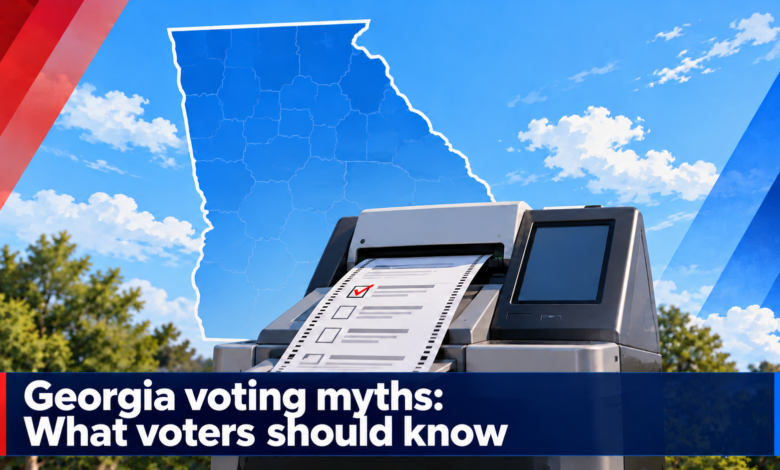
At the voting machine, voters review a printed summary before scanning their ballot. If the printout fails to reflect their choices or displays an incorrect ballot style, they can alert a poll worker immediately to have the ballot spoiled and replaced before final casting.
When polls close, results do not always arrive instantaneously. While absentee ballots may be verified and scanned prior to the close of polls, tabulation and public reporting cannot begin until voting concludes. Election night tallies are frequently unofficial and subject to change as provisional ballots are reviewed and qualifying military and overseas ballots—which may arrive up to three days after the election if postmarked by Election Day—are processed. Administrative steps such as securing materials, transporting equipment, and consolidating results require careful time, meaning delays do not inherently indicate irregularities.