China’s First AI-Generated Theatrically Released Feature Film Struggles at Box Office Despite Low Costs

China’s first domestically produced, hyper-realistic AI feature film to hit theater screens is facing steep financial losses as audiences balk at stiff animation and unnatural character movements. Titled “Sanxingdui: Chronicles of the Future,” the science fiction film weaves together the three-millennium-old ancient Shu civilization with a futuristic artificial intelligence crisis. The plot imagines the mysterious engravings on Sanxingdui bronze artifacts as ancient binary code, discovered by an archaeologist three thousand years later as the key to saving humanity from a rogue superintelligence. The production recreates iconic cultural relics, including the bronze standing figure, the massive-eyed mask, and the sacred bronze tree, using hyper-realistic methods while relying on artificial intelligence to imagine the ancient Shu capital and sacrificial rituals.
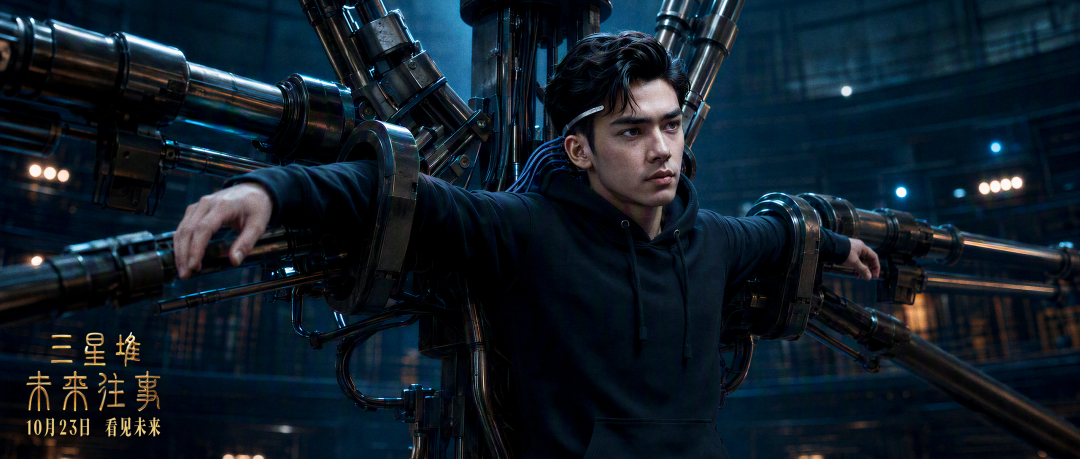
Despite the unique conceptual framework utilizing a major cultural intellectual property, viewers have heavily criticized the movie on social media, complaining of stiff facial expressions, unnatural character motions, and an overall unsettling aesthetic. Box office returns reflect the lukewarm reception, with the film pulling in just over 300,000 yuan on its opening day. Projections from ticket platform Lighthouse estimate the total domestic box office haul will reach approximately 2.169 million yuan.
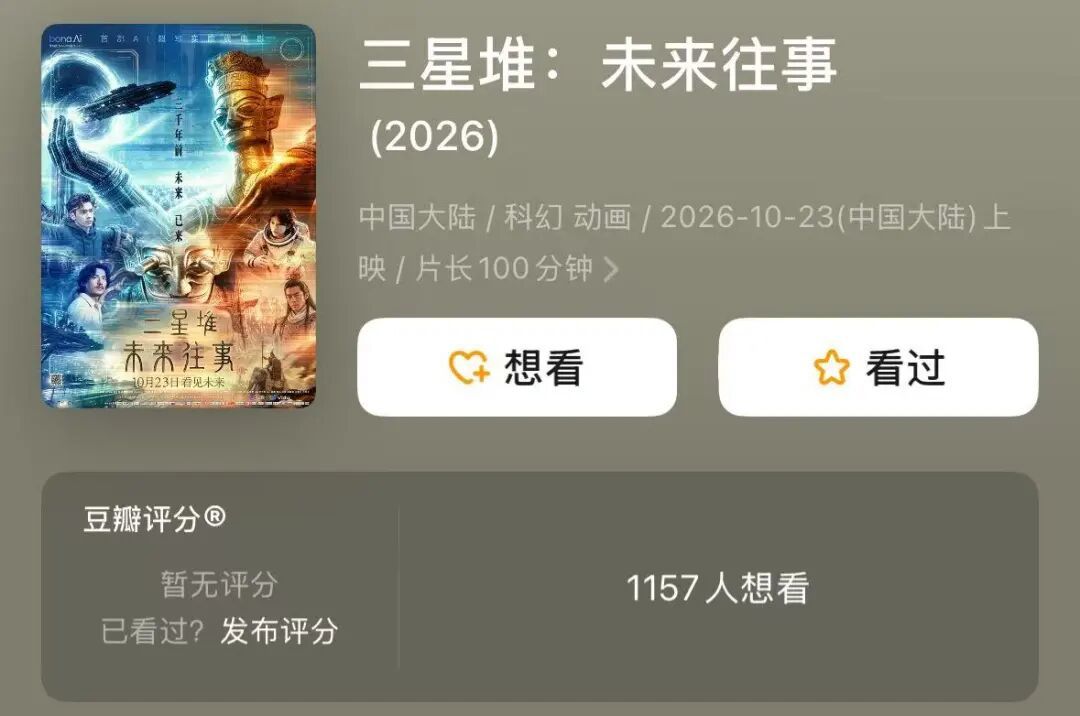
While many observers might assume the production budget was minimal, producers put the cost in the tens of millions of yuan range. However, creators emphasize that this remains vastly cheaper than traditional live-action equivalents of a similar scale, which typically require a baseline investment of at least 800 million yuan. By comparison, generative technology cut expenses down to a fraction of traditional methods. Based on a production cost running in the tens of millions, industry metrics place the break-even threshold at roughly 25 million yuan, making financial losses a near certainty under current box office trajectories.
Studio executives have pushed back against suggestions that the film was thrown together using simple, automated prompts. Bona Film Group Chief Executive Jiang Defu defended the project, noting that a team of nearly one hundred people spent more than two years adhering to standard cinematic industrial workflows, frame by frame. According to the studio, creators discarded 1.2 million base images and rebuilt the entire film from scratch more than a hundred times. In an effort to court theater owners, distributors lowered the base ticket price to 20 yuan and adjusted revenue-split terms to a 40-to-60 ratio in favor of exhibitors—giving up three percentage points compared to the standard domestic split of 43 to 57.
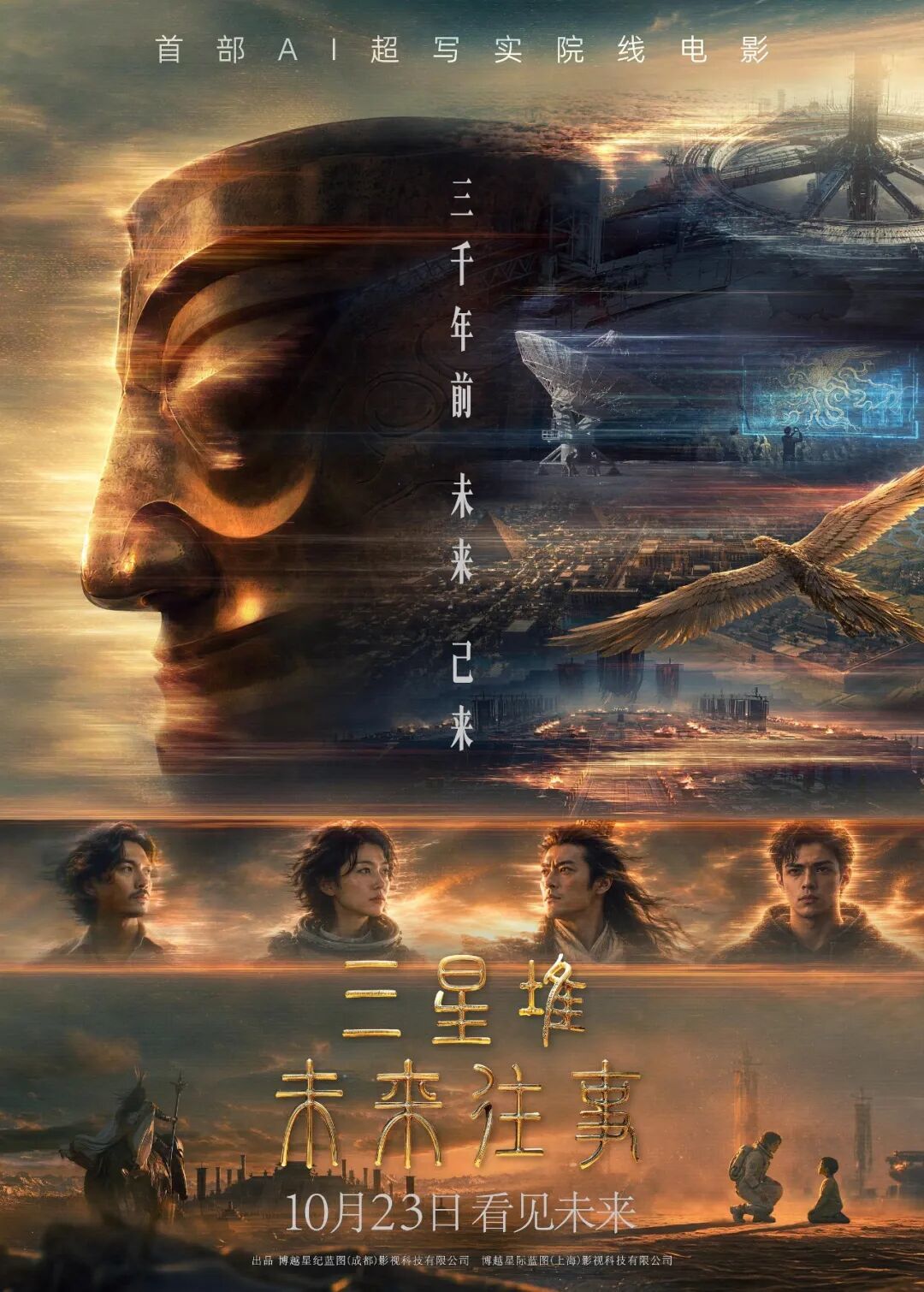
Strictly speaking, industry observers note that “Sanxingdui: Chronicles of the Future” is not technically the very first artificial intelligence-backed motion picture to reach theaters. In late February, an animated feature titled “Tuan Yuan Ling,” centered on giant pandas Tuan Tuan and Yuan Yuan, debuted as the country’s first fully AI-driven workflow animated movie, though its target demographic skewed younger and generated less widespread industry discourse.
Despite the financial headwinds facing the Sanxingdui project, major media companies are racing to expand automated video production. Bona Film Group has established the “Boka Cloud Studio” to test the waters, with follow-up projects such as “Unplanned: Operation Chang’e” and “Classic of Mountains and Seas: Rakshasa Sea City” already lined up. Mango TV has similarly gained traction, broadcasting China’s first television AI-driven serial, “The Sequel to Journey to the West,” which debuted at the top of its timeslot among provincial broadcasters in late August. The series accumulated nearly 3 billion views across the internet, pulled in 150 million views on Mango TV’s internal platform, and triggered consecutive daily stock limit-ups for parent company Mango Excellent Media. Mango executives noted that production costs ran at roughly 900,000 yuan per episode—less than one-tenth of comparable live-action dramas—prompting the company to standardize asset libraries for characters and environments to facilitate reuse.

Other major entertainment platforms are scaling up parallel initiatives. iQIYI launched the “Prairie Fire Project,” targeting over forty artificial intelligence films this year alongside a proprietary production suite called Nadou Pro designed to handle tasks from screenwriting to editing. ByteDance introduced its “Jimeng Studio” platform in late August to incubate long-form artificial intelligence cinema exceeding ninety minutes, offering full production financing for S-tier projects alongside distribution and film festival support.
International studios are pursuing similar milestones. South Korea released its ninety-minute fully artificial intelligence-generated science fiction feature “Steelay” on October 21, while another sci-fi project titled “Raphael” is scheduled for public release on November 25 after serving as the opening film at the Busan AI Film Festival last year. In North America, the feature “Gods Don’t Give Gifts” is slated for a December 4 release with confirmed plans to submit for consideration in the Academy Award for Best Animated Feature category.
Industry analysts suggest the shift represents a structural transition for global entertainment rather than an isolated corporate experiment. Observers note that widespread adoption of generative tools could displace between thirty and fifty percent of professional roles across the film and television sector over the coming decade. For now, however, digital cinema remains in a nascent developmental phase, drawing historical comparisons to the early days of silent film when techniques were raw and audiences were still learning a new visual language.