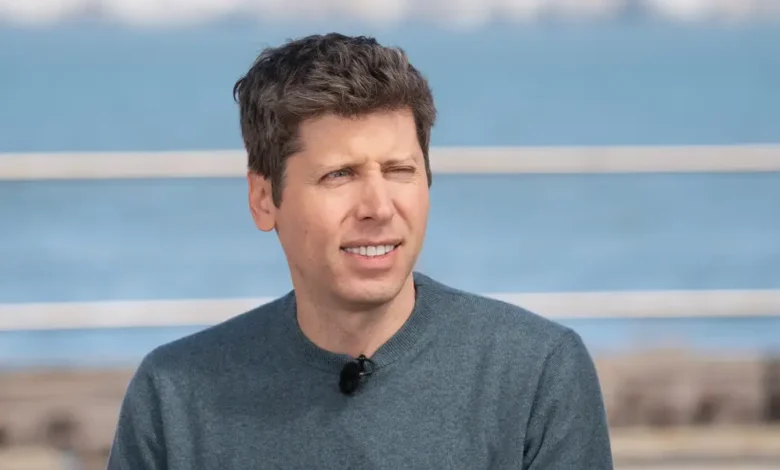
OpenAI CEO Sam Altman recently addressed how mathematicians reacted to his company’s rapid advancement in their field, characterizing the transition as an emotional progression from initial panic to eventual acceptance.
Speaking before a crowd of students at Stanford University, Altman outlined the psychological phases he observed among researchers as artificial intelligence began tackling complex mathematical puzzles. According to Altman, the initial reaction on the first day was widespread panic regarding the future of the discipline. Researchers expressed severe concern, with some even advising graduate students to switch their academic majors entirely under the assumption that human mathematical work was obsolete.
By day three, that shock reportedly shifted into anger directed at the company for disrupting the traditional study of numbers and proofs. However, Altman noted that by day five, many mathematicians began adjusting to the new reality, recognizing artificial intelligence as an inevitable tool in their field and anticipating a different, potentially more productive career path.
Altman’s optimistic perspective contrasts sharply with the broader reaction from the academic community. Tensions escalated in September when OpenAI announced that its models had successfully solved the Navier-Stokes equations, a notoriously difficult mathematical puzzle that had baffled researchers since the 19th century.
Following that announcement, preeminent mathematicians voiced intense frustration. Two academics, affiliated with New York University and rival artificial intelligence firm Anthropic, publicly accused OpenAI of utilizing data from their chat logs to assist in cracking the complex problem. Furthermore, critics pointed out that while the artificial intelligence model produced a solution, it failed to show its working steps, leaving human mathematicians with the laborious task of verifying the validity of the results.
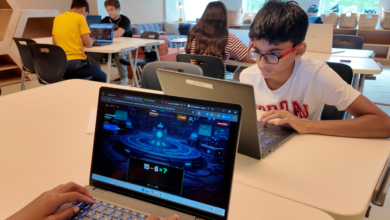
Controversy continued to surround the intersection of artificial intelligence and academia. A group of undergraduate students at the California Institute of Technology organized a competitive event known as a “mathathon,” encouraging participants to leverage artificial intelligence tools to tackle long-standing problems. The initiative faced immediate backlash, prompting more than 700 academics to sign an open letter condemning the competition for promoting what they termed AI “slop.” OpenAI ultimately withdrew its sponsorship of the event, though organizers subsequently adjusted competition rules ahead of its scheduled launch in November.
Prominent figures in the field have also acknowledged profound changes to the traditional workflow of mathematical research. Terence Tao, a University of California, Los Angeles mathematician and prodigy who earned his doctorate at age 20, remarked that mathematics has moved past its “romantic era” as top researchers adapt to a reality where their primary role is verifying machine-generated output rather than solving problems independently. Tao’s comments followed a separate announcement from OpenAI stating that its systems had successfully solved more than 700 additional mathematical problems.
Despite the friction and the fundamental shift in methodology, Altman rejected the notion of a broader workforce catastrophe, stating his belief that widespread job displacement will not occur across industries. He did, however, concede that the disruption struck the mathematical community faster than almost any other discipline, marking an unprecedentedly rapid cycle of technological adaptation.