In the hyper-efficient world of Chinese e-commerce, a single phone call from a customer can cost a delivery worker more than their daily wages. Investigations into the logistics industry have revealed a systemic cycle of “management by fine,” where automated systems interpret routine customer inquiries or modifications to delivery times as official complaints, triggering immediate financial penalties for couriers.
The phenomenon, often referred to within the industry as “incoming call triggers,” has created a climate of fear among frontline workers. When a customer dials a corporate hotline to ask about a package’s location or to request a different delivery window, the backend systems of many express companies automatically generate a “complaint ticket.” These tickets frequently bypass human verification, resulting in fines that couriers say start at 50 yuan ($7 USD) and can climb as high as 200 yuan for a single instance.
In Beijing, a resident identified as Mr. Tong recently experienced the human cost of this automated hostility. While attempting to return a product, a merchant filed a complaint against the delivery company. Without verifying the facts, the company issued a penalty to the courier. The worker, frustrated by the sudden deduction from his earnings, arrived at Mr. Tong’s door not to deliver a package, but to demand an explanation. Mr. Tong described the courier as visibly distressed and aggressive, realizing only later that the company had manufactured a “dispute ticket” based on a merchant’s inquiry that had nothing to do with the courier’s actual performance.
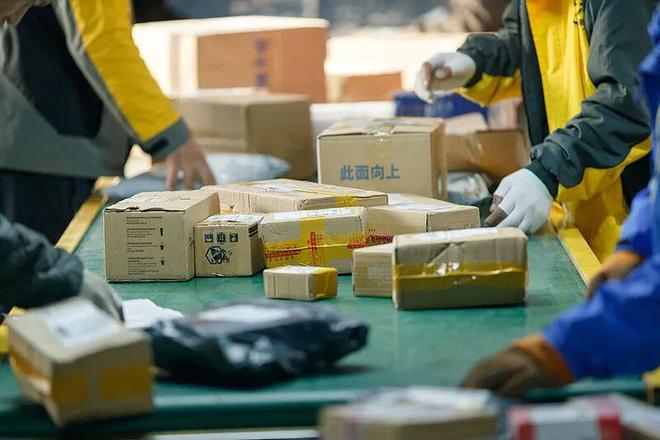
Interviews with multiple delivery workers across various firms reveal a desperate plea being issued to the public: “Please do not contact the platform or the merchant.” Couriers are increasingly asking customers to call them directly on their personal cell phones for any issues, including canceling orders or changing pickup times.
One courier for a major firm explained that even when a customer cancels an order through an official app—a standard feature of the service—the system may flag it as a failure on the courier’s part. “If you want to cancel, just tell me,” the worker said. “Don’t do it through the app. We had a peak period recently where cancellations resulted in direct punishments for us.”
The rules are inconsistently applied across the industry. In direct-sales logistics firms, the fines are often arbitrary, with workers reporting penalties ranging from 100 to 200 yuan based on the whim of the system’s current logic. In franchise-based models, the situation is even more precarious. Because headquarters, local franchise outlets, and individual couriers represent three distinct financial interests, the local outlets—operating on razor-thin margins—often use fines as a low-cost tool to maintain control over their subcontractors.

Labor law expert Huang Leping notes that couriers are in a structurally weak position. Many fear that asserting their rights or appealing a fine will lead to being blacklisted by the company or losing their delivery credentials entirely. “The industry lacks necessary supervision over these non-standard management methods,” Huang said. He warned that this system does not just hurt workers; it erodes the relationship between the company and the consumer, as customers become hesitant to use official channels, and interactions between frustrated couriers and confused residents turn hostile.
Industry analysts suggest that the solution requires a fundamental decoupling of customer inquiries from automatic penalties. Yang Daqing, a secretary at the China Federation of Logistics and Purchasing, argues that companies must implement “intent classification” at the source of the call. This would involve using AI or human operators to distinguish between a genuine complaint about service quality and a simple request for information.
Yang further recommends that the power to issue fines should be removed from automated systems and local franchises, moving instead toward a centralized, transparent process. “There must be a manual review as a backstop,” Yang said, noting that systems currently allow for “secondary labeling,” where a consultation ticket is secretly changed to a complaint ticket to meet corporate quotas for penalties. He suggested that all background label changes should leave a digital audit trail for regulatory inspection.
The regulatory environment is beginning to shift in response to these pressures. The State Post Bureau has outlined plans for 2026 to implement “penetrating supervision,” specifically targeting unreasonable management behaviors such as “penalty-upon-complaint.” The proposed measures aim to balance the distribution of profits between corporate headquarters and frontline workers, ensuring that couriers have a clear, direct channel to appeal fines without fear of retaliation.
Until these regulatory protections are fully enforced, the burden remains on the workers. As the industry stands, the very tools designed to facilitate customer service have become financial traps for the people responsible for making the system work.