A high-stakes summit in Montreal is testing whether a grand vision for a new global alliance can translate into practical reality, as Canadian Prime Minister Mark Carney and top European Union officials explore closer integration against a backdrop of shifting geopolitical forces. The gathering follows a series of diplomatic overtures catalyzed by deteriorating transatlantic relations under US President Donald Trump, whose hostility toward traditional security arrangements and public belittling of Canada have driven Ottawa and Brussels closer than ever.
European Commission President Ursula von der Leyen traveled to Canada alongside European Council President António Costa and up to 10 European commissioners for the October 29-30 summit. The discussions focus on bringing Canada as close to the EU as possible without formal membership, though officials acknowledge that defining what an “associate member” relationship entails remains a work in progress. European member states previously removed the specific term from draft summit conclusions amid closed-door debate, leaving many questions about the exact mechanics of the proposed partnership.

The diplomatic momentum began building earlier in the year. In January, Carney used an address to the World Economic Forum in Davos to issue a clarion call to the world’s middle powers, urging nations to build independent coalitions for resilience and democracy. By September, his outreach had expanded to include nations such as Australia, India, and Turkey, culminating in a speech to the European Parliament in Strasbourg where he switched seamlessly between German, French, and English to advocate for chosen affinities.
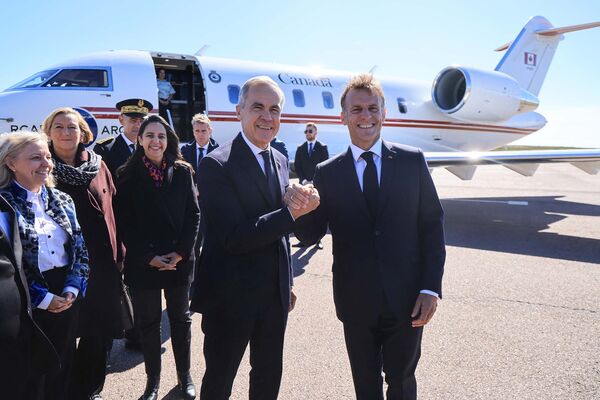
That same month, French President Emmanuel Macron hosted Carney for an unusual detour on the North Atlantic archipelago of Saint Pierre and Miquelon, just 25 kilometers off the coast of Newfoundland. For Macron, entering his final year in office before stepping aside in 2027, the meeting was a display of international stature amid domestic political turmoil and brewing protests in France. Both leaders, former investment bankers sharing a business-oriented approach to governance, found common cause in championing the global center ground.
Despite the enthusiasm in Brussels and Ottawa, building a coherent bloc of middle powers faces significant hurdles. Aside from Canada’s ongoing trade war with the US, few nations have formally rallied to Carney’s doctrine. Furthermore, domestic political instability threatens to distract European leaders from forging new arrangements. German Chancellor Friedrich Merz faces pressure from far-right electoral gains, while the traditional Franco-German axis is strained, and major eurozone economies confront the rising influence of nationalist movements.
Even as practical details remain elusive, European leaders have signaled a clear willingness to rewire their alliances. German Chancellor Friedrich Merz described Canada as “as European as it was never before” in a recent interview, while UK Prime Minister Andy Burnham has also signaled a desire to mend ties with the bloc. Whether the diplomatic goodwill in Montreal can overcome domestic political vulnerabilities and reshape international relations will determine the legacy of Carney’s middle-powers strategy.